

What My Physical Therapy Career Taught Me About Home Design and Aging in Place
A Louisville Realtor and former Physical Therapist explains how home design quietly affects safety, mobility, and aging in place.
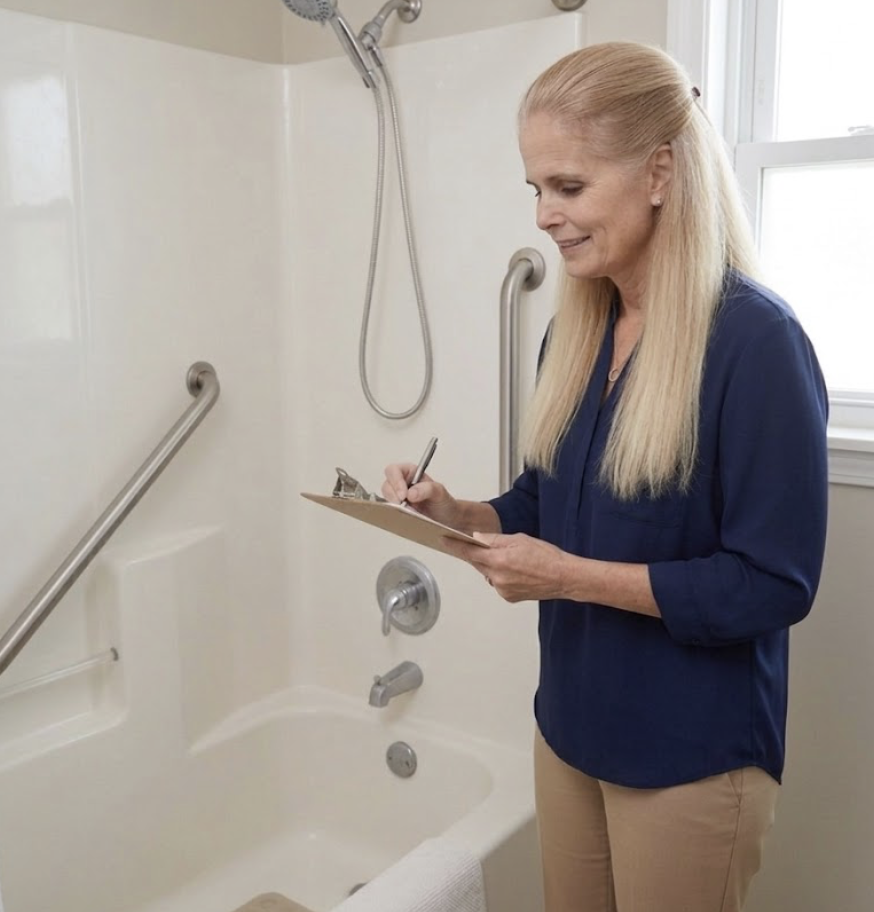
Years before I became a Louisville REALTOR®, I worked as a physical therapist. I don’t practice physical therapy today, but that experience has never really left the way I look at a home.
When I walk through a house, I notice the things any buyer notices: the kitchen, condition, room sizes, natural light and how the house feels. At the same time, I find myself noticing other things almost automatically. How many steps are there from the garage into the house? Where is the laundry? How do you get from the bedroom to the bathroom? Is there enough room beside the car in the garage to open the door fully? Could that bathroom doorway be widened someday? If stairs became difficult, could most of daily life happen on one floor?
Those questions come from years of watching people move through their environments, and they are also useful real estate questions, especially for someone who hopes to stay in a home for a long time.
A home does not have to be fully accessible today to be a good long-term choice. I want to understand how well it functions now, what could reasonably be adapted later, and whether the things that are difficult to change are likely to become a problem.
That is a much bigger picture than simply looking for a ranch.
What Does Aging in Place Mean When You’re Looking at the Home?
Aging in place generally means being able to remain in your own home and community as you get older. Whether that works well depends on the person, the house and the support available. Health, finances, transportation, family, services and personal preference may all become part of the decision.
The home itself deserves a close look because sometimes it is the house creating the difficulty, and sometimes it isn’t. If yard work has become too much, hiring someone to maintain the yard may solve the problem. If driving has become difficult, transportation may be the bigger issue. If the only bedroom and full bathroom are upstairs and stairs have become increasingly difficult, the structure of the home may play a much larger role.
So when someone tells me they want to stay in their home, I don’t immediately start thinking about moving. I want to know what is making it harder to stay. Once we understand that, we have a much better idea of what kinds of solutions are worth exploring.
If You’re Buying a Home, Think About Accessibility Before You Need It
This is something I wish more buyers considered. Most of us naturally buy for the life we are living right now, but if you are hoping your next home will be the place you stay for many years, it makes sense to think about how that house could work if your needs changed.
You don’t have to search for a perfectly accessible home. In fact, you may pass over some very good houses if you do. I would rather look at adaptability.
A home may not seem exactly right at first glance, but perhaps the location is excellent and the basic layout gives us something to work with. A bathroom doorway may be narrower than you would want for someone using a wheelchair or another assistive device, but the surrounding wall may allow that opening to be widened during a future renovation. Another house may have a gorgeous new bathroom that would be extremely difficult to alter because of its size or configuration.
This is why I don’t want buyers looking only at what a house is today. Sometimes we need to consider what it could reasonably become. If the location and bones of the house are good, a property with a few workable limitations may offer better long-term possibilities than one that looks perfect on the surface but gives you very little flexibility.
Accessibility Actually Starts at the Car
This is one of those details people often don’t think about until they have a reason to. A garage may be advertised as a two-car garage, but what happens after two cars are actually parked in it?
Can you open the vehicle doors fully? Is there enough space beside the car for someone who needs more room getting in and out? What if that person uses a walker, wheelchair or another assistive device? Then look at what happens next. How do you get from the car into the house? Are there steps? Is there a railing? Is there room to maneuver around the entrance? Where could equipment be stored? If you are carrying groceries, what does that trip into the kitchen look like?
The same thinking applies when there isn’t a garage. I look at the driveway or parking area, walkway and entrance together.
My physical therapy background makes me notice this very quickly because moving around a home begins before you are standing in the living room. You have to arrive, get out of the vehicle, reach the house, enter it and then move through the spaces you use every day. When those pieces work together, a home can be much easier to live in.
How Much Do Stairs Really Matter?
Stairs deserve attention, but I don’t automatically see them as a reason to rule out a house. Louisville has wonderful two-story homes, homes with basements and older houses where stairs are simply part of the architecture.
What matters more to me is what you have to use the stairs for.
If every bedroom is upstairs, laundry is in the basement and there is no full bathroom on the main floor, everyday life depends heavily on moving between levels. Compare that with another two-story house that has a first-floor office or flex room, a full bathroom nearby and laundry on the main level. That house may offer considerably more flexibility even though the listing still says “two story.”
I look for possibilities like that when long-term livability matters to a buyer. Could a room be used differently later? Could laundry move to another area? If stairs became difficult for a period of time, could the household still function? Those questions tell me more than the architectural label attached to the house.
Don’t Assume a Room Has to Keep the Same Purpose Forever
Floor plans aren’t as fixed as we sometimes treat them. A room being used as an office today may not always need to be an office, and a formal dining room may have possibilities that aren’t obvious when there is a dining table sitting in the middle of it.
If there is a first-floor room near a full bathroom, for example, I may wonder whether that space gives the homeowner some flexibility later. Not every room can simply be converted to another use, of course, and renovations or changes need to be evaluated properly. But when I’m helping someone think long term, I don’t want today’s furniture to keep us from seeing tomorrow’s possibilities.
Bathrooms Are About Much More Than the Finishes
Bathrooms are one of the first places my physical therapy background tends to show up. Most buyers walk in and notice whether the bathroom has been updated. They see the tile, vanity, countertops and fixtures. I’m looking at those things too, but I’m also looking at the doorway.
How much room is there to enter? How do you get into the shower? Is there a tub wall to step over? How tight is the space around the toilet? Could the room potentially accommodate changes later?
A narrow doorway is a good example of why I don’t like dismissing a house too quickly. Depending on the wall and surrounding layout, widening that opening may be something a qualified contractor could address during a future renovation. That could make the bathroom much more usable for someone using a wheelchair, walker or other assistive equipment.
In another house, the bathroom may be so small or the surrounding structure so limiting that meaningful changes would be far more involved. You can’t tell the whole story by looking at whether the bathroom is pretty.
Some Changes May Be Fairly Simple. Others Need a Professional.
People sometimes hear “aging in place” or “accessibility” and immediately picture a major renovation. Depending on the home and the person, however, there may be smaller changes worth considering before getting anywhere near a major remodel.
Lighting is one example. In some situations, hardware, flooring transitions, railings or the way a particular space is arranged may also deserve attention. Other changes are more involved and need a qualified vendor. A doorway may need to be widened, a bathroom reconfigured or an entrance altered.
There are also situations where a home modification or piece of equipment relates directly to someone’s mobility, physical abilities or health. That is where an appropriate healthcare professional needs to be part of the discussion.
Because of my physical therapy background, I have quite a bit of familiarity with assistive and adaptive equipment and with the kinds of home modifications families may encounter. Over the years, I have also developed contacts and resources I can turn to when someone needs specialized help.
In my role as a REALTOR®, I’m not prescribing equipment or determining what modification is medically appropriate for someone. I can help clients notice things they may not have considered, ask better questions about how a property could function, and connect them with qualified professionals and vendors when we need another level of expertise. For a family already juggling several decisions, simply knowing who to call next can make the process much easier.
If You’re Renovating Anyway, Look a Little Further Ahead
I don’t think people need to remodel their homes today around every possible thing that could happen 15 years from now. But if you are already renovating, it makes sense to think ahead.
Suppose you’re completely redoing a bathroom. Before putting everything back exactly where it was, it may be worth asking whether a different layout would give you more usable space. If a doorway is already being changed, could its width matter later? If you’re redesigning part of the first floor, could the new plan give the house more flexibility?
You may decide not to make any additional changes at all. The value is in asking while you still have options, particularly when walls are already open and money is already being spent on the space.
Kitchens and Laundry Rooms Tell You a Lot About Daily Life
Kitchens receive a lot of attention in real estate, usually because people care about finishes, storage and entertaining. I also think about the work that happens there every day.
Where are the things you use most often? How much reaching or bending is involved? Is there enough room to move comfortably when an appliance or cabinet door is open? How far do groceries have to travel from the car to the kitchen?
Laundry is another good example. A basement laundry room may be perfectly fine for someone today, but doing laundry isn’t just standing at the washer. It means carrying clothes to the machine and bringing them back again. If that requires a flight of stairs every single time, it is worth noticing.
These aren’t necessarily reasons to reject a house. They are simply part of understanding how the house functions in real life.
Sometimes the Route Between Rooms Matters More Than the Rooms
One of the things I learned as a physical therapist was to pay attention to the whole activity rather than one isolated moment. That carries over into how I look at homes.
Think about getting up in the middle of the night and walking from the bedroom to the bathroom. Think about bringing groceries in from the car, taking laundry from the bedroom to the washer, or getting outside to pick up the mail or take out the trash.
When we’re healthy and moving easily, we rarely think about these routines. We just do them. A change in mobility can make you see the same house very differently.
That is why sometimes a smaller, less impressive house can function beautifully, while a larger home with gorgeous individual rooms may ask much more of the person living there.
Lighting Is Easy to Overlook
Lighting tends to fade into the background until it isn’t adequate. I pay particular attention to entrances, stairs, hallways, bathrooms and the route between a bedroom and bathroom.
Natural light is wonderful during the day, but it doesn’t help much when someone gets up during the night. Fortunately, lighting is also one of the features that may be relatively manageable to improve. Depending on the home, additional fixtures, better placement, improved switches or other changes may be worth considering.
This is a good example of why it helps to separate the things that may be fairly easy to change from the characteristics that are built into the house.
What Can Be Changed, and What Is Built Into the House?
This may be one of the most useful questions to ask when thinking about long-term livability.
Paint can change. Lighting can often change. Flooring can change. Bathrooms may be remodeled. A doorway may sometimes be widened, and an existing room may be able to serve another purpose.
Other things are harder. Moving a second-floor primary bedroom downstairs requires space the house may simply not have. Eliminating a steep staircase may not be realistic. Changing the slope of a lot is a very different undertaking from changing a light fixture.
There is also a large middle ground where something may be possible but needs to be evaluated by a qualified contractor or other professional.
I don’t expect a house to anticipate every possible future need. What I want to understand is how many reasonable options the property gives us.
Is a Ranch Always Better for Aging in Place?
No. A ranch can be a very good option because it reduces the need for interior stairs, but I would never assume a home works well for long-term living simply because it is one level.
I have seen one-level homes with difficult entrances, awkward bathrooms, inconvenient laundry arrangements and large properties that require a tremendous amount of upkeep. At the same time, a two-story home may have an easy entrance, a full bathroom on the first floor and enough flexible space that most daily living could happen downstairs if needed.
This is another reason I look at the entire property rather than one feature.
The Yard and Exterior Are Part of the House Too
Sometimes the interior of the home is working just fine. The property surrounding it is what has become difficult.
How much grass has to be cut? Is the driveway steep? Are there exterior steps? Is there a long walk to the mailbox? Who handles snow removal? What about gutters, landscaping and all the other maintenance that comes with owning the property?
A homeowner may still love the house while being completely tired of taking care of everything around it. Before deciding that means moving, it may be worth looking at what could be outsourced. Lawn services, snow removal, handyman help and other resources may take enough responsibility off the homeowner to make staying more manageable.
For some people, that makes a meaningful difference.
Location Matters More Than People Sometimes Realize
This is an area where my real estate experience becomes just as important as my physical therapy background. You can renovate a bathroom, but you can’t move the house to another part of Louisville.
When someone is buying for the long term, I want them to think about location in practical terms. How far are the places you regularly go? Where are the people who would realistically help you if you needed something? How dependent is your everyday routine on driving? Would the location still work if driving became more difficult someday?
Those answers will be different for everyone. Someone may want to be close to family. Someone else may care more about convenient access to the places they visit regularly. Another person may value a particular community or familiar area enough that it outweighs other considerations.
Location belongs in the long-term picture because it is one of the few things about a home you truly cannot change.
What Should You Look for When Buying a Home for the Long Term?
If you hope your next home will serve you for many years, I would look at more than bedrooms, updates and square footage. Some of the questions I think are worth asking are:
How do we get from the car into the house?
Is there enough room around the vehicle to get in and out comfortably?
How many steps are required at the entrances?
Could the main parts of daily life happen on one level if necessary?
Is there a full bathroom on the main floor?
Is there a first-floor room that could potentially serve another purpose?
Where is the laundry?
What does the route from the bedroom to the bathroom look like?
How do you get into the shower or bathtub?
Are entrances, stairs and important walkways well lit?
Are there narrow spaces that could become difficult with assistive equipment?
Which features could reasonably be modified?
Which limitations are part of the basic structure?
How much exterior maintenance comes with the property?
Does the location still make sense if life changes?
I don’t expect a house to get a perfect score on every question. I want buyers to understand what they’re buying, where the flexibility is and where it isn’t. That gives them better information for deciding what matters to them.
Try Walking Through Your Own Home With Fresh Eyes
If you’re wondering how well your current home might work over time, try starting where you normally park. Get out of the car and walk into the house the way you usually do. Notice how much room there is around the vehicle, then pay attention to the entrance, the steps, the lighting and what it is like to open the door while carrying something.
Once you are inside, go through an ordinary day. Walk from your bedroom to the bathroom. Go to the kitchen. Take something to the laundry room. Imagine bringing in several bags of groceries. Walk outside to where you take the trash or get the mail.
You may begin noticing things you have walked past for years.
Ask yourself which parts of the house make daily life easier, which require more effort than you usually notice, and what would become difficult first if your mobility changed, even temporarily. You don’t need to make a decision after that walk. Sometimes simply seeing the house differently gives you a better place to begin.
A Temporary Change Can Tell You a Lot About a Home
People don’t always start thinking about accessibility because they are getting older. Sometimes surgery, an injury or another temporary mobility change suddenly makes someone aware of how their house works.
The stairs that barely registered before become a major part of the day. The bathroom seems smaller. Getting groceries from the car to the kitchen takes more effort.
That experience doesn’t necessarily mean the house is wrong for the person. It may show where the limitations are and where adaptations could be useful if circumstances changed again later.
Questions about an individual’s health, mobility or specific safety needs belong with the appropriate healthcare professional. From a housing standpoint, though, these experiences can teach us quite a bit about the property.
What If Someone Wants to Stay in Their Home?
Then I think we should take that seriously.
For many people, the house is much more than a structure. It may be where they raised their children, know their neighbors, celebrated holidays and built decades of memories. Before assuming that moving is the solution, I want to understand what is actually making staying difficult.
There may be more possibilities than the family realizes. Home modifications are one possibility, and equipment may be another. Outside services can also make a tremendous difference for some older adults.
Depending on someone’s circumstances and what is available locally, families may explore help with lawn care, home maintenance, housekeeping, transportation, meals, personal care, home health services or other day-to-day needs. Those services don’t make every home appropriate for every person, and health or personal-care decisions need to involve the professionals qualified to address them.
Still, a homeowner who needs help maintaining the yard is facing a very different situation from someone whose home itself has become extremely difficult to navigate. Understanding what is actually causing the problem helps families explore the right options.
If you are starting to wonder whether a parent’s home still works as well as it once did, When Is It Time to Help a Parent Downsize in Louisville? goes more deeply into the early signs families often notice.
How Do You Decide Between Adapting the Home and Moving?
There isn’t one formula I would use for every family. I would start with the reasons the current home has become difficult and separate the issues that may have reasonable solutions from those that are much harder to overcome.
If the homeowner loves the location, has support nearby and the biggest problems can realistically be addressed, adapting the current house may deserve serious consideration. If the basic layout remains difficult even after possible renovations, the property requires more upkeep than the homeowner wants, or the location itself has become part of the problem, it may be useful to see what other housing choices look like.
Cost matters, but so does disruption. Renovating can be disruptive, and moving brings an entirely different kind of disruption. There is also an emotional side that shouldn’t be dismissed simply because it doesn’t fit neatly on a spreadsheet. Leaving a home after 30 or 40 years can be a very big decision.
Families deserve enough information to compare their choices without being rushed toward one of them.
What If the Current Home Really Doesn’t Work Anymore?
There are times when a family explores modifications, services and support and still concludes that the home is no longer a good fit. At that point, it helps to understand the choices before making assumptions about where someone should go next.
A smaller house may be one possibility. A patio home or condominium may be another. Some people want to live closer to family, while others begin exploring independent living or settings that offer more support.
I’ve gone through those choices more fully in When Aging Parents Can’t Safely Stay in Their Home: Options Louisville Families Often Face.
If your family is at the beginning of the process and needs the larger picture, my Downsizing & Senior Transitions in Louisville, KY guide brings together the housing, planning and transition questions in one place.
Frequently Asked Questions About Home Design and Aging in Place
What should I look for when buying a home for aging in place?
Look at how the entire property functions. Consider the path from the car into the house, necessary stair use, bedroom and bathroom locations, laundry, bathroom configuration, lighting, exterior maintenance and whether important areas could reasonably be modified later.
A home doesn’t have to be fully accessible today to offer good long-term possibilities. Its adaptability can be just as important as the features already there.
Is a ranch always the best home for aging in place?
No. One-level living can be helpful, but entrances, bathrooms, laundry, garage access, property maintenance and the overall layout still matter. Some multi-level homes also have enough first-floor living space to provide considerable flexibility.
Can an existing home be modified to make it more accessible?
Many homes can be modified to some degree. Some improvements may be fairly straightforward, while others require significant renovation. The structure of the house and the needs of the individual determine what is practical.
When a modification or piece of equipment is being considered for a person’s specific health or mobility needs, an appropriate healthcare professional and qualified vendor should be involved.
Should I think about accessibility even if I don’t need it now?
If you hope to stay in a home for many years, it is worth considering how adaptable the property is. You don’t need to plan for every possible future circumstance. Knowing which parts of the house could reasonably change and which could not can help you make a more informed purchase.
Can services help an older adult stay at home longer?
For some people, they can. Depending on the person’s needs and the services available, help with transportation, meals, housekeeping, home maintenance, lawn care, personal care or home health may make remaining at home more manageable.
The appropriate services vary from person to person, and medical or personal-care needs should be discussed with qualified professionals.
How do I know whether it makes more sense to modify the house or move?
Start with what is making the current home difficult. Then look at whether those problems could reasonably be addressed through modifications, equipment, outside services or additional support. If the home’s structure, maintenance demands or location would continue to create significant difficulties, comparing other housing options may be worthwhile.
Why My Physical Therapy Background Still Matters in Real Estate
After years in real estate, I understand how important price, condition, location and resale are when someone is evaluating a house. I just happen to bring another set of eyes with me.
I notice whether there is enough room beside the car and the step everyone else walks over without thinking. I notice the narrow bathroom doorway and wonder what is on the other side of that wall. I notice the basement laundry, the first-floor room that might give a homeowner options later, and sometimes I notice that a house a buyer was ready to dismiss actually has very good bones and a few problems that may have workable solutions.
I’m not there to turn every showing into an accessibility evaluation, and I’m not practicing physical therapy when I work with my real estate clients. Those years did teach me to pay attention to how people actually live in a space, and I still do that.
For a buyer, that perspective can help us look beyond today’s floor plan and consider whether a home has room to adapt. For an older homeowner, it can help us identify the specific things that have become difficult before assuming a move is necessary. And for a family helping a parent, it can give us a much better place to begin the conversation.
Sometimes the question really is whether it is time to move. Other times, the more useful question is, “What would make this home work better?”
If you are thinking about your own home, helping a parent consider their options, or buying a Louisville home with long-term livability in mind, you are welcome to contact me.
Because Your Move Deserves Care, Not Chaos.
This article provides general real estate information and is not medical, legal, financial or tax advice. Individual health, mobility, accessibility and safety needs should be evaluated by appropriately qualified professionals.
