

Should You Buy a Home in Louisville Right Now or Wait?
Deciding whether to buy a home in Louisville right now or wait comes down to your timeline, your comfort with the monthly payment, and how stable your situation feels over the next few years. There is no perfect time to buy. Waiting doesn’t remove risk, it simply changes it. When those core pieces are clear, the decision becomes much easier to navigate.

A Moment Most Buyers Don’t Expect
There’s a moment most buyers don’t plan for.
It doesn’t happen at a showing.
It doesn’t happen when you first start looking.
It happens when things start to feel real.
You’ve talked to a lender.
You’ve looked at homes.
You’ve started to picture where you might land.
And then you pause.
Because this isn’t browsing anymore.
It’s a decision.
And the question gets heavier:
“Are we about to make a mistake by buying right now?”
Not because you’re unprepared.
But because the market doesn’t feel clear.
Should You Buy a Home in Louisville Right Now or Wait?
If you’re deciding whether to buy a home in Louisville right now or wait, the right decision depends on your timeline, your financial comfort with today’s monthly payment, and how stable your life is over the next few years.
There is no perfect time to buy. Waiting does not eliminate risk. It simply shifts the type of risk you face.
For many buyers, moving forward with a clear plan is more stable than waiting for a market that may bring more competition, higher prices, or different pressures.
The Real Question Most Buyers Are Actually Asking
Most buyers don’t really want to know:
“Is now a good time to buy?”
What they’re really asking is:
“Will I regret this decision later?”
That’s a different question.
And it requires a different kind of answer.
What Is Actually Happening in the Louisville Market Right Now
Let’s take the emotion out of it for a moment.
Inventory has improved slightly, but it is still below balanced levels
Well-prepared homes continue to attract strong attention
Days on market have increased modestly, but desirable homes still move quickly
Buyers are more cautious, but they are still active
This is not a frozen market.
It is a selective market.
The buyers who feel clear are moving forward.
The buyers who feel uncertain are staying on the sidelines.
A Clear Framework to Decide Whether to Buy Now or Wait
Trying to predict the market creates confusion.
Walking through your situation creates clarity.
Timeline: How Long Do You Plan to Stay?
If you plan to stay in the home for five years or more, short-term market shifts matter less.
If your move is short-term, timing becomes more sensitive.
The longer your timeline, the less pressure there is to “get it perfect.”
Payment: Can You Live Comfortably With This Number?
This is the most important filter.
Not:
the purchase price
the interest rate headline
what someone else says is smart
But this:
“Does this monthly payment fit comfortably into our life?”
If the answer is yes, you have stability.
If the answer is no, waiting is not a failure—it’s a smart decision.
Life Stability: What Else Is Changing?
Buying a home works best when the rest of life is relatively steady.
Consider:
job security
family changes
relocation timing
major financial shifts
If multiple areas feel uncertain, the buying decision will feel heavier than it needs to.
What Happens If You Wait?
Waiting feels like control. It often isn’t.
If rates drop:
more buyers enter the market
competition increases
negotiating power often decreases
If inventory improves:
you may have more options
but not necessarily better pricing
Waiting doesn’t remove uncertainty.
It trades one version of it for another.
The Property Itself: Is This a Long-Term Fit?
Sometimes the home matters more than the market.
If a property fits:
your location needs
your layout preferences
your long-term lifestyle
It may outweigh trying to time the market perfectly.
Not every home is replaceable.
What Most Buyers Get Wrong About Timing the Market
Many buyers believe the goal is to buy at the “right time.”
That mindset leads to:
hesitation
overanalysis
delayed decisions
The truth is simpler:
You don’t need the perfect market.
You need a decision that fits your life.
Markets move.
Your life is what determines whether the decision feels right after you make it.
A Real-World Pattern That Happens More Often Than People Expect
A buyer waits for clarity.
They watch rates. They watch prices. They wait for something to feel obvious.
Months pass.
The market shifts slightly, but not dramatically.
The homes they liked are gone.
When they step back in:
they feel more pressure
they feel less confident
and the process feels harder than before
Not because they made a wrong choice.
But because waiting didn’t give them what they thought it would: certainty.
Frequently Asked Questions About Buying Right Now
Is now a bad time to buy a home in Louisville?
No. It is a more selective market, but buyers who are prepared and financially stable are still finding strong opportunities.
Should I wait for interest rates to drop?
Rates may change, but when they drop, more buyers typically enter the market. That often increases competition and reduces flexibility.
Are home prices going down in Louisville?
Prices have stabilized more than declined. Well-maintained and move-in ready homes continue to hold value.
What matters more: purchase price or monthly payment?
Monthly payment matters more. It directly affects your day-to-day comfort and long-term stability.
What if I buy now and rates improve later?
Many buyers refinance when rates improve. Buying now does not remove your ability to adjust later.
Where to Go From Here
If you want a clear, step-by-step understanding of how the buying process works in Louisville, start here:
If you want to see what your budget looks like in real time, you can explore current homes here:
If You’re Still Unsure, That’s Normal
Most people don’t feel 100 percent certain before making this decision.
And you don’t need to.
What you need is clarity around:
your timeline
your numbers
and what’s actually happening in the market
Once those pieces are clear, the decision usually becomes much quieter.
Final Thought
This isn’t about getting the timing perfect.
It’s about making a decision that feels steady and right for your life.
The market will always move.
But when you understand your position clearly, the noise starts to fade.
And the next step becomes easier to see.
If you are needing more clarity, start here for an honest conversation.
Louisville Neighborhood Guide: How to Choose the Right Area for Your Lifestyle
Trying to decide where to live in Louisville? Compare areas based on commute, walkability, housing style, amenities, space and the way you actually live.
Helping you find the Louisville neighborhood that fits the way you want to live. Rather than ranking neighborhoods from best to worst, this guide is designed to help you identify the communities that best fit the way you want to live.
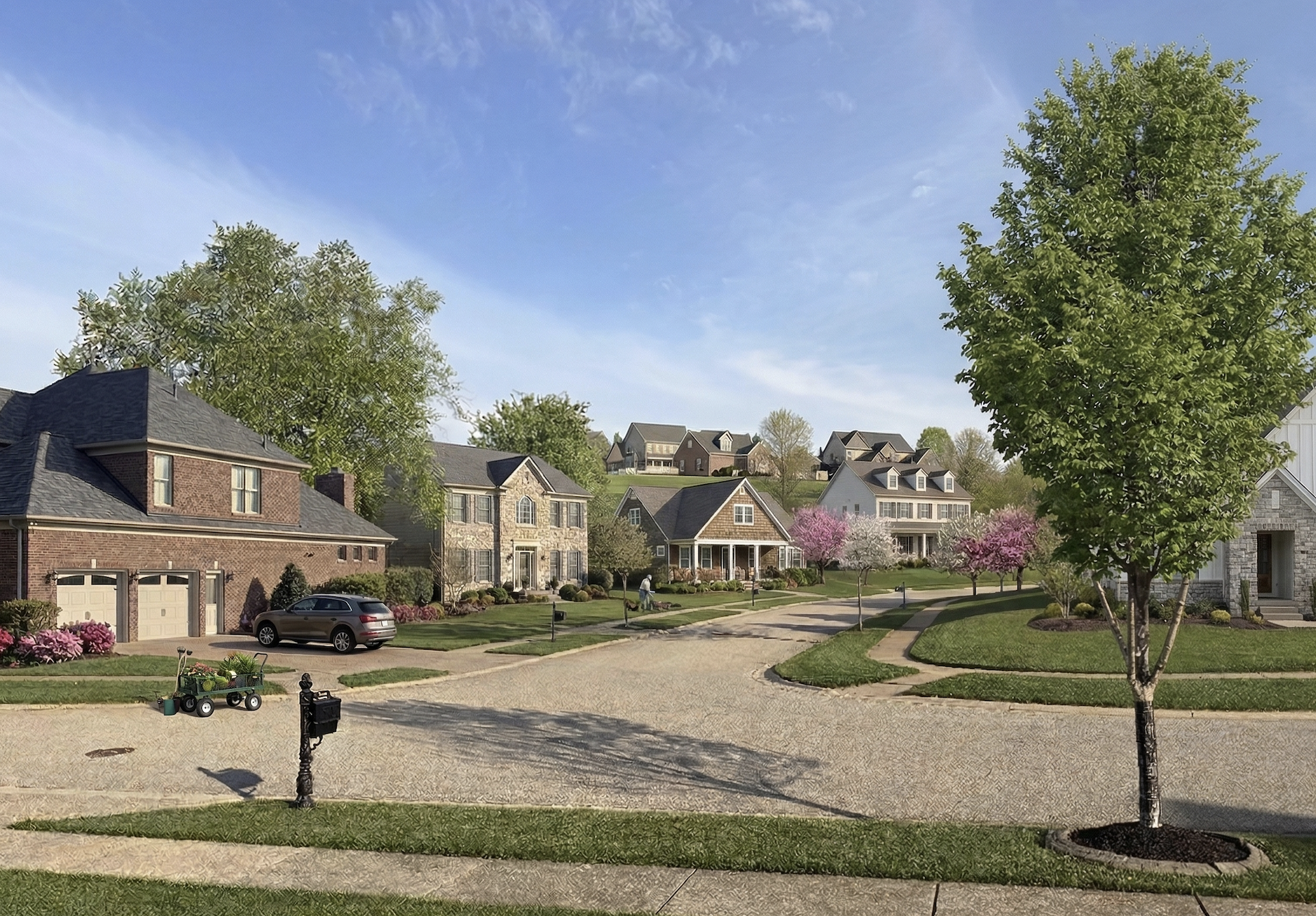
Different areas in Louisville can offer very different living experiences, even within the same price range—making location choice just as important as the home itself.
There’s a question that comes up in almost every relocation conversation:
“Where should we live?”
It sounds like a simple question, but I don't think there's one Louisville neighborhood I could name without knowing quite a bit more about you.
Where will you work? How much driving are you comfortable with? Do you want to be close to restaurants and shopping, or would you rather have more space? Are you drawn to an older home with character, newer construction, a condo or patio home, or something with more land?
Those questions tell me much more than a list of Louisville's “best” neighborhoods ever could.
I work with people who are trying to make these decisions before Louisville feels familiar to them. One thing I've learned is that the house search gets much easier once we have a clearer picture of how you actually want to live here.
If you're still deciding whether Louisville itself is right for you, start with my Moving to Louisville, Kentucky guide.
If you already know you're moving and may need to purchase before you arrive, my guide to buying a home in Louisville from out of state explains how virtual showings, inspections, financing, final walk-throughs and closing can work from a distance.
This guide will help you compare Louisville areas based on the things that will actually affect your everyday life. You'll also find links to more detailed neighborhood resources as you narrow your search.
How to Choose the Right Louisville Neighborhood
I usually start with your routine before we spend much time looking at individual houses.
Where will you work? What other places will you visit regularly? How much driving feels reasonable? Do you want to be able to walk to restaurants or shops, or does “walkable” simply mean having sidewalks and places to take an evening walk?
Then there are the questions about the home itself:
Do you prefer an established home or newer construction?
Would you trade some convenience for more space?
How important are neighborhood amenities?
How much maintenance do you realistically want?
Which home features are true priorities?
You don't need perfect answers to all of these questions. The point is to give the search some direction.
Otherwise, it's surprisingly easy to fall in love with a house online and only later realize that its location doesn't work particularly well for the life you'll be living.
If Walkability and Everyday Convenience Matter to You
First, define what you mean by walkable.
For one buyer, walkability means being able to leave home and walk to a restaurant or coffee shop. Someone else may simply want sidewalks for an evening walk. Another buyer may care less about walking to businesses and more about having convenient access to parks and trails.
Those are different priorities.
When you're comparing Louisville areas, think about the things you would actually use:
sidewalks and walking paths
nearby parks
restaurants and shopping
grocery stores and everyday services
access to major roads
distance to work and other frequent destinations
community amenities, when applicable
A few areas buyers often ask me about include Norton Commons, Glen Oaks, St. Matthews, Springhurst and Lake Forest. They are quite different from one another, which is exactly why I wouldn't group them together as simply the “best” areas.
Norton Commons – This planned community incorporates a mix of housing, restaurants, shops, parks and community spaces within the development. If you're considering Norton Commons, compare the available housing styles, community amenities, costs and location with the way you expect to live day to day.
Glen Oaks – A beautiful golf course community with sidewalks connecting much of the neighborhood to the clubhouse, golf course, tennis courts, pool, and other amenities. Residents are also just minutes from Norton Commons, making it easy to enjoy the restaurants, coffee shops, parks, community events, and local businesses that Norton Commons has to offer. One unique feature of Glen Oaks is that portions of the neighborhood are located in Jefferson County while others are in Oldham County, giving buyers different county and school district options depending on the location of the home. If school assignments are important to you, I always recommend verifying them directly before making a purchase.
St. Matthews– One of Louisville's most established and centrally located neighborhoods, St. Matthews offers convenient access to shopping, restaurants, parks, hospitals, and local businesses while maintaining the character and charm that continue to attract buyers year after year.
Springhurst - Located in Louisville's Northeast corridor, Springhurst combines neighborhood living with exceptional everyday convenience. Residents enjoy easy access to shopping, restaurants, grocery stores, a movie theater, the seasonal farmers market, medical services, and nearby parks, making it a popular choice for buyers who appreciate being able to accomplish many everyday errands close to home.
Lake Forest – A large master-planned community in the East End near the Middletown corridor offering a variety of home styles, neighborhood amenities, walking areas, community events, and convenient access to shopping, dining, and everyday services.
Walking Means Different Things in Louisville
Not every buyer is looking to walk to a coffee shop every morning—and not every great walking neighborhood is built around restaurants and shops.
Many Louisville neighborhoods feature beautiful sidewalks, walking paths, neighborhood pools, and parks that encourage an active lifestyle. Others are just minutes from The Parklands of Floyds Fork, one of the nation's premier urban park systems, offering miles of walking and biking trails, playgrounds, spraygrounds, picnic areas, kayaking, fishing, and year-round outdoor recreation. For many East Louisville residents, easy access to The Parklands has become part of everyday life, whether it's walking the trails, riding bikes, enjoying playgrounds with grandchildren, or simply spending time outdoors.
When you're comparing areas, be specific about what “walkable” means to you. Walking to dinner, taking an evening walk through the neighborhood and having convenient access to a trail system are three different things. Knowing which one matters to you can make the home search much more focused.
Established Neighborhoods vs. Newer Communities
One choice buyers don't always realize they're making is whether they prefer the character and housing styles of an established neighborhood or some of the features that may come with a newer community.
There isn't a better choice across the board. What matters is understanding the differences and deciding which ones matter to you.
Established Neighborhoods
If you appreciate mature trees, distinctive architecture, winding streets, and neighborhoods with a long history, you may enjoy exploring communities such as:
These neighborhoods have developed over decades and offer a sense of character that's difficult to recreate.
Newer Communities
If you're drawn to more modern home designs, neighborhood amenities, and thoughtfully planned communities, you may want to explore:
Many newer communities also feature sidewalks, neighborhood events, pools, walking paths, and convenient access to shopping and dining.
Neighborhood Amenities & Active Lifestyles
For some buyers, the neighborhood itself is an important part of the home-buying decision.
Louisville communities may offer amenities such as pools, golf, tennis or pickleball facilities, walking paths, parks, playgrounds and shared gathering spaces. If those features matter to you, I would go one step further than simply asking whether a neighborhood has them.
Ask yourself which ones you will actually use.
Amenities can add a lot to daily life when they fit the way you live. They may matter much less if you're choosing between a better commute, a house you prefer and a community feature you rarely expect to use.
Communities you may want to explore include:
Each offers a different combination of housing, location and community amenities. When you're considering a particular property, verify which amenities apply to that home and whether there are associated fees, memberships or restrictions.
Looking for More Space?
Some buyers know they want a larger lot, more privacy, or simply a little more room than they're finding closer to Louisville's urban core.
Depending on your budget and other priorities, that may mean expanding the search into areas such as:
The important tradeoff is often distance. More space may be well worth a longer drive for one person and completely wrong for someone else's routine.
If you're considering areas farther out, I recommend driving the routes you'll use regularly before deciding that the location works. A distance that looks reasonable on a map can feel very different when you're making the trip several times a week.
The Biggest Mistake People Make When Choosing Where to Live
One thing I see with relocation buyers is how easy it is to let the house make the location decision.
You find a listing online that checks a lot of boxes. The kitchen looks right, it has the space you wanted, and maybe the price is better than another home you've been considering. Before long, you're trying to convince yourself that the location works too.
I would rather approach it from the other direction.
You don't have to choose one neighborhood before you start looking at homes, but it helps to identify several areas that make sense for your routine, budget and housing priorities. Then we can compare the homes available within those areas.
A home can change over time. Its location can't.
That matters even more when your schedule is demanding or you'll be making the same commute several times a week.
How to Narrow Down Your Louisville Neighborhood Search
If the number of choices feels overwhelming, you don't need to compare every part of Louisville at once. I find it much easier to narrow the search in stages.
Choose your two or three biggest priorities. Commute, space, home style, maintenance, budget and proximity to places you'll visit regularly are good places to start.
Identify several areas that could support those priorities. You don't need to choose one neighborhood yet.
Compare what your budget actually buys in each area. The same price can give you very different housing choices depending on where you're looking.
Visit different types of areas if you can. Spend some of your time experiencing the locations rather than filling every available hour with house showings.
Drive the routes you'll use regularly. A commute on a map doesn't always tell you what it will feel like several times a week.
Pay attention to the tradeoffs. Which ones genuinely bother you, and which ones are easier to accept than you expected?
Once you begin comparing areas this way, the search usually becomes much more manageable. You may even find that where you thought you wanted to live changes as you get to know Louisville better.
Explore Louisville Neighborhoods
East Louisville
Oldham County
Low-Maintenance Living
Frequently Asked Questions About Where to Live in Louisville
What is the best area to live in Louisville, KY?
There isn't one best area to live in Louisville for everyone. The right location depends on your budget, commute, housing preferences, regular destinations and what you want your daily routine to look like. I recommend identifying those priorities first, then comparing several Louisville areas that meet them rather than starting with a generic “best neighborhoods” list.
What Are the Safest Areas in Louisville?
I don't rank Louisville neighborhoods by safety because conditions can vary within an area and change over time. If safety is important to your decision, I recommend reviewing current crime data from official sources and researching the specific locations you're considering. Visiting an area at different times can also help you decide how comfortable you feel there.
Where Should I Live in Louisville if I Work at a Hospital or Medical Facility?
Start with the specific facility or facilities where you'll work and your actual schedule.
Someone working traditional daytime hours may evaluate a commute differently from someone working nights, early mornings, rotating shifts or call. Instead of choosing an area simply because it's described as “close to the hospitals,” compare the actual routes and drive times that would be part of your routine.
Is It Better to Live in Louisville or Outside the City?
It depends on what you want from the location.
Some buyers prioritize shorter drives and convenient access to the places they visit regularly. Others are willing to drive farther for a different type of home, more land or another feature that matters to them.
I would compare the actual housing choices and what your daily routine would look like in each location rather than assuming one is better.
Should I Choose an Established Neighborhood or a Newer Community?
There isn't a right answer for everyone.
Established areas may offer older housing, mature landscaping and distinctive architecture. Newer communities may offer more contemporary construction, different floor plans or planned amenities.
The individual home's condition, location, maintenance needs, applicable fees and your own housing preferences should all be part of the decision.
How Should I Compare Louisville Neighborhoods if Schools Are Important to Me?
Verify school assignments directly for any property you're seriously considering because boundaries and assignments can change.
You can research schools and district information independently while I help you evaluate the real estate side of the decision, including the property, location, commute, housing options and the other priorities you've identified.
Can I Choose a Louisville Neighborhood Before I Visit in Person?
You can narrow your choices considerably before visiting, and some buyers purchase a Louisville home while still living in another state.
The key is getting enough information to make an informed decision. Virtual showings, maps, property information, inspections and careful evaluation of the location can all help.
If you're able to visit before buying, I still think there's real value in experiencing the areas you're seriously considering. Spend some of that visit driving the routes you'll use, looking at the surroundings and getting a sense of how the different locations fit together rather than using every available hour for house showings.
If you won't be able to visit before purchasing, my guide to buying a home in Louisville from out of state explains how I approach the process with remote buyers.
Still Not Sure Which Louisville Neighborhood Fits You?
You don't need to know the answer before we start talking.
If you're still deciding whether Louisville itself is right for you, my Moving to Louisville, Kentucky guide gives you the broader picture of what to consider before relocating.
If you've decided to move and need to figure out how to purchase while you're still somewhere else, read How to Buy a Home in Louisville When You're Moving From Out of State.
And if you want help narrowing the search around your particular routine, work location, budget and housing priorities, you can reach out here.
Sometimes the first useful step isn't finding the house. It's getting clear about where to look.