

What Happens After a Bad Inspection Report? A Louisville Seller’s Guide to Responding Without Losing the Deal
After a bad inspection report, sellers typically negotiate repairs, credits, or price adjustments. The key is separating serious issues from normal maintenance and responding strategically rather than emotionally. Most reports look worse than they are, and how you respond in this moment plays a major role in whether the deal moves forward.

The Moment Every Seller Feels
There is a moment in almost every sale that feels heavier than the rest.
It’s not the listing.
It’s not the showings.
It’s not even the offer.
It’s the inspection.
You’ve done the work.
You’ve accepted an offer.
You’ve started to believe this is moving forward.
Then the report comes in.
And everything feels uncertain again.
Not because you expected perfection.
But because you don’t know what this means yet.
“Are they going to walk?”
“Do we have to fix all of this?”
“Is the deal falling apart?”
That moment matters more than most sellers realize.
Because what happens next isn’t about the house.
It’s about how you respond.
What Happens After a Bad Inspection Report?
After a bad inspection report, the buyer typically requests repairs, a credit, a price adjustment, or a combination of the three. The seller can agree, negotiate, partially accept, or decline based on the seriousness of the issues and the contract terms.
Most inspection reports look worse than they are. The goal is not to fix everything. The goal is to identify what actually matters and respond with strategy.
The Truth Most Sellers Don’t Hear Early Enough
An inspection report is not a verdict.
It is a negotiation tool.
That distinction changes everything.
An inspection report doesn’t tell you what to do. It shows you where the negotiation begins.
Every report combines:
real concerns
aging systems
minor maintenance
and items that simply sound bigger in writing
When everything is listed together, it feels overwhelming.
But not everything carries the same weight.
Why Inspection Reports Feel Bigger Than They Are
This stage hits emotionally before it hits logically.
Sellers often hear:
“My house isn’t as solid as I thought.”
“They’re trying to lower the price.”
“This is about to fall apart.”
But most buyers are not trying to walk away.
They are trying to reduce uncertainty.
Buyers don’t panic because a home is imperfect. They panic when they don’t understand what those imperfections mean.
That’s where this process can either stabilize…
Or escalate.

What Is Actually Happening in the Louisville Market
In today’s Louisville market, inspection negotiations are back.
Buyers are no longer waiving everything just to win
Sellers are seeing more repair requests and credits
Pricing and condition are more connected than they were a few years ago
This doesn’t mean the market is weak.
It means it is more balanced.
In a selective market, condition matters more, not less.
Homes that are:
well-prepared
well-presented
and realistically priced
tend to hold stronger positions during inspection.
Homes that stretch on condition often feel more pressure here.
The Only Way to Stay in Control: A Clear Filter
When a report comes in, everything feels urgent.
It’s not.
You only need to filter it correctly.
Separate “Serious” from “Expected”
Not everything listed is a problem.
Serious issues include:
roof failure or active leaks
electrical hazards
structural concerns
HVAC systems not functioning
moisture or foundation issues
Expected items include:
aging components
minor wear
maintenance items
cosmetic imperfections
A long report is normal. A dangerous report is not.
Ask: Will This Affect Financing or Insurance?
This is where clarity sharpens.
Some items feel stressful but don’t impact closing.
Others can stop a deal entirely.
The only issues that truly control a deal are the ones that affect financing, safety, or insurability.
That’s where attention should go first.
Understand the Buyer’s Ask Is a Starting Point
Most buyers open with a stronger request than they expect to receive.
That’s not conflict.
That’s negotiation.
The first request is rarely the final outcome.
Your job is not to react.
It’s to respond with structure.
Your 5 Real Options as a Seller
There are only five ways this moves forward.
Clarity comes from understanding them.
Option 1: Make the Repairs
Best when:
the issue is real and measurable
it will come up again with the next buyer
it protects the transaction
If the issue will follow the house, solving it now often protects your outcome later.
Option 2: Offer a Credit
Best when:
timing is tight
the buyer wants control
you want to avoid repair coordination
Credits preserve momentum.
Option 3: Adjust the Price
Best when:
multiple issues affect overall value
repairs are not urgent but still relevant
This simplifies negotiation.
Option 4: Split the Difference Strategically
Most deals land here.
You address what matters.
You hold where it doesn’t.
Strong negotiations are rarely all or nothing. They are selective and intentional.
Option 5: Hold Firm and Risk the Deal
Sometimes appropriate.
But only when:
pricing already reflects condition
requests are unreasonable
or you are prepared for the home to return to market
Holding your position is only strong if it is strategic, not emotional.
What Sellers Get Wrong in This Moment
Reacting Instead of Responding
Emotion speeds things up.
Strategy slows things down.
The fastest reactions usually create the weakest outcomes.
Fixing Too Much
Overcorrecting often costs more than negotiating.
Refusing Too Much
If the issue is real, it won’t disappear with the next buyer.
Forgetting the Bigger Picture
The goal is not to “win” the inspection.
The goal is to close the transaction with the best possible outcome.
You don’t get paid for winning negotiations. You get paid at the closing table.
A Simpler Way to Make Decisions
Instead of reacting line by line, ask:
Is this a real safety concern?
Will this affect financing or insurance?
Will the next buyer raise this again?
Is the request reasonable for the issue?
Does this keep the deal moving without overgiving?
That’s the filter.
A Louisville Reality Worth Understanding
Louisville has many homes with history.
That means:
aging systems
older construction
repairs done at different times and standard
This is normal.
Older homes don’t fail inspections. They reflect time.
The goal is not perfection.
It’s confidence.
What a Strong Seller Response Actually Sounds Like
A strong response is calm, specific, and measured.
Not defensive.
Not reactive.
Not over-explained.
Example:
We are willing to address the roof issue due to its impact on insurance.
We are not agreeing to complete all maintenance items listed.
We are offering a credit for the remaining concerns so the buyer can address them after closing.
A strong response acknowledges reality without surrendering position.
The Pattern That Breaks Deals (and How to Avoid It)
Most deals don’t fall apart because of the inspection.
They fall apart because of the reaction.
seller feels attacked
buyer feels unheard
both sides escalate
Deals rarely die from problems. They die from how people respond to them.
Calm structure keeps deals together.
Frequently Asked Questions
Do sellers have to fix everything?
No. Inspection reports are negotiable. Sellers choose how to respond based on the contract and the seriousness of the issues.
What repairs matter most?
Safety, structural, roofing, electrical, plumbing, and anything affecting financing or insurance.
Is a credit better than repairs?
Often, yes. It can simplify the process and give buyers control.
Can buyers walk away?
Yes, depending on the inspection contingency and timing.
Will the next buyer ask for the same things?
If the issue is real, most likely.
Where to Go From Here
If you want to understand what to address before listing so you don’t face this pressure later, start here:
If you want a full breakdown of the selling process in Louisville:
If pricing is part of your concern:
If You’re in This Stage Right Now
Pause before reacting.
This moment always feels bigger before it feels clearer.
You don’t need to:
fix everything
give everything
or assume the deal is over
You need to understand what actually matters.
Clarity doesn’t remove the problem. It removes the panic.
Final Thought
A bad inspection report is not the end of your sale.
It is the moment where experience matters most.
Handled emotionally, it creates friction.
Handled strategically, it creates resolution.
The inspection doesn’t decide the outcome. The response does.
Should You Buy a Home in Louisville Right Now or Wait?
Deciding whether to buy a home in Louisville right now or wait comes down to your timeline, your comfort with the monthly payment, and how stable your situation feels over the next few years. There is no perfect time to buy. Waiting doesn’t remove risk, it simply changes it. When those core pieces are clear, the decision becomes much easier to navigate.

A Moment Most Buyers Don’t Expect
There’s a moment most buyers don’t plan for.
It doesn’t happen at a showing.
It doesn’t happen when you first start looking.
It happens when things start to feel real.
You’ve talked to a lender.
You’ve looked at homes.
You’ve started to picture where you might land.
And then you pause.
Because this isn’t browsing anymore.
It’s a decision.
And the question gets heavier:
“Are we about to make a mistake by buying right now?”
Not because you’re unprepared.
But because the market doesn’t feel clear.
Should You Buy a Home in Louisville Right Now or Wait?
If you’re deciding whether to buy a home in Louisville right now or wait, the right decision depends on your timeline, your financial comfort with today’s monthly payment, and how stable your life is over the next few years.
There is no perfect time to buy. Waiting does not eliminate risk. It simply shifts the type of risk you face.
For many buyers, moving forward with a clear plan is more stable than waiting for a market that may bring more competition, higher prices, or different pressures.
The Real Question Most Buyers Are Actually Asking
Most buyers don’t really want to know:
“Is now a good time to buy?”
What they’re really asking is:
“Will I regret this decision later?”
That’s a different question.
And it requires a different kind of answer.
What Is Actually Happening in the Louisville Market Right Now
Let’s take the emotion out of it for a moment.
Inventory has improved slightly, but it is still below balanced levels
Well-prepared homes continue to attract strong attention
Days on market have increased modestly, but desirable homes still move quickly
Buyers are more cautious, but they are still active
This is not a frozen market.
It is a selective market.
The buyers who feel clear are moving forward.
The buyers who feel uncertain are staying on the sidelines.
A Clear Framework to Decide Whether to Buy Now or Wait
Trying to predict the market creates confusion.
Walking through your situation creates clarity.

Timeline: How Long Do You Plan to Stay?
If you plan to stay in the home for five years or more, short-term market shifts matter less.
If your move is short-term, timing becomes more sensitive.
The longer your timeline, the less pressure there is to “get it perfect.”
Payment: Can You Live Comfortably With This Number?
This is the most important filter.
Not:
the purchase price
the interest rate headline
what someone else says is smart
But this:
“Does this monthly payment fit comfortably into our life?”
If the answer is yes, you have stability.
If the answer is no, waiting is not a failure—it’s a smart decision.
Life Stability: What Else Is Changing?
Buying a home works best when the rest of life is relatively steady.
Consider:
job security
family changes
relocation timing
major financial shifts
If multiple areas feel uncertain, the buying decision will feel heavier than it needs to.
What Happens If You Wait?
Waiting feels like control. It often isn’t.
If rates drop:
more buyers enter the market
competition increases
negotiating power often decreases
If inventory improves:
you may have more options
but not necessarily better pricing
Waiting doesn’t remove uncertainty.
It trades one version of it for another.
The Property Itself: Is This a Long-Term Fit?
Sometimes the home matters more than the market.
If a property fits:
your location needs
your layout preferences
your long-term lifestyle
It may outweigh trying to time the market perfectly.
Not every home is replaceable.
What Most Buyers Get Wrong About Timing the Market
Many buyers believe the goal is to buy at the “right time.”
That mindset leads to:
hesitation
overanalysis
delayed decisions
The truth is simpler:
You don’t need the perfect market.
You need a decision that fits your life.
Markets move.
Your life is what determines whether the decision feels right after you make it.
A Real-World Pattern That Happens More Often Than People Expect
A buyer waits for clarity.
They watch rates. They watch prices. They wait for something to feel obvious.
Months pass.
The market shifts slightly, but not dramatically.
The homes they liked are gone.
When they step back in:
they feel more pressure
they feel less confident
and the process feels harder than before
Not because they made a wrong choice.
But because waiting didn’t give them what they thought it would: certainty.
Frequently Asked Questions About Buying Right Now
Is now a bad time to buy a home in Louisville?
No. It is a more selective market, but buyers who are prepared and financially stable are still finding strong opportunities.
Should I wait for interest rates to drop?
Rates may change, but when they drop, more buyers typically enter the market. That often increases competition and reduces flexibility.
Are home prices going down in Louisville?
Prices have stabilized more than declined. Well-maintained and move-in ready homes continue to hold value.
What matters more: purchase price or monthly payment?
Monthly payment matters more. It directly affects your day-to-day comfort and long-term stability.
What if I buy now and rates improve later?
Many buyers refinance when rates improve. Buying now does not remove your ability to adjust later.
Where to Go From Here
If you want a clear, step-by-step understanding of how the buying process works in Louisville, start here:
If you want to see what your budget looks like in real time, you can explore current homes here:
If You’re Still Unsure, That’s Normal
Most people don’t feel 100 percent certain before making this decision.
And you don’t need to.
What you need is clarity around:
your timeline
your numbers
and what’s actually happening in the market
Once those pieces are clear, the decision usually becomes much quieter.
Final Thought
This isn’t about getting the timing perfect.
It’s about making a decision that feels steady and right for your life.
The market will always move.
But when you understand your position clearly, the noise starts to fade.
And the next step becomes easier to see.
If you are needing more clarity, start here for an honest conversation.
Louisville Neighborhood Guide: How to Choose the Right Area for Your Lifestyle
Trying to decide where to live in Louisville? Compare areas based on commute, walkability, housing style, amenities, space and the way you actually live.
Helping you find the Louisville neighborhood that fits the way you want to live. Rather than ranking neighborhoods from best to worst, this guide is designed to help you identify the communities that best fit the way you want to live.

Different areas in Louisville can offer very different living experiences, even within the same price range—making location choice just as important as the home itself.
There’s a question that comes up in almost every relocation conversation:
“Where should we live?”
It sounds like a simple question, but I don't think there's one Louisville neighborhood I could name without knowing quite a bit more about you.
Where will you work? How much driving are you comfortable with? Do you want to be close to restaurants and shopping, or would you rather have more space? Are you drawn to an older home with character, newer construction, a condo or patio home, or something with more land?
Those questions tell me much more than a list of Louisville's “best” neighborhoods ever could.
I work with people who are trying to make these decisions before Louisville feels familiar to them. One thing I've learned is that the house search gets much easier once we have a clearer picture of how you actually want to live here.
If you're still deciding whether Louisville itself is right for you, start with my Moving to Louisville, Kentucky guide.
If you already know you're moving and may need to purchase before you arrive, my guide to buying a home in Louisville from out of state explains how virtual showings, inspections, financing, final walk-throughs and closing can work from a distance.
This guide will help you compare Louisville areas based on the things that will actually affect your everyday life. You'll also find links to more detailed neighborhood resources as you narrow your search.
How to Choose the Right Louisville Neighborhood
I usually start with your routine before we spend much time looking at individual houses.
Where will you work? What other places will you visit regularly? How much driving feels reasonable? Do you want to be able to walk to restaurants or shops, or does “walkable” simply mean having sidewalks and places to take an evening walk?
Then there are the questions about the home itself:
Do you prefer an established home or newer construction?
Would you trade some convenience for more space?
How important are neighborhood amenities?
How much maintenance do you realistically want?
Which home features are true priorities?
You don't need perfect answers to all of these questions. The point is to give the search some direction.
Otherwise, it's surprisingly easy to fall in love with a house online and only later realize that its location doesn't work particularly well for the life you'll be living.
If Walkability and Everyday Convenience Matter to You
First, define what you mean by walkable.
For one buyer, walkability means being able to leave home and walk to a restaurant or coffee shop. Someone else may simply want sidewalks for an evening walk. Another buyer may care less about walking to businesses and more about having convenient access to parks and trails.
Those are different priorities.
When you're comparing Louisville areas, think about the things you would actually use:
sidewalks and walking paths
nearby parks
restaurants and shopping
grocery stores and everyday services
access to major roads
distance to work and other frequent destinations
community amenities, when applicable
A few areas buyers often ask me about include Norton Commons, Glen Oaks, St. Matthews, Springhurst and Lake Forest. They are quite different from one another, which is exactly why I wouldn't group them together as simply the “best” areas.
Norton Commons – This planned community incorporates a mix of housing, restaurants, shops, parks and community spaces within the development. If you're considering Norton Commons, compare the available housing styles, community amenities, costs and location with the way you expect to live day to day.
Glen Oaks – A beautiful golf course community with sidewalks connecting much of the neighborhood to the clubhouse, golf course, tennis courts, pool, and other amenities. Residents are also just minutes from Norton Commons, making it easy to enjoy the restaurants, coffee shops, parks, community events, and local businesses that Norton Commons has to offer. One unique feature of Glen Oaks is that portions of the neighborhood are located in Jefferson County while others are in Oldham County, giving buyers different county and school district options depending on the location of the home. If school assignments are important to you, I always recommend verifying them directly before making a purchase.
St. Matthews– One of Louisville's most established and centrally located neighborhoods, St. Matthews offers convenient access to shopping, restaurants, parks, hospitals, and local businesses while maintaining the character and charm that continue to attract buyers year after year.
Springhurst - Located in Louisville's Northeast corridor, Springhurst combines neighborhood living with exceptional everyday convenience. Residents enjoy easy access to shopping, restaurants, grocery stores, a movie theater, the seasonal farmers market, medical services, and nearby parks, making it a popular choice for buyers who appreciate being able to accomplish many everyday errands close to home.
Lake Forest – A large master-planned community in the East End near the Middletown corridor offering a variety of home styles, neighborhood amenities, walking areas, community events, and convenient access to shopping, dining, and everyday services.
Walking Means Different Things in Louisville
Not every buyer is looking to walk to a coffee shop every morning—and not every great walking neighborhood is built around restaurants and shops.
Many Louisville neighborhoods feature beautiful sidewalks, walking paths, neighborhood pools, and parks that encourage an active lifestyle. Others are just minutes from The Parklands of Floyds Fork, one of the nation's premier urban park systems, offering miles of walking and biking trails, playgrounds, spraygrounds, picnic areas, kayaking, fishing, and year-round outdoor recreation. For many East Louisville residents, easy access to The Parklands has become part of everyday life, whether it's walking the trails, riding bikes, enjoying playgrounds with grandchildren, or simply spending time outdoors.
When you're comparing areas, be specific about what “walkable” means to you. Walking to dinner, taking an evening walk through the neighborhood and having convenient access to a trail system are three different things. Knowing which one matters to you can make the home search much more focused.
Established Neighborhoods vs. Newer Communities
One choice buyers don't always realize they're making is whether they prefer the character and housing styles of an established neighborhood or some of the features that may come with a newer community.
There isn't a better choice across the board. What matters is understanding the differences and deciding which ones matter to you.
Established Neighborhoods
If you appreciate mature trees, distinctive architecture, winding streets, and neighborhoods with a long history, you may enjoy exploring communities such as:
These neighborhoods have developed over decades and offer a sense of character that's difficult to recreate.
Newer Communities
If you're drawn to more modern home designs, neighborhood amenities, and thoughtfully planned communities, you may want to explore:
Many newer communities also feature sidewalks, neighborhood events, pools, walking paths, and convenient access to shopping and dining.
Neighborhood Amenities & Active Lifestyles
For some buyers, the neighborhood itself is an important part of the home-buying decision.
Louisville communities may offer amenities such as pools, golf, tennis or pickleball facilities, walking paths, parks, playgrounds and shared gathering spaces. If those features matter to you, I would go one step further than simply asking whether a neighborhood has them.
Ask yourself which ones you will actually use.
Amenities can add a lot to daily life when they fit the way you live. They may matter much less if you're choosing between a better commute, a house you prefer and a community feature you rarely expect to use.
Communities you may want to explore include:
Each offers a different combination of housing, location and community amenities. When you're considering a particular property, verify which amenities apply to that home and whether there are associated fees, memberships or restrictions.
Looking for More Space?
Some buyers know they want a larger lot, more privacy, or simply a little more room than they're finding closer to Louisville's urban core.
Depending on your budget and other priorities, that may mean expanding the search into areas such as:
The important tradeoff is often distance. More space may be well worth a longer drive for one person and completely wrong for someone else's routine.
If you're considering areas farther out, I recommend driving the routes you'll use regularly before deciding that the location works. A distance that looks reasonable on a map can feel very different when you're making the trip several times a week.
The Biggest Mistake People Make When Choosing Where to Live
One thing I see with relocation buyers is how easy it is to let the house make the location decision.
You find a listing online that checks a lot of boxes. The kitchen looks right, it has the space you wanted, and maybe the price is better than another home you've been considering. Before long, you're trying to convince yourself that the location works too.
I would rather approach it from the other direction.
You don't have to choose one neighborhood before you start looking at homes, but it helps to identify several areas that make sense for your routine, budget and housing priorities. Then we can compare the homes available within those areas.
A home can change over time. Its location can't.
That matters even more when your schedule is demanding or you'll be making the same commute several times a week.
How to Narrow Down Your Louisville Neighborhood Search
If the number of choices feels overwhelming, you don't need to compare every part of Louisville at once. I find it much easier to narrow the search in stages.
Choose your two or three biggest priorities. Commute, space, home style, maintenance, budget and proximity to places you'll visit regularly are good places to start.
Identify several areas that could support those priorities. You don't need to choose one neighborhood yet.
Compare what your budget actually buys in each area. The same price can give you very different housing choices depending on where you're looking.
Visit different types of areas if you can. Spend some of your time experiencing the locations rather than filling every available hour with house showings.
Drive the routes you'll use regularly. A commute on a map doesn't always tell you what it will feel like several times a week.
Pay attention to the tradeoffs. Which ones genuinely bother you, and which ones are easier to accept than you expected?
Once you begin comparing areas this way, the search usually becomes much more manageable. You may even find that where you thought you wanted to live changes as you get to know Louisville better.
Explore Louisville Neighborhoods
East Louisville
Oldham County
Low-Maintenance Living
Frequently Asked Questions About Where to Live in Louisville
What is the best area to live in Louisville, KY?
There isn't one best area to live in Louisville for everyone. The right location depends on your budget, commute, housing preferences, regular destinations and what you want your daily routine to look like. I recommend identifying those priorities first, then comparing several Louisville areas that meet them rather than starting with a generic “best neighborhoods” list.
What Are the Safest Areas in Louisville?
I don't rank Louisville neighborhoods by safety because conditions can vary within an area and change over time. If safety is important to your decision, I recommend reviewing current crime data from official sources and researching the specific locations you're considering. Visiting an area at different times can also help you decide how comfortable you feel there.
Where Should I Live in Louisville if I Work at a Hospital or Medical Facility?
Start with the specific facility or facilities where you'll work and your actual schedule.
Someone working traditional daytime hours may evaluate a commute differently from someone working nights, early mornings, rotating shifts or call. Instead of choosing an area simply because it's described as “close to the hospitals,” compare the actual routes and drive times that would be part of your routine.
Is It Better to Live in Louisville or Outside the City?
It depends on what you want from the location.
Some buyers prioritize shorter drives and convenient access to the places they visit regularly. Others are willing to drive farther for a different type of home, more land or another feature that matters to them.
I would compare the actual housing choices and what your daily routine would look like in each location rather than assuming one is better.
Should I Choose an Established Neighborhood or a Newer Community?
There isn't a right answer for everyone.
Established areas may offer older housing, mature landscaping and distinctive architecture. Newer communities may offer more contemporary construction, different floor plans or planned amenities.
The individual home's condition, location, maintenance needs, applicable fees and your own housing preferences should all be part of the decision.
How Should I Compare Louisville Neighborhoods if Schools Are Important to Me?
Verify school assignments directly for any property you're seriously considering because boundaries and assignments can change.
You can research schools and district information independently while I help you evaluate the real estate side of the decision, including the property, location, commute, housing options and the other priorities you've identified.
Can I Choose a Louisville Neighborhood Before I Visit in Person?
You can narrow your choices considerably before visiting, and some buyers purchase a Louisville home while still living in another state.
The key is getting enough information to make an informed decision. Virtual showings, maps, property information, inspections and careful evaluation of the location can all help.
If you're able to visit before buying, I still think there's real value in experiencing the areas you're seriously considering. Spend some of that visit driving the routes you'll use, looking at the surroundings and getting a sense of how the different locations fit together rather than using every available hour for house showings.
If you won't be able to visit before purchasing, my guide to buying a home in Louisville from out of state explains how I approach the process with remote buyers.
Still Not Sure Which Louisville Neighborhood Fits You?
You don't need to know the answer before we start talking.
If you're still deciding whether Louisville itself is right for you, my Moving to Louisville, Kentucky guide gives you the broader picture of what to consider before relocating.
If you've decided to move and need to figure out how to purchase while you're still somewhere else, read How to Buy a Home in Louisville When You're Moving From Out of State.
And if you want help narrowing the search around your particular routine, work location, budget and housing priorities, you can reach out here.
Sometimes the first useful step isn't finding the house. It's getting clear about where to look.
Moving to Louisville, KY: What It’s Really Like and How to Decide Where to Live
If you’re considering a move to Louisville, the real question isn’t just “Can we afford it?”
It’s “Will this actually work for our life?”
This guide walks through what it’s really like to live here—from cost and lifestyle to where to live and what people often don’t expect—so you can make a clearer, more confident decision.

A typical Louisville neighborhood where daily life feels steady, walkable, and connected.
If you're considering moving to Louisville, Kentucky, the biggest decision usually isn't whether you can find a house you like. It's figuring out where your everyday life will work best once you're here.
Louisville gives buyers a wide range of choices, from older established neighborhoods closer to the center of the city to suburban communities, newer developments and properties with more land farther out. The right choice depends on much more than price.
Your commute, the places you visit regularly, the kind of home you want, how much maintenance you're comfortable with and even how you like to spend an ordinary Tuesday can all change where it makes sense to look.
I work with people who are trying to make those decisions before Louisville feels familiar to them. One thing I've learned is that relocation gets much easier when we stop trying to find the “best” area and start figuring out which area works for the life you're actually going to live here.
If you already know you're moving and expect to purchase before you arrive, my guide to buying a home in Louisville from out of state explains how virtual showings, inspections, financing, final walk-throughs and closing can work when you're still living somewhere else.
What Is It Really Like to Live in Louisville?
Louisville offers a mix that can be difficult to understand from a map.
You can live fairly close to restaurants, parks, hospitals and established commercial areas, or choose a location farther out where homes and lots may offer more space. Housing also varies considerably by area and age. You'll find everything from older homes with distinctive architecture to traditional suburban neighborhoods, condos and patio homes, and newer construction.
The city is also part of a larger regional employment center. Healthcare is particularly significant, alongside logistics, manufacturing, education and business services. Norton Healthcare, UofL Health and Baptist Health are among the region's major healthcare employers, while UPS, Ford, GE Appliances and Humana also have substantial operations here.
But those facts won't tell you whether your life will work here.
That's where I think relocation research often falls short. People learn about attractions, employers, home prices and neighborhoods, but they haven't yet pictured the routine they'll repeat hundreds of times after the moving boxes are gone.
How Much Does It Cost to Live in Louisville?
The cost of living is one reason people consider Louisville, but I wouldn't make a relocation decision from a citywide affordability number.
Housing costs can vary significantly depending on the area, property type, age, size and condition of the home. Purchase price is also only one part of what a house will cost you.
When I'm helping someone relocate, I want them thinking about questions such as:
What does this budget actually buy in the areas we're considering?
How much maintenance comes with the property?
Are we comparing an older home with a newer one?
How will the location affect the drives you'll make regularly?
What compromises would you have to make to stay within budget?
Two people can arrive in Louisville with exactly the same housing budget and make very different choices.
One may decide that being closer to work matters enough to accept a smaller house. Another may happily drive farther for additional space. Someone else may decide that lower maintenance matters more than either one.
That's why I prefer the question, “What will my budget allow me to prioritize?” rather than simply, “How much house can I afford?”
If you're comparing locations, my Louisville Neighborhood Guide gives you a practical framework for doing that.
Where Should You Live in Louisville?
There isn't one answer, and I would be wary of anyone who gives you one without knowing much about you.
I start with the places you will actually need to reach.
Where will you work? Do you have family nearby? Are there medical facilities or other destinations you'll visit regularly? How much driving feels reasonable to you? What kind of house are you hoping to find?
Then we can start comparing areas.
Broadly, Louisville-area buyers will encounter several different kinds of settings.
Established Areas
These often have older housing stock and can put you closer to restaurants, parks, hospitals and other established parts of the city. Homes can have tremendous character, but age and condition deserve careful attention.
Suburban Areas
You'll find a wide range of suburban housing throughout the Louisville area. Depending on location, that can include established subdivisions as well as newer homes and communities.
Newer Developments
For buyers who prefer newer construction, modern floor plans or certain community amenities, newer developments may belong in the search. The tradeoff may be location, lot size, price or commute, depending on the community.
Areas Farther From the Urban Core
Moving farther out can open up different possibilities, including larger lots or more privacy in some locations. The practical question is whether the additional driving works for your routine.
None of those choices is automatically better.
A house can meet every item on your wish list and still be in the wrong place for the life you need to live.
That is one of the most important things I want relocation buyers to understand.
How Should You Choose an Area Before You Know Louisville?
You don't have to know Louisville like a local before you begin looking.
You do need a way to compare your choices.
Before getting attached to individual houses, I would answer these questions:
Where will I need to go most often?
What drive times am I comfortable with?
Which home features are true needs?
What would I trade for a better location?
How much maintenance do I realistically want?
Do I care more about space, condition, convenience or some combination of the three?
How long do I expect this home to fit my life?
Those answers give us something far more useful than a list of popular neighborhoods.
If you're able to visit before buying, use at least part of the trip to drive rather than tour houses.
Drive from the areas you're considering to work. Go at a realistic time of day. Find the grocery store. Notice the roads and surroundings. See whether the distances on the map feel the way you expected them to feel.
I've found that this often tells a relocating buyer more than squeezing one additional showing into the afternoon.
What Surprises People After Moving to Louisville?
Some surprises have nothing to do with real estate.
Louisville summers can be hot and humid. A car is an important part of daily life for many residents. Different parts of the metro can feel surprisingly distinct from one another, which is one reason choosing solely from an online neighborhood list can be misleading.
There is also an adjustment that is harder to quantify.
When you're new to a city, even simple things require thought for a while. You don't automatically know which route you prefer, how long a drive really takes at 5:00, where you like to shop or which part of town makes the most sense for an appointment.
That becomes normal surprisingly quickly, but I think it's worth acknowledging.
Relocation isn't just changing houses. For a while, you're rebuilding all the little routines that normally happen without thinking.
A good housing decision can make that transition considerably easier.
What If You're Relocating to Louisville for Work?
Start with your actual work schedule, not simply the address of your employer.
Louisville has substantial employment in healthcare, logistics, manufacturing and business services.
For someone relocating for a medical position, for example, I would want to know more than which hospital or facility employs you.
Do you work traditional hours? Early mornings? Nights? Are you on call? Will you work at more than one location?
Those details can change how you think about distance.
The same applies to anyone relocating for work. A commute that looks perfectly reasonable on a map may feel different when you make it ten times a week.
Should You Choose the House First or the Location First?
For most relocating buyers, I would narrow the location before becoming serious about individual houses.
That doesn't necessarily mean choosing one neighborhood. Doing that too early can be unnecessarily restrictive.
Instead, identify several areas that work with your routine and housing goals. Then let the available homes help you compare the tradeoffs.
This approach also makes remote searching much easier because you aren't reacting to every attractive listing across the entire Louisville metro.
The house is one decision. The life surrounding it is the bigger one.
Is Louisville the Right Fit for You?
That depends on what you're hoping your move will accomplish.
Someone looking for a dense urban environment where daily life can revolve around public transportation may evaluate Louisville very differently from someone looking for more housing choices, additional space or a different pace of life.
And that's okay.
I don't think a relocation guide should try to convince everyone that Louisville is right for them.
A useful relocation guide should help you recognize whether your priorities and what Louisville offers line up well enough to keep exploring.
If they do, the next step is getting more specific about where and how you would live here.
What Should You Do Before Deciding Where to Live in Louisville?
Before choosing an area or making an offer:
Map your regular destinations. Work is important, but include the other places that will be part of your routine.
Drive the areas you're seriously considering. If you can visit Louisville, experience them at different times rather than only during showings.
Compare what your budget buys in several locations. Don't assume the same amount of money produces the same choices everywhere.
Look beyond listing photographs. Pay attention to the property, street, surroundings and drive.
Decide which compromises you can actually live with. Most buyers make some. The goal is choosing the right ones.
Give yourself permission not to know everything yet. You can narrow the search as you learn more.
The goal isn't to become a Louisville expert before you move.
It's to know enough to make a thoughtful decision about your own life here.
Frequently Asked Questions About Moving to Louisville, KY
Is Louisville, KY a Good Place to Live?
Louisville can be a good fit for people who value a range of housing choices, access to a major regional employment center and the ability to choose among more urban, suburban and lower-density settings. Whether it is a good fit for you depends on your budget, commute, housing preferences and the kind of daily life you want.
Why Do People Relocate to Louisville?
People relocate to Louisville for many reasons, including employment, proximity to family, housing needs and lifestyle changes. The regional economy includes major employers in healthcare, logistics, manufacturing, education and business services.
Is Louisville Affordable?
Affordability depends on what you're comparing Louisville with and where and what you plan to buy. Instead of relying only on a citywide cost-of-living figure, compare actual housing choices, taxes, maintenance, transportation and other recurring expenses that apply to your situation.
Where Should I Live in Louisville?
Start with your routine. Identify where you need to go regularly, the type of home you want, your budget, acceptable drive times and the compromises you're willing to make. Then compare Louisville-area locations that meet those criteria rather than relying on a generic “best neighborhoods” list.
Is Louisville Good for Healthcare Professionals Relocating Here?
Louisville has a significant healthcare sector, including major employers such as Norton Healthcare, UofL Health and Baptist Health. For someone relocating for healthcare work, location should be considered alongside worksite, schedule, commute and whether the position requires travel between facilities.
Planning Your Move to Louisville
If you're in the early stages, you don't need to have every part of the move figured out before asking questions.
My Louisville relocation guide goes deeper into the overall relocation process, including how Louisville is laid out, planning your home search and preparing for the move.
If you already know you're moving and expect to purchase while you're still living somewhere else, start with my guide to buying a Louisville home from out of state.
And if your move involves helping a parent or planning a later-life transition, my Louisville downsizing and senior transitions guide addresses the additional decisions that can come with that kind of move.
You don't have to sort through all of it at once.
If you'd like to talk through where to focus, what to consider or how your particular move might work, you can reach out here. I'll help you figure out a sensible next step.
How to Talk to a Parent About Moving Without Causing Conflict
Talking to a parent about moving can be difficult when you see the home differently. Learn how to start the conversation, understand what is behind resistance, and explore options without pushing for a decision.

Talking with a parent about moving can be one of those conversations you rehearse in your head long before you ever say the words.
You may have noticed that the stairs seem harder, the yard is becoming more work, or parts of the house are no longer being used. Maybe you find yourself thinking about what could happen after an illness, an injury or another change in circumstances.
Your parent may see the same house very differently.
It is home. It holds familiar routines, neighbors, independence and years of memories. The things you see as responsibilities may be woven into the life they still value.
That difference in perspective is often where the tension begins.
If you are wondering how to talk to a parent about moving without causing conflict, I would not make the goal of the first conversation getting them to agree to move. Start by trying to understand how they feel about the home now, what they want to protect and whether anything about living there has become harder than they want it to be.
The first conversation about moving does not need to end with a decision. It needs to end with a better understanding of what your parent wants.
Why can talking about moving feel so difficult?
For an adult child, the conversation may feel practical. You see a large house, stairs, maintenance, unused rooms or increasing responsibilities and naturally start thinking about solutions.
Your parent may hear something entirely different.
A suggestion about moving can sound like a judgment about their independence or their ability to manage their own life. It can also open the door to questions they may not be ready to answer.
Where would I go? What would happen to everything in this house? Could I afford something else? Would I still see my friends? What would my days look like somewhere new?
Sometimes the resistance is not really about the house at all. It is about everything the idea of leaving the house represents.
That is why curiosity is usually a better starting point than a solution.
When should you start the conversation?
You do not need to wait until everyone agrees that a move is necessary. In many families, that may be much later than the best time to begin talking.
Earlier conversations leave room to explore.
Maybe the yard has become a burden. Perhaps the stairs are still manageable, but your parent dislikes carrying laundry between floors. The house itself may be working reasonably well while the maintenance, cost or responsibility no longer feels worth it.
You may also learn that the things worrying you are not bothering your parent at all.
Both kinds of information matter.
If you are trying to decide whether the changes you are noticing are enough to begin the conversation, I go into that question more deeply in When Is It Time to Help a Parent Downsize in Louisville?.
How do you bring up moving without making your parent defensive?
Begin with what you have noticed rather than what you think should happen.
There is a meaningful difference between saying:
“You need to move somewhere without stairs.”
and asking:
“I've noticed you aren't using the upstairs very much anymore. How are the stairs feeling to you?”
The second version leaves room for an answer you may not expect.
You can approach other concerns the same way.
“The yard seems to take a lot of your time now. Do you still enjoy taking care of it?”
“You've mentioned a few times that the house feels like a lot. What part is bothering you most?”
“If you could make one thing about living here easier, what would it be?”
You are gathering information rather than building a case.
That distinction matters because families sometimes spend months trying to solve the wrong problem. You may be worried about stairs while your parent is worried about the cost of another home. You may think the obstacle is leaving the neighborhood when the real obstacle is the thought of sorting forty years of belongings.
Until you understand the concern underneath the resistance, it is difficult to know what would actually help.
Ask what your parent wants to keep, not only what they are willing to give up
Downsizing conversations can become focused on loss very quickly.
A smaller house. Fewer belongings. No more yard. Leaving a familiar neighborhood.
Try asking about the other side of the decision.
If your parent ever did move, what would they want life to look like afterward?
Maybe they would love less maintenance but still want a small garden. They may want a first-floor bedroom without giving up room for grandchildren to stay. Perhaps being close to friends, church, doctors or familiar stores matters more than square footage.
A move that sounds like “giving things up” feels very different when someone can also see what they might gain.
And if your parent ultimately decides to stay? You have still learned something important about what makes home feel like home to them.
Give the conversation enough room
One of the hardest things for adult children is resisting the urge to solve the problem once the subject is finally on the table.
You may have been thinking about this for six months. Your parent may have been thinking about it for six minutes.
That difference matters.
Silence does not necessarily mean the conversation went badly. Changing the subject does not mean the answer will always be no. A defensive response may simply mean the conversation moved faster than your parent was ready for.
A useful first conversation might end with nothing more than, “I've thought about that too,” or, “I'm not ready to talk about this yet.”
That is still information.
You can come back to it later.
What if your parent says no?
Then you know where they stand for now.
Unless there is an immediate situation requiring involvement from appropriate medical, legal or other professionals, a parent's decision about where to live remains their decision.
That can be difficult when you see concerns they do not see, or when you are worried about what could happen later. Pushing harder, though, can turn a housing question into a struggle over independence.
Instead, try to understand what is behind the no.
Do they genuinely want to remain in the home? Can they simply not imagine where else they would live? Does moving feel financially impossible? Is the thought of dealing with decades of belongings overwhelming? Are they afraid that agreeing to look at options means they have already agreed to leave?
Those are very different problems.
A family can spend weeks debating whether a parent should move when the real obstacle is much more specific: they have no idea where they would go. Until that question has an answer, discussions about selling the house or clearing the basement may be beside the point.
When the concern is really about the home itself
This is where my physical therapy background still influences the way I look at houses.
Before real estate, I worked as a physical therapist. I tend to notice stairs, bathrooms, lighting, entrances, walking paths and whether important rooms are spread across several levels. Those physical features are only part of the picture, but they can help a family understand what the home will continue to require.
I am no longer practicing physical therapy, and I do not evaluate an individual's medical or mobility needs. Those questions belong with the appropriate healthcare professionals. What I can help families look at is the house itself: how it functions, what could reasonably be changed and which limitations are built into the property.
Sometimes a few thoughtful modifications can make staying in the home work much better. Other times the difficult features are part of the home's basic layout.
If that is the question your family is facing, What My Physical Therapy Career Taught Me About Home Design and Aging in Place may help you look at the property with fresh eyes.
Should siblings be involved in the conversation?
Sometimes, but bringing the entire family into the first conversation is not always helpful.
Five concerned people sitting across from one parent can feel less like support and more like an intervention.
If one sibling has the easiest relationship with your parent around difficult subjects, it may make sense for that person to begin. Other family members can become part of the conversation as it develops.
It also helps if siblings talk with one another before involving the parent. If one person thinks Mom should move tomorrow, another thinks she should never leave the house and a third has already found a condominium online, the parent may end up managing the family's disagreement on top of making an already difficult decision.
When siblings are approaching the situation very differently, What to Do When Siblings Disagree About Aging Parents addresses that part of the problem specifically.
When the conversation starts becoming an argument
Pay attention to the moment when you stop listening and start trying to win.
That is usually a good place to stop for the day.
You do not have to resolve the future of a longtime home in one conversation. Trying to do so may make everyone more certain that they need to defend their position.
You can say something as simple as:
“We don't have to figure this out today. I wanted to understand how you're feeling about the house.”
Then give the conversation some room.
There is a practical reason for slowing down too. A housing decision involves more than emotion. Your parent may need to know what the current home is worth, what another home would cost, what choices actually exist and what a move would involve before they can have a meaningful opinion about any of it.
Sometimes what looks like resistance is really a lack of information.
Making the unknowns more concrete can change the conversation without anyone having to win it.
What if staying in the current home may no longer work well?
Eventually, some families need to move from talking about whether a move might happen to understanding what the alternatives would actually look like.
That still does not mean the house is going on the market.
It may mean touring a patio home or condominium. It could mean exploring a smaller house with the important rooms on one level. Some families consider independent living or a setting where more support is available. Others discover that modifications could allow the current home to continue working.
Seeing actual choices often makes the conversation less frightening because “moving” stops being one enormous unknown.
If your family has reached that stage, When Aging Parents Can't Safely Stay in Their Home: Options Louisville Families Often Face walks through some of the housing choices families begin exploring.
What happens once your parent is willing to explore a move?
Do not start with the basement.
One of the quickest ways to make downsizing feel impossible is to confront forty years of belongings before anyone knows where they are going.
Start with the larger questions.
Where might your parent want to live? What kind of home would work better? What can they realistically afford? What might the current home sell for? Is there a timing issue? Would it make more sense to move before selling, sell first, or coordinate the two?
The answers begin to create the boundaries for everything that follows.
If the next home has three bedrooms, the conversation about furniture is different than it would be for a one-bedroom apartment. If your parent plans to stay in the same part of Louisville, the housing search looks different than it would if they want to move closer to a child in another state.
Belongings are easier to sort when you know what life you are making room for.
Once the destination and timing become clearer, decisions about home preparation, possessions and moving logistics have something to connect to.
For a deeper look at the process itself, read How to Help Aging Parents Downsize Without Overwhelm in Louisville.
When your family is ready to start putting the pieces in order, my Louisville Downsizing Planning Checklist for Families Helping Aging Parents gives you one place to work through the housing decisions, belongings, home preparation and moving plan.
Frequently Asked Questions About Talking to a Parent About Moving
How do I tell my elderly parent it may be time to move?
Begin with what you have noticed rather than telling your parent what they need to do. Ask how the home is working for them now and listen to their concerns before discussing solutions. The first conversation does not need to produce a decision.
What if my parent refuses to discuss moving?
Give the conversation some room. Your parent may need time, may not understand the alternatives or may be reacting to what moving represents. Unless there is an immediate concern requiring appropriate professional involvement, you can usually return to the subject later.
Should I take my parent to look at other homes before they agree to move?
Usually it makes sense to have some willingness to explore first. Once your parent becomes curious about alternatives, seeing actual housing choices can turn an abstract idea into something they can evaluate without requiring a commitment.
How do I talk about safety without sounding like I am taking away independence?
Talk about specific things you have observed and ask how your parent experiences them. Health, mobility and medical concerns should be discussed with appropriate healthcare professionals. The housing conversation can focus on how the home functions, what could be changed and what other options exist.
Should all siblings be involved?
Not necessarily in the first conversation. One calm, trusted family member may be a better starting point. If siblings disagree strongly, work through some of those differences before putting the parent in the middle whenever possible.
When should we start sorting belongings?
Usually after you have some idea of what the next step might be. Sorting becomes much easier when you know the approximate size and type of the next home. Beginning with decades of belongings before there is a plan can make the entire idea of moving feel overwhelming.
There is room between staying forever and moving tomorrow
A parent can love a home and still admit that parts of it have become difficult. They can explore another housing option without agreeing to move. They can decide to stay for now and revisit the question later.
There is room between doing nothing and putting the house on the market.
For many families, that middle ground is where the most useful work happens.
You can learn what the current home might be worth. You can understand what it would take to stay. You can look at other housing choices. You can talk about what your parent wants to keep in their life. And you can gather enough information that, when a decision eventually needs to be made, it does not have to begin from a place of panic.
That is very different from pushing someone toward a move.
It is giving a family enough clarity to make a thoughtful decision when the time is right.
For a broader look at aging in place, downsizing, housing choices and selling a longtime home in Louisville, visit my Downsizing and Senior Transitions in Louisville, KY guide.
If you would like help understanding the real estate side of the decision, you can contact me here. We can look at the current home and the available options without assuming that moving is the answer.
Because Your Move Deserves Care, Not Chaos.
What Families Often Overlook When Helping an Aging Parent Move
Helping a parent move is often more than a housing decision—it’s an emotional, practical, and family transition happening all at once. This guide walks through what families often overlook, from safety and decision-making to the adjustment after the move, so you can approach the process with more clarity and less overwhelm.
Helping a parent move can look fairly straightforward from the outside. Find the next place, sort through the belongings, sell the house, schedule the movers.
Then you are the family actually doing it.
That is when people often discover that the physical move is only one part of the transition. There are decisions about housing and possessions, of course, but there are also questions about control, family roles, timing, finances, memories, and what everyday life will look like afterward.
What do families most often overlook when helping an aging parent move? Usually, it is the emotional and practical weight surrounding the move rather than the move itself. Families prepare for boxes and paperwork. They are often less prepared for the sheer number of decisions, the meaning attached to a longtime home, the changing roles within the family, and the adjustment that continues after moving day.
Knowing that ahead of time can change the way you approach the entire transition.

A Parent May Be Experiencing the Move Very Differently Than You Are
Adult children usually step in because they want to help.
Maybe maintaining the house has become difficult. Perhaps there are concerns about stairs, upkeep, transportation, isolation, or simply whether the home still fits the parent's life. You may be looking at the situation and seeing a list of problems that need to be solved.
Your parent may be looking at the same situation and seeing something very different.
Where will I live? What can I take? What happens to my things? Will I still see the same people? Will I have enough space? Who is making these decisions? Am I still in charge of my own life?
When adult children are juggling ten problems at once, efficiency naturally starts to matter. But for the parent, maintaining some sense of control may matter just as much.
That is why seemingly small choices can carry surprising weight. Which furniture comes along? Which belongings go to family? When will the move happen? What will the new bedroom look like? Who gets told about the move, and when?
There are situations in which adult children have to take on significant responsibility. Even then, look for the decisions your parent can still make and the parts of the process where their preferences can lead.
If you are still at the conversation stage, I have a separate guide on how to talk to a parent about moving without causing conflict.
Belongings Are Rarely Just Belongings
One of the easiest things to underestimate is how emotionally difficult sorting can become.
To an adult child, an old chair may simply be an old chair. To a parent, it may be where a spouse sat every evening for 30 years.
A cabinet full of dishes may look like something that should take 20 minutes to sort. Instead, it brings back holidays, children growing up, parents who are gone, and a version of family life that existed in that house.
That does not mean everything needs to be kept. It does mean that sorting possessions can take considerably more emotional energy than families expect.
For that reason, I would not begin by attacking the entire house at once.
Start with easier decisions and smaller areas. Identify the things that clearly need to move and separate those from belongings that require more thought. When possible, give important items a destination.
Sometimes asking, “Who would you like to have this?” leads to a very different conversation than, “Do you want to get rid of this?”
You still need to make progress. You just do not have to make every decision at the same speed.
The Number of Decisions Can Become Exhausting
A senior move can become overwhelming long before anyone packs a box.
There may be decisions about where the parent will live, what furniture will fit, what should move, what will be sold or donated, whether the current house needs repairs, when it should be listed, and how the sale and move should be timed.
Then come utilities, address changes, documents, movers, transportation, cleaners, contractors, organizers, estate-sale companies, and all the small details nobody thought about at the beginning.
Individually, many of these decisions seem manageable. Collectively, they can become a second job.
This is where families sometimes get into trouble. Everyone keeps solving the next problem without stepping back to organize the whole transition.
I like to separate the work into three simple questions:
What needs to happen now?
What can wait?
Who is responsible for each piece?
You do not need an elaborate system. You need a plan that allows everyone to see what is happening and what comes next.
For families who are ready to get into the actual planning process, my guide to helping aging parents downsize without overwhelm goes much further into that stage.
Family Roles Can Change During a Move
A transition can also change the way family members relate to one another.
The parent who always handled everything may suddenly need help. An adult child who has never managed household or financial matters may become the organizer. A sibling who lives nearby may end up carrying much more of the day-to-day workload than siblings who live farther away.
Old family patterns have a way of appearing during stressful transitions too.
One person becomes the project manager. Another wants every detail discussed. Someone else avoids the situation because it feels too difficult. Another family member wants everything completed as quickly as possible.
This is where a little structure can prevent a lot of frustration.
Who will communicate with professionals? Who is handling the house? Who will keep track of documents? Who is coordinating the move? Who will update other family members?
The work does not have to be divided equally to be divided fairly. Geography, schedules, finances, abilities and family relationships all affect what each person can realistically take on. What matters most is that everyone understands who is doing what.
If disagreement itself has become the larger problem, that deserves its own conversation. I wrote a separate guide about what to do when siblings disagree about aging parents.
Plan the Old House and the New Home Together
Families understandably spend a great deal of time figuring out what to do with the current house.
At the same time, someone needs to be thinking carefully about the next one.
What furniture will actually fit? Where will familiar belongings go? Is there room for favorite photographs, artwork, books, or the chair that has always been part of the morning routine? What needs to be in place before the parent arrives?
The new home does not need to reproduce the old one. Still, familiar objects and routines can help a completely new space begin to feel personal.
I also think it is worth considering how the home may function over time.
My years as a physical therapist still influence what I notice when I walk through a house. I am not practicing physical therapy today, and I am not evaluating an individual's medical or mobility needs. That background simply taught me to notice parts of a home people can easily overlook: entrances, stairs, bathrooms, lighting, pathways through rooms, access from the car, and whether a home has some flexibility if circumstances change.
I explore that subject much more fully in What My Physical Therapy Career Taught Me About Home Design and Aging in Place.
When individual health, mobility, equipment, or care needs are involved, the appropriate healthcare professionals should be part of those decisions.
Do Not Get So Focused on Leaving That You Rush the Next Housing Decision
When the current home has become difficult, there can be a strong desire to solve that problem quickly.
But choosing the next home deserves its own thoughtful process.
For one person, a smaller house, condo, or patio home may make sense. Someone else may prefer an independent-living community. Another parent may need a setting where additional services or support are available.
The decision involves much more than square footage.
Location can affect access to family, friends, physicians, shopping, transportation, church, activities and familiar routines. Monthly costs matter. Maintenance matters. Layout matters. So does the kind of everyday life someone will be able to have there.
It is easy to choose a place because it solves today's most obvious problem. A better question is whether it also supports the life your parent wants to continue living.
When staying in the current home may no longer be workable, I walk through the broader choices in When Aging Parents Can't Safely Stay in Their Home: Options Louisville Families Often Face.
The Home Sale Is a Separate Decision, Not Just Another Item on the Moving List
If a parent has lived in a home for many years, preparing it for sale can become a project of its own.
Families may wonder how much work the house needs, whether to sell it as-is, what should be repaired, whether anything should be updated, and how to coordinate the sale with the parent's move.
There is no universal list of things that should be done before selling a longtime home.
Sometimes preparation can make a meaningful difference in how a property shows and sells. In other situations, extensive work adds expense, delays the move, and creates stress without enough benefit to justify it.
This is one reason I prefer to look at the actual property before a family starts creating a long repair or renovation list.
The useful question is not simply, “What could we do to this house?”
It is, “What is actually worth doing given the home's condition, the Louisville market, the family's timing, and everything else happening during the transition?”
Those are very different questions.
Families Often Wait Until They Are Exhausted to Ask for Help
There is a point in many transitions when the family realizes the project has become much larger than expected.
By then, everyone may already be tired.
Depending on the situation, a move can involve a real estate professional, senior move manager, organizer, mover, estate-sale company, attorney, financial professional, healthcare professional, contractor, cleaner, or staff at the new community.
Most families will not need all of those people. The goal is not to assemble a huge team.
It is to recognize which jobs really do require outside expertise and which tasks are consuming so much family time that getting help would make the rest of the transition more manageable.
My role is not to personally perform all of those services. I help with the real estate side, look at how the home sale fits into the larger transition, and, when appropriate, help families identify resources for other pieces of the process.
That broader view matters because the move, the house, and the family are all part of the same transition, even when different professionals are handling different pieces.
Moving Day Is Not the Finish Line
This may be the most overlooked part of the entire process.
Families spend so much time getting to moving day that it starts to feel like the finish line. The movers leave, the boxes are inside, and everyone feels an enormous sense of relief.
For the parent, though, that may be the moment the real adjustment begins.
Even a move that makes excellent practical sense can involve grief, homesickness, uncertainty, or simply the strange feeling of waking up somewhere that does not yet feel like home.
Think about the first few weeks, not just the first few hours.
Which familiar belongings should be unpacked first? Can a favorite chair, photographs, bedding, books, or artwork be in place quickly? Who will visit? Which routines can continue? Are there activities, neighbors, family members, friends, or community connections that can help the new place begin to feel familiar?
You cannot manufacture a sense of home overnight. You can make it easier for one to develop.
A successful transition is about more than getting a person and their belongings from one address to another. It is also about helping everyday life begin to take shape again.
The Family May Need Time to Recover Too
Adult children sometimes overlook their own adjustment.
You may have spent weeks or months making decisions, solving problems, driving back and forth, handling paperwork, worrying about your parent, managing the house, and trying to keep everyone informed.
Then the move happens, and there can be an expectation that life immediately returns to normal.
It may not.
You can feel relieved that the move is complete and sad about the end of an era at the same time. There may still be work at the old house. Your parent may need reassurance. Family members may be tired and less patient with one another after a long stretch of decision-making.
None of that necessarily means the transition went badly. It may simply mean it was a significant change for everyone involved.
When you can, leave some breathing room after the move instead of filling every available day with the next task.
What Should Families Think Through Before Helping an Aging Parent Move?
You will not have every answer before you begin, but these are the questions I would want a family to think through early:
What does our parent want, and which decisions can remain theirs?
What truly needs to happen now?
What are we assuming needs to happen?
Where will our parent live next?
What needs to be ready in the new home before moving day?
Which belongings matter most?
Who is responsible for each part of the transition?
Where might outside help make sense?
What should happen with the current house?
How will the sale and the move be coordinated?
What will the first few weeks after the move look like?
The purpose of asking these questions is not to create a perfect plan. It is to discover the issues that could otherwise surprise the family later.
If your family is ready to turn those questions into an actual plan, my Louisville Downsizing Planning Checklist for Families Helping Aging Parents gives you a practical way to organize what needs attention now, what can wait and what should happen next.
Frequently Asked Questions About Helping an Aging Parent Move
What do families most often overlook when helping a parent move?
The physical move gets most of the attention, but families often underestimate the emotional transition, the number of decisions involved, changing family roles, the meaning attached to possessions, and the adjustment after moving day. Planning for those issues early can make the entire process easier to manage.
Should we start by decluttering the house?
Not always. Before beginning a major cleanout, it helps to know where your parent may be moving, how much space will be available, which belongings matter most, and what the likely timeline will be. Otherwise, families can spend a tremendous amount of energy sorting before they have enough information to make good decisions.
How involved should an aging parent be in the move?
As much as circumstances reasonably allow. Adult children may need to take on substantial responsibility, but preserving meaningful choices about belongings, timing, the new home, and everyday routines can help the parent remain part of the decision-making process.
How should siblings divide the work of helping a parent move?
Start with clear responsibilities rather than trying to make every task equal. One sibling might coordinate paperwork, another might work on the house, and someone else may communicate with professionals or the new community. Availability, geography and individual strengths will affect what each person can realistically do.
When should a family bring in professional help?
Consider outside help when the workload becomes difficult to coordinate, the house requires significant preparation, family members live out of town, the timeline is tight, or a decision requires expertise the family does not have. Bringing in the right person earlier can sometimes prevent a relatively manageable task from becoming a crisis.
How far ahead should we plan the new home?
As early as reasonably possible. Knowing the size, layout and needs of the new space helps determine which furniture and belongings should move. It also gives the family time to prepare the home so that important everyday items are ready when the parent arrives.
What should we plan for after the move?
Think beyond unpacking. Consider familiar routines, family visits, transportation, activities, community connections, important belongings, and the practical details that will help the new place begin to feel like home.
Where should a Louisville family start if the whole transition feels overwhelming?
Start by separating the decisions. You do not need to solve the house, belongings, next home, family responsibilities and move all at once. Identify the decision that needs to be made first, determine what can wait, and decide who can help with each part.
For a broader look at aging in place, downsizing, housing choices, preparing a longtime home for sale and planning the overall transition, visit my Louisville Senior Downsizing and Transition Guide.
The Move Is Only One Part of the Transition
Helping a parent move can begin as a practical project. There is a house to deal with, a new place to arrange, belongings to sort and a move to coordinate.
Then somewhere along the way, most families realize they are also helping someone close one chapter of life and begin another.
That is why I think the best plans leave room for both sides of the transition. The practical work needs structure. The people involved need patience, choices, good information and sometimes help from outside the family.
You do not have to anticipate every difficulty before you begin. You do want to understand the whole picture well enough that moving day is not the only thing everyone is planning toward.
If your family is trying to figure out what should happen first, what to do with a Louisville home, or how the real estate pieces fit into a larger transition, you are welcome to reach out. We can start by looking at the situation in front of you and sorting out what actually needs an answer now.
How Much Money You Actually Need to Buy a Home in Louisville in 2026
Wondering how much money you actually need to buy a home in Louisville? This guide breaks down real numbers—down payment options, closing costs, monthly payments, and what buyers are actually doing right now—so you can move forward with clarity instead of guesswork.

Buying a home starts with excitement for some people.
For others, it starts with a quiet kind of doubt.
They have been scrolling homes for weeks. Maybe longer. They have looked at prices, tried to estimate payments in their head, and started wondering whether they are even close to ready.
Usually, one assumption shuts the whole conversation down before it really begins:
“I probably need 20% down.”
That belief keeps a lot of buyers from taking the first step.
The truth is more nuanced than that.
If you are trying to figure out how much money you actually need to buy a home in Louisville, the answer depends on more than one number. It depends on your price point, financing structure, cash reserves, closing costs, taxes, insurance, and how long you plan to stay.
The good news is this: most buyers do not need perfect conditions. They need a clearer picture.
This guide walks through what homes are costing in Louisville right now, what buyers often need upfront, what monthly payments can look like, and how to think about the buy-versus-rent question in a way that is actually useful.
Most buyers don’t have a money problem—they have a clarity problem.
Important note
The market changes. Mortgage rates move. Taxes and insurance can shift, and inventory can tighten or expand.
The numbers below reflect recent Louisville-area sales data from the last 90 days and March 2026 cost estimates, so this article should be used as a planning guide, not a fixed quote.The short answer
Most buyers in Louisville need to plan for three things:
A down payment
Closing costs
A monthly payment that feels sustainable for real life, not just on paper
And no, 20% down is not the only path.
For many buyers, the better first question is not, “How much do I need to buy a house?”
It is, “What does a healthy buying plan look like for me in this market?”
That is a much better place to begin.
What homes are actually selling for in Louisville right now
If you are trying to estimate what it takes to buy, you need a realistic picture of the market you are stepping into.
Based on the last 90 days of sold properties in the Louisville area from March 26, 2026:
Median sale price: $290,000
Average sale price: $338,424
Average days on market: 46
That matters because buyers are not buying into some vague national headline. They are buying into this local market, with these price ranges, these taxes, and these payment realities.
The sold price segments also help paint a clearer picture of where buyers are actually landing:
Entry range: $200,000 to $275,000
684 sold properties
Mid-range: $275,000 to $400,000
841 sold properties
Upper range: $400,000 and up
631 sold properties
The biggest cluster is that middle range. That is where a lot of Louisville buyers are trying to make the numbers work right now.
If you are coming from a higher-cost market, Louisville may still feel relatively approachable. If you are a first-time buyer already living here, it may feel tighter than you expected. Both experiences can be true at the same time.
If you are relocating, choosing the right area matters just as much as the numbers. You can read more about that here:
Do you really need 20% down to buy a home in Louisville?
In a word, no.
That does not mean 20% down is a bad idea. It can lower your loan amount, reduce your monthly payment, and help you avoid Private Mortgage Insurance or PMI in many cases.
But it is no longer the normal starting point for every buyer.
What I am seeing in Louisville right now is a much wider mix:
Some buyers are putting 20% down
Some are putting less down to preserve cash
Some are putting more down to lower monthly pressure
Some are paying cash entirely
Many are using different lender programs and adjusting strategy based on what best fits their goals
That is why the lender conversation matters so much early on.
The goal is not to chase a mythical “right” number just because that is what people have heard for years. The goal is to understand what buying looks like with your income, your reserves, your comfort level, your timeline, and the financing options actually available to you.
A clean buying strategy almost always starts with a lender first, then ongoing communication between lender, buyer, and agent all the way through offer and closing.
What buyers usually need upfront
This is where many people underestimate the full picture.
Buying is not just about the down payment. It is also about the cash needed to get to the closing table without feeling stretched too thin afterward.
The main categories are:
Down payment
This varies widely depending on loan type, program, and strategy.
Closing costs
In Louisville, buyers should usually budget around 2% to 5% of the purchase price in closing costs, in addition to the down payment.
Here is what that looks like at common price points:
On a $250,000 home:
About $5,000 to $12,500
On a $300,000 home:
About $6,000 to $15,000
On a $400,000 home:
About $8,000 to $20,000
What those costs often include:
- Lender fees
- Appraisal
- Credit report
- Title work
- Recording fees
- Prepaid insurance
- Escrow reserves for taxes and insurance
That last category catches people off guard more often than it should. Prepaids and escrow setup are not glamorous, but they are real. In many cases, they make up a meaningful part of the cash-to-close number.
One more practical point: earnest money is separate from all of this in how buyers think about timing, but it is usually credited back toward the transaction at closing. The exact amount varies by deal, price point, and negotiation strategy.
What your monthly payment can actually look like
One of the most helpful things a buyer can see is a clear example.
Using March 2026 estimates with a 30-year fixed rate around 6.45 percent, 20% down, and a Jefferson County benchmark tax rate of 1.14 percent, here is what common Louisville price points look like when principal, interest, taxes, and insurance are combined.
For a $250,000 home:
Down payment: $50,000
Estimated monthly payment: $1,615
For a $300,000 home:
Down payment: $60,000
Estimated monthly payment: $1,949
For a $400,000 home:
Down payment: $80,000
Estimated monthly payment: $2,577
These examples assume:
A 30-year fixed loan
20% down
Good-to-excellent credit
No PMI
Average local tax and insurance estimates
That means the numbers can move.
A lower down payment can increase the monthly cost.
A lower credit score can increase the rate.
A home in a different tax district can change the tax portion.
Insurance can be materially different on older homes, larger homes, or homes in higher-risk areas.
This is why online mortgage calculators are only useful up to a point. They are fine for getting a rough feel. They are not the same thing as a real buying plan.
Why Louisville property taxes matter more than many buyers expect
Taxes are one of the most overlooked parts of the monthly payment conversation.
In Jefferson County, the total tax bill is made up of multiple layers, including state, metro, school, and in some cases Urban Service District or fire district taxes.
Typical residential ranges look like this:
Outside the Urban Service District:
Approximately 0.941 percent to 1.14 percent
Inside the Urban Service District:
Approximately 1.26 percent
Using the 1.14 percent benchmark, that creates these rough annual tax estimates:
$250,000 home:
About $2,850 per year
About $238 per month
$300,000 home:
About $3,420 per year
About $285 per month
$400,000 home:
About $4,560 per year
About $380 per month
That difference may not seem dramatic when someone is casually scrolling listings, but it can matter a lot when you compare two neighborhoods, two school areas, or two monthly payment scenarios.
This is one reason buyers should not focus only on purchase price. Two homes at the same price can feel very different in monthly ownership cost.
Why two buyers shopping at the same price point may need very different amounts of cash
This is where a lot of generic real estate content falls apart.
Two people can both be looking at a $300,000 home and still need very different strategies.
One buyer may choose to put less down because they want stronger cash reserves after closing.
Another may put more down because monthly comfort matters more than liquidity.
One may negotiate seller concessions.
Another may decide to buy down the rate.
One may be fine stretching a little on payment because their income path is rising.
Another may need a lower fixed monthly number because they value margin and predictability.
In other words, the right plan is not just about affordability. It is about durability.
That is why buyers should be very careful about comparing themselves to someone else’s rule of thumb or someone else’s transaction.
The better question is:
What structure leaves me feeling steady after I buy?
What buyers are actually doing in Louisville right now
This is the section I think matters most, because it reflects what is really happening instead of what people assume should be happening.
Buyers in Louisville are not all doing the same thing.
They are mixing it up.
Some are putting 20% down.
Some are using lower down payment options.
Some are bringing more cash to reduce long-term monthly strain.
Some are using lender programs.
Some are paying cash.
Some are adjusting their target price instead of waiting for a perfect rate environment.
The common denominator is not one specific financing model.
It is strategy.
The smartest buyers are not trying to guess their way through the process. They are talking with a lender first, watching rates, running multiple scenarios, and staying in close communication once they begin shopping seriously.
Then, when it is time to write an offer, the lender and Realtor work together with the buyer to make sure the structure of the deal supports the buyer’s real goals, not just the contract price.
That kind of coordination matters more than people realize.
It is the difference between casually looking at homes and moving forward with a plan that actually holds together.
Renting versus buying in Louisville right now
This is where a lot of people get stuck, and fairly so.
In Louisville right now, renting can still have the lower monthly cost in the short term. Buying often becomes more powerful over time.
As of March 2026, average Louisville rental benchmarks look like this:
Apartments, all types:
Average around $1,250
Typical range $900 to $1,600
Single-family houses:
Average around $1,697
Typical range $1,200 to $2,400+
Townhomes:
Average around $1,317
Typical range $1,100 to $1,700
By unit size, current benchmarks are roughly:
Studio:
$950
1 bedroom:
$1,120
2 bedrooms:
$1,300
3 bedrooms:
$1,650
4+ bedrooms:
$2,000+
Neighborhood affects this a lot.
Premium areas like the Highlands, NuLu, and parts of the East End usually run higher.
Mid-range areas like St. Matthews, Fern Creek, and J-town often land closer to city averages.
Value-oriented areas like Old Louisville, South Louisville, and Shively may offer lower entry rents.
Single-family rental inventory is also tighter than the apartment market, especially in more desirable school districts and higher-demand areas.
Is buying cheaper than renting in Louisville?
In the short term, often no.
In the longer term, often yes.
Using current March 2026 examples:
$250,000 home
Estimated monthly ownership cost: $1,615
Estimated comparable rent: $1,450
Monthly gap: $165
$300,000 home
Estimated monthly ownership cost: $1,949
Estimated comparable rent: $1,697
Monthly gap: $252
$400,000 home
Estimated monthly ownership cost: $2,577
Estimated comparable rent: $2,150
Monthly gap: $427
That monthly gap is exactly why renting can make sense for some people right now.
If you only plan to stay in a home for a short period, or if cash reserves are tight, renting can be the more practical choice.
But monthly cost is not the whole story.
When renting may make more sense
Renting often makes more sense if:
You expect to move within the next two to three years
You do not want repair responsibility
You need maximum flexibility
You are still stabilizing income, job, or life plans
Buying comes with upfront transaction costs. If you sell too early, those costs can overwhelm the equity you had time to build.
That is why shorter stays and homeownership usually do not pair well financially unless appreciation is unusually strong.
When buying starts to pull ahead
In Louisville’s current environment, the breakeven horizon is often around four to six years, although growth does occur faster in some neighborhoods.
That is the point where the long-term benefits of owning start to outweigh the early costs more meaningfully.
Why?
Because your principal and interest stay fixed while rents can rise.
Because part of your monthly payment is reducing your loan balance.
Because modest appreciation compounds over time.
Because you are building equity through both appreciation and principal paydown.
Because there can be tax advantages depending on your situation
Because the longer you hold the property, the more room there is for the numbers to work in your favor.
If your plan is to stay four years or longer, want more payment stability, and are prepared for maintenance and repair costs, buying often starts to become much more compelling.
What a five-year ownership path could look like on a $300,000 home
This is where the conversation gets more interesting.
Using a $300,000 home example, 20% down, a 6.45 percent rate, and a steady 3 percent annual appreciation assumption, here is what a five-year picture can look like. It’s also worth noting that long-term appreciation in Louisville has often trended closer to 4–5%, though it can vary by neighborhood and market cycle.
Starting point:
Home value: $300,000
Loan balance: $240,000
Equity at purchase: $60,000
Estimated year five outcome:
Estimated home value: $347,782
Remaining loan balance: $222,145
Total equity: $125,637
That increase in net worth comes from two places:
About $47,782 from appreciation
About $17,855 from principal paydown
That does not mean all of it is spendable profit if you sell.
If you sold after five years and paid estimated selling costs around 8 percent, the projected net walkaway cash would be around $97,815.
After accounting for the original down payment, that would leave roughly $37,815 in additional profit.
By comparison, renting a similar single-family home at $1,697 per month with 2.5 percent annual rent growth would total around $107,000 in rent paid over five years, with no equity built.
That does not automatically mean buying is always the right call. It does mean the longer-term math often looks very different from the first-year monthly comparison.
These examples are based on a modest 3% annual appreciation assumption, which keeps the projections conservative.
The range of possible outcomes matters too
This is another place where buyers deserve a fuller conversation.
A five-year ownership result can look very different depending on the market.
On a $300,000 home with 20% down, here is how three broad scenarios compare over five years:
Worst case, flat market, 0 percent appreciation:
Home value remains $300,000
You still build equity through principal paydown
But after selling costs, you could still take a net loss if you sell too early
Steady case, around 3 percent annual appreciation:
This is the current balanced-growth assumption
You may end up with meaningful equity growth and a profit after sale
Higher-growth case, around 6 percent annual appreciation:
The upside can become much stronger
That equity could later help fund a move-up purchase or support holding the property as a rental
The main takeaway is simple:
Buying tends to reward time more than timing.
How to know if you may be ready to buy
You do not need every variable solved before you start.
But you do need a few things to be taking shape.
You may be more ready than you think if:
You have a realistic sense of your cash position
You understand your likely monthly comfort range
You have spoken with a lender about real scenarios
You are planning to stay long enough for ownership to make sense
You want more control and stability than renting gives you
You may need a little more time if:
Your timeline is short
Your savings are thin
Your income feels unstable
You are trying to buy at the edge of what feels manageable
There is nothing wrong with either outcome.
Good buying decisions usually come from clarity, not urgency.
Frequently asked questions about buying a home in Louisville
Do I need 20% down to buy a home in Louisville?
No. Many buyers use lower down payment options depending on their financing and overall plan.
How much are closing costs for buyers in Louisville?
A common planning range is about 2% to 5% of the purchase price, in addition to the down payment.
What is a typical monthly mortgage payment in Louisville?
That depends on price, rate, taxes, insurance, and down payment. At March 2026 estimates with 20% down, rough examples are about $1,615 on a $250,000 home, $1,949 on a $300,000 home, and $2,577 on a $400,000 home.
How much are property taxes in Louisville, KY?
A common planning benchmark is about 1.14 percent, though some areas may be lower and some, especially Urban Service District areas, may be higher.
Is renting cheaper than buying in Louisville right now?
Often in the short term, yes. Over a longer time horizon, buying can become more favorable depending on price, rent growth, appreciation, and how long you stay.
How long should I plan to stay if I buy?
In many cases, four to six years is a healthier breakeven target in the current market.
What is the first step if I think I may want to buy?
Talk to a lender before you start touring homes. A real pre-approval and a few scenario conversations create much more clarity than guessing from online calculators.
Final thoughts
A lot of buyers are not as far away as they think.
What they usually need is not more noise. They need better numbers, honest context, and a plan that fits real life.
The Louisville market is still moving. Rates move. Statistics change. Taxes and insurance shift. But buyers who get clear early usually make stronger decisions than buyers who stay stuck in assumptions.
If you want to see what this looks like with your numbers—not a general estimate—I’m happy to walk through it with you.
Rent vs. Buy in Louisville: What Actually Makes Sense Right Now (2026)
Should you rent or buy in Louisville? This guide breaks down real costs, timelines, and when each option actually makes sense.
(Updated for 2026 — Local data, estimates, and real-world scenarios. Numbers may shift based on market conditions, interest rates, and individual situations.)
There’s a point where most people stop asking “Can I buy?” and start asking something more practical:
Should I?
In Louisville right now, this isn’t a simple yes or no.
It’s a timing decision.
And more specifically—it’s a trade-off between flexibility now and stability later.
Quick Snapshot (Louisville, 2026)
• Average rent (single-family): ~$1,697/month
• Example PITI on $300K home (20% down, ~6.45%): ~$1,949/month
• Typical breakeven horizon: ~6–7 years
• Estimated appreciation (baseline): ~3% annually
Use these as orientation points—not exact budgets.
Most people don’t land exactly at the “average”—they fall somewhere within a range based on location, loan structure, and timing.
The Real Question: Timeline vs. Flexibility
Renting gives you flexibility.
Buying gives you stability and equity over time.
The decision isn’t which is “better.”
It’s which fits your timeline—and what you need your next few years to look like.
Monthly Cost Comparison (Real Example)
$300K Home (20% down, ~6.45%)
• Estimated monthly PITI: ~$1,949
Comparable Rent
• Estimated monthly rent: ~$1,697
Monthly gap
• ~$250 more to own (today)
That gap is the cost of entry into ownership—but it’s also what positions you for long-term equity.
In the short term, this is why renting often feels like the easier choice.
What Happens Over Time
Rent tends to rise.
Your principal and interest stay fixed.
Over time, that gap often narrows—or reverses.
5-Year Ownership Snapshot (Illustrative)
This is where the long-term difference begins to show.
Starting price: $300,000
After 5 years (est.):
• Home value: ~$347,782
• Loan balance: ~$222,145
• Total equity: ~$125,637
Estimated selling costs (~8%): ~$27,822
Estimated net after sale: ~$97,815
Net gain above initial $60,000 down payment: ~+$37,815
Estimates based on ~3% annual appreciation and typical amortization. Results vary.
When Renting Makes More Sense
• You expect to move within 1–3 years
• You value flexibility or job mobility
• You’re building savings or stabilizing income
In short timeframes, transaction costs can outweigh equity gains.
When Buying Starts to Work
• You plan to stay 4–6+ years
• You want predictable housing costs
• You’re comfortable with maintenance responsibilities
Time is what allows ownership to work in your favor.
The Breakeven Window (Louisville)
In Louisville’s current market, many scenarios land around a 5–6 year breakeven.
Before that, renting often wins on cost.
After that, buying typically pulls ahead.
Important Note About These Numbers
These figures represent typical scenarios—not guarantees.
Neighborhood, price point, condition, and timing all matter.
Real estate is hyper-local.
If you want clarity for your situation, it needs to be mapped specifically.
The Short Answer
Rent if you need flexibility.
Buy if you have time.
If You’re Trying to Decide
The goal isn’t to “win” the decision.
It’s to choose the path that fits your next few years.
If you want help running your numbers and mapping your timeline, I’m happy to walk through it with you.
Explore Related Topics
How Much Money You Need to Buy a Home in Louisville
Cost of Living in Louisville: What It Actually Looks Like Month to Month
Frequently Asked Questions (Rent vs Buy Louisville)
Is it cheaper to rent or buy in Louisville right now?
In the short term, renting is often cheaper month to month. Over time, buying can become more favorable depending on your timeline and market conditions.
How long should you stay for buying to make sense?
A common guideline is 4–6 years to allow equity growth to offset transaction costs.
What is the breakeven point in Louisville?
Many current scenarios land around 4–6 years, depending on price, rent trends, and appreciation.
If you want to walk through your numbers and see how this plays out based on your timeline, I’m happy to help you think it through.
Cost of Living in Louisville, Kentucky: What It Actually Looks Like Month to Month
Thinking about living in Louisville? This guide breaks down real monthly costs, including housing, rent, utilities, and how location impacts your budget.
Updated September 2026 with current housing and rental data.

When people ask whether Louisville is affordable, they are rarely looking for one number.
What they usually want to know is whether life here will feel manageable. What will housing cost? How much should they allow for utilities? Will they need a car? And after paying for all of that, will there still be room in the budget for the life they are moving here to build?
Those are better questions.
Louisville can offer more breathing room than many larger cities, particularly when it comes to housing. But an average cannot tell you what your life will cost. Your actual expenses will depend on where you live, whether you rent or buy, the type and condition of the home, your commute, and the way your household functions from day to day.
Here is a realistic place to begin.
The Short Answer: How Much Does It Cost to Live in Louisville?
Recent public data gives us several useful reference points:
Average advertised rent: approximately $1,250 per month
Median gross rent: $1,120 per month
Median monthly homeowner costs with a mortgage: $1,555
Median monthly homeowner costs without a mortgage: $587
Median household income: $66,849
Average commute: 22.5 minutes
The rent figures need a little context. Zillow’s average reflects advertised rents available to new renters as of September 1, 2026. The Census figure is based on what surveyed Louisville households reported paying between 2020 and 2024.
That is why two reliable sources can produce different answers. One reflects current asking rents. The other provides a broader historical picture of what existing households have been paying.
Sources: U.S. Census Bureau QuickFacts for Louisville/Jefferson County and Zillow’s Louisville rental-market data.
These numbers are helpful for orientation. They are not a complete Louisville budget.
Is Louisville an Affordable Place to Live?
Compared with many larger metropolitan areas, Louisville’s housing costs can feel relatively approachable.
Federal economic data supports that general picture. The Louisville metropolitan area’s 2024 housing-services price index was 78.558, compared with a national reference level of 100. In plain terms, measured housing-service prices in the Louisville area were below the national level during that reporting year.
That does not mean every Louisville home is inexpensive. It means the region as a whole has historically compared favorably with the country on housing costs.
There is a wide range within the city. An apartment near downtown, an older home in an established neighborhood, a condominium, and a newer home farther east can have very different price points and ongoing expenses.
Source: Federal Reserve Bank of St. Louis, using U.S. Bureau of Economic Analysis data.
What Does It Cost to Rent in Louisville?
As of September 1, 2026, Zillow reported an average Louisville asking rent of approximately $1,250 across all property types and bedroom counts.
Its reported averages included:
Studio: approximately $900
One bedroom: approximately $950
Two bedrooms: approximately $1,175
Three bedrooms: approximately $1,550
Four bedrooms: approximately $1,854
These are broad market averages, not quotes. Actual rent will vary by location, size, condition, amenities, lease terms, and availability.
It is also important to ask what the advertised rent leaves out. A lower-priced apartment may not remain the lower-cost option after parking, pet charges, utilities, internet, trash service, or other required fees are added.
If you are comparing rentals, ask for the full monthly amount rather than looking at the base rent alone.
Source: Zillow Louisville Rental Market, updated September 1, 2026.
What Does It Cost to Own a Home in Louisville?
The Census Bureau reports median monthly owner costs of $1,555 for Louisville homeowners with a mortgage. That provides useful background, but it should not be treated as an estimate for a new purchase today.
A buyer’s monthly expense will be shaped by the purchase price, down payment, interest rate, loan program, property taxes, insurance, association fees, and condition of the home.
Two houses with the same price can carry very different monthly costs. One may have a homeowners association fee. Another may have an older roof, aging mechanical systems, higher utility use, or different property taxes. Those details matter long after the closing.
For someone considering a purchase, I prefer to begin with current local MLS information and then build the property-specific expenses around it. Public real estate portals can provide a starting point, but they cannot fully account for condition, improvements, concessions, or the smaller market differences within Louisville.
You can find current broader trends through the Greater Louisville Association of REALTORS® market statistics.
If you are trying to understand the cash needed before purchasing, my guide to how much money you need to buy a home in Louisville walks through down payments, closing costs, and the expenses buyers often overlook.
What Should You Expect for Utilities?
This is one area where a citywide average can be more misleading than helpful.
Louisville has hot, humid summers and periods of cold winter weather. Utility costs can shift considerably from one season to another. The size and age of the home, insulation, windows, HVAC efficiency, fuel source, number of occupants, and thermostat preferences all affect the bill.
Louisville Gas and Electric supplies electricity and natural gas to much of the area. Louisville Water Company charges residential customers through a combination of service and usage charges. Sewer and drainage charges may also apply.
Louisville Water’s published 2026 rate schedule shows why one “typical water bill” cannot describe every household. Charges depend on the meter, consumption, and whether certain service-area surcharges apply.
Source: Louisville Water Company’s 2026 rate schedule.
When you are seriously considering a particular home, ask whether recent utility history is available. A full year is especially helpful because one mild spring bill will not tell you what the house costs to heat in January or cool in July.
Property Taxes Can Change by Address
Louisville and Jefferson County do not have one simple property-tax figure that applies equally to every home.
A property may be subject to state, county, school, city, fire-district, or other local taxes. That means two homes with similar prices can have different tax bills depending on their location.
The current owner’s tax bill is a useful reference, but it should not automatically be treated as the next owner’s future bill. A change in ownership or assessed value may affect the amount.
Before buying, review the property’s actual tax record and ask your lender or another qualified professional to help estimate what should be included in the monthly payment.
Homeowners Insurance Deserves an Early Look
Insurance is another expense that is difficult to estimate accurately from an online average.
The premium may be affected by the home’s age, roof, electrical system, plumbing, claims history, construction, coverage limits, and deductible. Certain property conditions can also affect whether an insurer is willing to provide coverage.
I encourage buyers to request an address-specific quote during the inspection period, if not sooner. It is better to discover a concern while there is still time to understand the options.
Do You Need a Car in Louisville?
For many people, yes.
Louisville is spread out, and many residents rely on a car for work, shopping, healthcare, and everyday errands. The Census Bureau reports an average commute of 22.5 minutes, but that number can feel very different depending on where you live and where you need to be each day.
A home that costs less on paper may not save as much as expected if it creates a long daily drive. Fuel, maintenance, insurance, parking, bridge tolls, and time all belong in the calculation.
This is one reason I encourage relocating buyers to think about their weekly routine before becoming attached to a particular area. Where you live affects much more than the house itself.
My Louisville relocation guide explains more about how the city is laid out and why location can shape the entire experience of living here.
The Expenses That Are Easy to Miss
The first few months after a move often cost more than an ordinary month.
Even when the main moving expense is covered, there may be deposits, overlapping housing payments, utility connections, repairs, storage, window coverings, furniture, or household items that do not work in the new space.
Then there are the ordinary costs that rarely make it into a cost-of-living headline:
Groceries and dining
Healthcare and prescriptions
Childcare
Pet care
Internet and mobile service
Lawn and home maintenance
Parking and transportation
Recreation and memberships
None of these expenses is unusual. They simply tend to arrive separately, which makes them easier to underestimate.
A moving reserve can make the transition feel considerably calmer.
Is It Better to Rent or Buy in Louisville?
There is no universal answer.
Renting may make sense when flexibility matters, the length of the stay is uncertain, or someone does not want responsibility for repairs and maintenance.
Buying may deserve a closer look when you expect to remain in Louisville, are financially prepared for ownership, and can find a home that fits both your monthly budget and your longer-term plans.
The mistake is comparing rent with only the principal and interest portion of a mortgage. A fair comparison should include taxes, insurance, association fees, utilities, maintenance, and the upfront costs of purchasing.
There is also no automatic point at which buying becomes better than renting. The answer changes with the property, financing, market, and person.
For a deeper look at that decision, read Rent vs. Buy in Louisville: What Actually Makes Sense Right Now?.
How Do You Build a Realistic Louisville Budget?
Start with the life you expect to live, then work backward.
Think about where you will work, how often you will commute, the amount of space you actually need, and the responsibilities you are comfortable carrying. Then compare the complete monthly cost of the housing options that fit those needs.
For a rental, include the rent, required fees, utilities, renters insurance, parking, transportation, and deposits.
For a purchase, include the mortgage payment, property taxes, insurance, association fees, utilities, maintenance, transportation, closing costs, and a reserve for repairs.
The point is not to predict every dollar perfectly. It is to avoid making a major decision from one attractive number.
Frequently Asked Questions About Louisville’s Cost of Living
What is the average rent in Louisville in 2026?
Zillow reported an average advertised rent of approximately $1,250 per month across all property types and bedroom counts as of September 1, 2026. The price of a particular rental will depend on its size, location, condition, amenities, and lease terms.
Is Louisville cheaper than the national average?
Federal economic data indicates that Louisville-area housing-service prices were below the national level in 2024. Whether Louisville feels affordable to a particular household will still depend on income, housing needs, transportation, healthcare, and other expenses.
What are typical monthly housing costs for Louisville homeowners?
The Census Bureau reports median monthly owner costs of $1,555 for Louisville homeowners with a mortgage, based on 2020–2024 data. A buyer purchasing today may pay a very different amount because of the home’s price, loan terms, taxes, insurance, and condition.
How much should I budget for Louisville utilities?
There is not one reliable amount for every household. Utility costs vary by property size, age, efficiency, fuel source, weather, and personal use. Recent utility records for the specific home will provide a more meaningful estimate.
What is the biggest cost to consider when moving to Louisville?
Housing is usually the largest expense, but the complete answer includes utilities, transportation, taxes, insurance, maintenance, and the one-time costs surrounding a move.
Is Louisville the Right Fit for You?
Louisville may give you more room in the budget than some larger cities. But the right decision is not simply finding the lowest price.
It is finding the combination of home, location, monthly cost, and daily life that feels sustainable once the moving boxes are gone.
If you are considering a move to Louisville, I can help you compare areas, understand current MLS conditions, and look beyond the listing price at the practical costs surrounding a home.
Contact me to talk through your Louisville move.
Beth Green, REALTOR®, SRES®
RE Solutions Real Estate
Louisville, Kentucky
(502) 836-3027
Beth@REsolutions.realtor
LouisvilleHomesAndLiving.com
Because Your Move Deserves Care, Not Chaos.
This article is for general educational purposes and does not provide financial, tax, legal, insurance, or lending advice. Housing costs and market conditions change. Verify property-specific expenses with the appropriate provider or qualified professional.
Moving to Louisville for a Life Change: How to Choose the Right Area When You Need More Than a Pretty House
Relocating to Louisville during a life change requires more than choosing the right house. This guide explains how to choose the right area based on daily life, support systems, and what this next chapter truly needs.

When life changes, the move isn’t just about the house—it’s about finding a place that supports what comes next.
Some moves begin with excitement.
Others begin with necessity.
A new job.
A divorce.
A parent who needs support.
A desire to be closer to family.
A chapter that ended and a different one that now needs to begin.
When people move to Louisville during a life change, they are not just looking for a house.
They are trying to rebuild rhythm, stability, and a sense of what daily life will feel like next.
That is why choosing where to live requires more than scrolling listings or asking which neighborhood is “best.”
The better question is usually this:
What kind of daily life do you need this next chapter to support?
The Short Answer: How Do You Choose the Right Area in Louisville During a Life Transition?
When you are moving to Louisville during a major life change, the right area is the one that makes everyday life simpler, steadier, and easier to maintain.
That often means:
Being closer to work or reducing commute time
Living near family or a support system
Simplifying school or childcare logistics
Having access to medical care or essential services
Choosing a lower-maintenance home that fits your current capacity
The best move is usually not about finding the most impressive house.
It is about finding a life that works.
Why Relocation Feels Harder During a Transition
Relocating to a new city already requires fast decisions.
You are learning Louisville neighborhoods, comparing home options, and making financial choices—often on a tight timeline.
When that move is layered with a life change, the pressure increases.
You may be:
Navigating uncertainty
Emotionally tired
Carrying family responsibilities
Making decisions without the time you would normally want
That is when people start looking for certainty in the wrong places.
They focus on square footage.
They get pulled toward the prettiest listing.
They rely on surface-level impressions of neighborhoods.
But transitions do not get easier because a home photographs well.
They get easier when the move supports real life.
Mistake 1: Choosing Based on Image Instead of Daily Rhythm
A neighborhood can look great online and still feel wrong once you are living in it.
Two homes in Louisville at similar price points can create completely different weeks.
One may reduce stress and keep you close to what matters.
Another may add driving, friction, and daily fatigue.
During a transition, daily rhythm matters more than image.
Ask yourself:
How much driving do I realistically want each week?
What errands will happen regularly?
How important is proximity to work, school, family, or healthcare?
Do I need energy around me right now—or more quiet?
These answers often matter more than anything you will see in listing photos.
Mistake 2: Trying to Choose the “Best Area” in Louisville
Many people relocating ask: “What is the best area in Louisville?”
It is a reasonable question—but not a useful one.
Louisville is not one experience.
It is a collection of very different daily-life patterns.
Instead of trying to choose the whole city, narrow by fit:
What pace of life feels right right now?
What level of home maintenance feels manageable?
What type of access matters most (work, family, airport, schools)?
Once those answers are clear, the city becomes much easier to navigate.
Mistake 3: Underestimating How Much Support Matters
During a life transition, support is not a small detail. It changes everything.
Support can look like:
Living closer to adult children or aging parents
Shortening a commute
Reducing the mental load of home upkeep
Being near familiar routines or trusted people
Many people feel pressure to make a “forever” decision immediately.
In reality, you often do not need to.
Sometimes the right move is choosing the right house for this season of life.
A Practical Way to Narrow Your Louisville Search
If you are relocating because life changed, use this framework:
What needs to feel easier after this move?
Focus on real relief, not ideal scenarios.
What kind of home supports that?
Single-level, lower maintenance, walkable, private, or close-in?
What part of Louisville helps that life work?
This is where neighborhood fit becomes clear.
What problems are you trying not to recreate?
Long drives, too much house, isolation, or constant decision fatigue?
This approach usually leads to better decisions than searching by price alone.
What People Moving to Louisville Often Need Most
Most people do not need more opinions.
They need someone to help translate the city into real life.
Not:
“This neighborhood is popular.”
But:
“This area may work better if you need quick access to the airport.”
“This part of town may make more sense if your family is in the northeast.”
“This type of home may feel easier if you are coming out of a heavy season.”
That kind of clarity reduces second-guessing.
And during a transition, that matters more than anything.
Why People Move to Louisville During Life Changes
People relocate to Louisville for many reasons:
Job opportunities
Family proximity
More manageable cost of living
A need for a fresh start
A desire to be closer to what matters most
There is no single right reason.
What matters is whether the move supports the life you are trying to build now.
Explore More About Moving in Louisville
If you’re trying to understand how different areas of Louisville actually feel to live in, these resources can help.
If you’re still early in the process, my Relocating to Louisville guide walks through how the city is laid out, what relocating actually involves, and how to begin narrowing your home search.
If you’re comparing specific areas, exploring neighborhoods like Anchorage, Oldham County, or St. Matthews can give you a clearer sense of how lifestyle differs across the area.
If your move is connected to downsizing or helping a parent, my Downsizing and Senior Transitions guide walks through aging in place, housing options, family conversations, and how to begin planning the transition.
Key Takeaways
The right area in Louisville is usually not the one that looks best online.
It is the one that makes daily life work more smoothly.
Transitions increase decision pressure.
That is why structure matters.
Neighborhood fit is about routine, access, support, and pace—not just popularity.
You do not need the perfect forever house.
You need the right next fit.
Frequently Asked Questions
How do I choose where to live in Louisville after a major life change?
Start with your daily routine, support needs, and what needs to feel easier. Then narrow neighborhoods based on fit, not just listing appeal.
Is Louisville a good city for relocation during a transition?
For many people, yes. Louisville offers a range of neighborhood styles, price points, and daily-life options. The key is choosing the part of the city that fits your season of life.
Should I rent or buy when moving to Louisville during a life change?
That depends on your timeline, confidence, and how much clarity you already have. Some people benefit from buying immediately with strong local guidance. Others prefer to rent first while they get their footing.
What matters more: house or location?
During a transition, location usually matters more than people expect because it shapes your daily routine, support system, and how heavy life feels day to day.
What are the best areas in Louisville for relocation?
The best areas depend on your lifestyle needs. The East End is popular for families and newer homes, the Highlands offers walkability and character, and areas like Middletown and Jeffersontown provide convenience and accessibility. The right choice depends on your daily routine, commute, and support system.
A Final Thought
When people move during a major life transition, they are not just choosing a home.
They are trying to create steadiness.
That is why the right move is rarely about the prettiest house or the trendiest area.
It is about choosing a place that helps life feel more manageable from the inside out.
And when that part gets clearer, the move usually does too.
If you are moving to Louisville because life changed and you want help sorting through the city in a way that actually fits your next chapter, you can reach out to me here:
If you are moving to Louisville because life changed and want help sorting through the city in a way that fits your next chapter, we can talk through your situation together.
Sometimes it just helps to talk it through with someone who knows the city and can help you make sense of it.
What to Do When Siblings Disagree About Aging Parents: A Practical Guide for Louisville Families
When siblings see an aging parent's situation differently, even a caring family can become stuck. Learn how to separate observations from conclusions, understand each person's concerns, and agree on the next question that needs answering.

When siblings disagree about what an aging parent needs, the problem is often not that one person cares and another does not. Family members may be seeing different parts of the situation, carrying different responsibilities, or trying to protect different things.
One sibling may want Mom to remain at home as long as possible. Another may be increasingly concerned about stairs, maintenance, or changes in daily routines. A sibling who lives out of town may have a very different picture from the person helping with appointments, groceries, repairs, or other needs each week.
That can turn a difficult family decision into a conflict surprisingly quickly.
Before trying to settle where a parent should live or what should happen to the house, it can help to slow the conversation down and get clear about what has actually changed, what each person is concerned about, and what information the family still needs.
Why Do Siblings Disagree About Aging Parents?
Siblings often disagree because they are experiencing the situation differently.
One person may visit occasionally and see a parent who appears to be doing fairly well. Another may be nearby and noticing small changes that are harder to see during a phone call or weekend visit. Family members may also have different ideas about independence, safety, finances, responsibility, and what their parent would want.
Sometimes old family dynamics enter the conversation too. Questions about who has been helping, who makes decisions, who feels heard, or who has been carrying most of the responsibility can become tangled together with the immediate issue.
Recognizing those differences does not resolve the decision, but it can help everyone understand why reasonable people who care about the same parent may be reaching very different conclusions.
Start With What Is Actually Happening
Before discussing whether a parent should move, sell a home, downsize, or consider another living arrangement, start with the present situation.
Ask each person to describe what they have actually noticed:
What parts of everyday life have changed?
What has become harder to manage?
Is someone already providing regular help?
Are there concerns about stairs, home maintenance, transportation, meals, or other daily routines?
Has your parent expressed frustration or concern about anything?
What is still working well?
Try to separate observations from conclusions.
“There are three exterior steps, and Mom has mentioned that they are becoming difficult” gives the family something specific to discuss.
“Mom cannot live there anymore” jumps immediately to a conclusion that other family members, and Mom herself, may not be ready to accept.
Getting specific can make a difficult conversation much more productive.
Understand What Each Person Is Trying to Protect
Two siblings can argue for completely different solutions while both acting out of genuine concern.
One may be protecting a parent's independence. Another may be worried about avoiding a crisis. Someone may be concerned about finances, while another is thinking about the emotional impact of leaving a longtime home.
Instead of debating only the proposed solution, ask what concern is underneath it.
Questions such as these can help:
What worries you most about the current situation?
What are you most concerned we might lose if things change?
What would make you feel more comfortable with the situation?
What information would help you think about this differently?
Understanding the concern behind someone's position does not mean everyone has to agree with it. It does give the family a better problem to solve.
Talk About Daily Life Before Talking About the House
Families can become focused on the real estate decision too early.
Should the house be sold? Should Dad move? Should Mom downsize? What kind of place should they move into?
Those may eventually be important questions, but they are difficult to answer without first understanding how well the current living situation is working.
Look at daily life instead. What parts of the home are easy to use? What has become more difficult? How much maintenance is involved? What help is already needed? Is the current arrangement likely to remain manageable?
My background as a physical therapist shapes how I look at these questions. I tend to notice how a home functions in everyday life, including stairs, bathroom access, entrances, walking paths, and the amount of upkeep it requires. Sometimes thoughtful changes and additional support can help a current home continue to work. In other situations, the same observations can help a family understand what another home would need to offer.
For more on that perspective, see What My Physical Therapy Career Taught Me About Home Design and Aging in Place.
Use Observation Language Instead of Verdicts
The way a concern is expressed can change the direction of the conversation.
Instead of:
“She cannot stay here anymore.”
Try:
“I've noticed the stairs seem harder lately. Can we talk about what might make everyday life easier?”
Instead of:
“You don't understand because you're never here.”
Try:
“I think we may be seeing different parts of the situation. Let me explain what I've been noticing during the week, and I'd like to hear what you're seeing too.”
Instead of:
“We have to decide this now.”
Try:
“We may not need every answer today, but I think we need a clearer picture of what's happening and what our options are.”
This does not guarantee agreement. It can, however, keep the conversation focused on the situation instead of turning it into a judgment about another family member.
A Practical Framework When Siblings Cannot Agree
When a family feels stuck, breaking the discussion into smaller decisions can help.
Step 1: Compare What Everyone Is Seeing
Give each person a chance to describe what they have observed without immediately debating the solution.
If one sibling lives nearby and another lives out of town, acknowledge that they may genuinely have different information.
Step 2: Identify the Concern Behind Each Position
Is someone primarily worried about independence? Safety? Finances? Isolation? Caregiver strain? The emotional effect of a move?
Naming the concern helps the family understand what a successful solution would need to address.
Step 3: Determine What Information Is Missing
Sometimes disagreement continues because everyone is working with assumptions.
The next step might be learning more about housing choices, understanding what changes could be made to the current home, reviewing finances, touring possible communities, or getting appropriate professional guidance about care or health concerns.
Gathering information is progress even when the family is not ready to make a final decision.
Step 4: Agree on the Next Decision, Not Every Decision
A family does not necessarily need to decide where a parent will live for the rest of their life.
The next step might simply be:
talking with the parent more directly
visiting a few housing options
looking honestly at the current home
identifying what additional help is needed now
gathering information about costs
discussing what the parent wants to preserve in any future living situation
A smaller next step can create momentum without making anyone feel that the entire future has already been decided. If your family is ready to put those next steps in one place, my Louisville Downsizing Planning Checklist for Families Helping Aging Parents can help you organize the housing questions, belongings, home preparation and moving decisions without trying to solve everything at once.
What If One Sibling Is Doing Most of the Helping?
This can be one of the most difficult sources of family tension.
The sibling who is nearby may be seeing problems the others do not see and carrying responsibilities the rest of the family does not fully understand. At the same time, siblings who live farther away may not realize how much support is already being provided.
Rather than arguing about who has done enough, make the current situation more visible.
What tasks are being handled each week? How much time do they require? What has changed over the last several months? What additional help may soon be needed?
Specific information can help the family understand the situation without turning the conversation into a tally of who has contributed the most.
What If Your Parent Disagrees With Everyone?
A family can reach agreement among the siblings and still find that their parent wants something entirely different.
That does not make the parent's perspective a problem to overcome.
Ask what matters most to them. They may be worried about losing independence, leaving neighbors, giving up possessions, spending money, or having other people make decisions for them.
Understanding those concerns can help the family explore choices that preserve as much control and familiarity as possible.
If conversations about moving are becoming tense, How to Talk to a Parent About Moving Without Causing Conflict goes more deeply into how to approach that discussion.
When there are significant medical, cognitive, legal, or care concerns, families may also need guidance from the appropriate healthcare, legal, financial, or senior-care professionals. Those decisions go beyond the role of a real estate professional.
What If the Family Is Not Sure Whether a Move Is Necessary?
You do not have to begin with the assumption that your parent needs to move.
Sometimes the current home can continue to work with modifications, additional support, or changes in how certain parts of the home are used. In other situations, the family may begin noticing that maintaining the home or navigating everyday life there is becoming increasingly difficult.
If your family is still trying to understand whether the timing is changing, see When Is It Time to Help a Parent Downsize in Louisville?
If you have already begun considering a move and are trying to organize all the pieces, How to Help Aging Parents Downsize Without Overwhelm in Louisville walks through the process step by step.
When Staying in the Current Home No Longer Seems Workable
Sometimes the conversation changes because the current living situation no longer appears realistic.
At that point, the family may need to explore a range of possibilities, including a smaller home, condo or patio home, living closer to family, an age-restricted community, independent living, assisted living, or another setting appropriate to the parent's needs.
Real estate is only one part of that decision. Care needs, finances, personal preferences, proximity to support, and guidance from appropriate professionals may all play a role.
For a broader look at those choices, see When Aging Parents Can't Safely Stay in Their Home: Options Louisville Families Often Face.
Frequently Asked Questions About Siblings Disagreeing Over Aging Parents
What should families do when siblings disagree about an aging parent?
Start by separating what each person has actually observed from what they believe should happen next. Then identify the concerns behind the different positions and determine what information is still missing. The first goal does not have to be complete agreement. It can simply be a shared understanding of the current situation and the next decision that needs to be made.
Why do siblings see an aging parent's situation so differently?
They may have different levels of involvement, information, and responsibility. A sibling who visits occasionally may see something very different from the person providing regular help. Family history and different concerns about independence, safety, finances, or timing can also shape how each person sees the situation.
How can siblings discuss an aging parent without creating more conflict?
Use specific observations instead of conclusions about what another person should do. Give each family member an opportunity to explain what they are seeing and what concerns them. Keeping the discussion focused on the parent's current daily life can reduce some of the defensiveness that comes with arguing immediately about a move.
What if one sibling is doing most of the work?
Make the responsibilities visible. Write down what is currently being handled, how often help is needed, and what has changed. This gives other family members a clearer picture of the situation and can make it easier to discuss what additional support may be needed.
Does disagreement mean the family should postpone the decision?
Not necessarily. Some decisions may be able to wait, while others may require more timely attention. Families can often move forward by agreeing on a smaller next step, such as gathering information, touring housing options, discussing the situation with the parent, or seeking appropriate professional guidance.
Related Louisville Senior Transition Resources
If your family is navigating several of these questions at once, my Downsizing & Senior Transitions in Louisville, KY guide provides a broader starting point for aging in place, downsizing, housing options, planning a move, and coordinating the real estate side of a transition.
For specific parts of the decision, you may also find these helpful:
What My Physical Therapy Career Taught Me About Home Design and Aging in Place
How to Help Aging Parents Downsize Without Overwhelm in Louisville
How to Talk to a Parent About Moving Without Causing Conflict
When Aging Parents Can't Safely Stay in Their Home: Options Louisville Families Often Face
A Calm Next Step for Louisville Families
When siblings disagree about an aging parent, agreement does not always have to come first.
Sometimes the better first goal is getting everyone to work from the same information. What has actually changed? What is still working? What does your parent want? What does the family still need to learn?
You do not have to agree about the final answer to agree about the next question that needs answering.
That may mean looking more closely at the current home, learning what other housing choices exist, understanding the financial picture or simply having a better conversation with your parent.
If the home or a possible move becomes part of that discussion, I can help your family understand the real estate side of the decision and how the property itself fits into the choices ahead. My background as both a Louisville REALTOR® and former physical therapist gives me a practical perspective on the home, while medical, care, legal and financial decisions remain with the appropriate professionals.
You can start with a conversation.
Because Your Move Deserves Care, Not Chaos.
The 7 Home Features That Quietly Become Dangerous as We Age
What home features should you reconsider as you age? A Louisville REALTOR® and former physical therapist looks at seven areas of the home that can affect safety, accessibility and long-term livability.
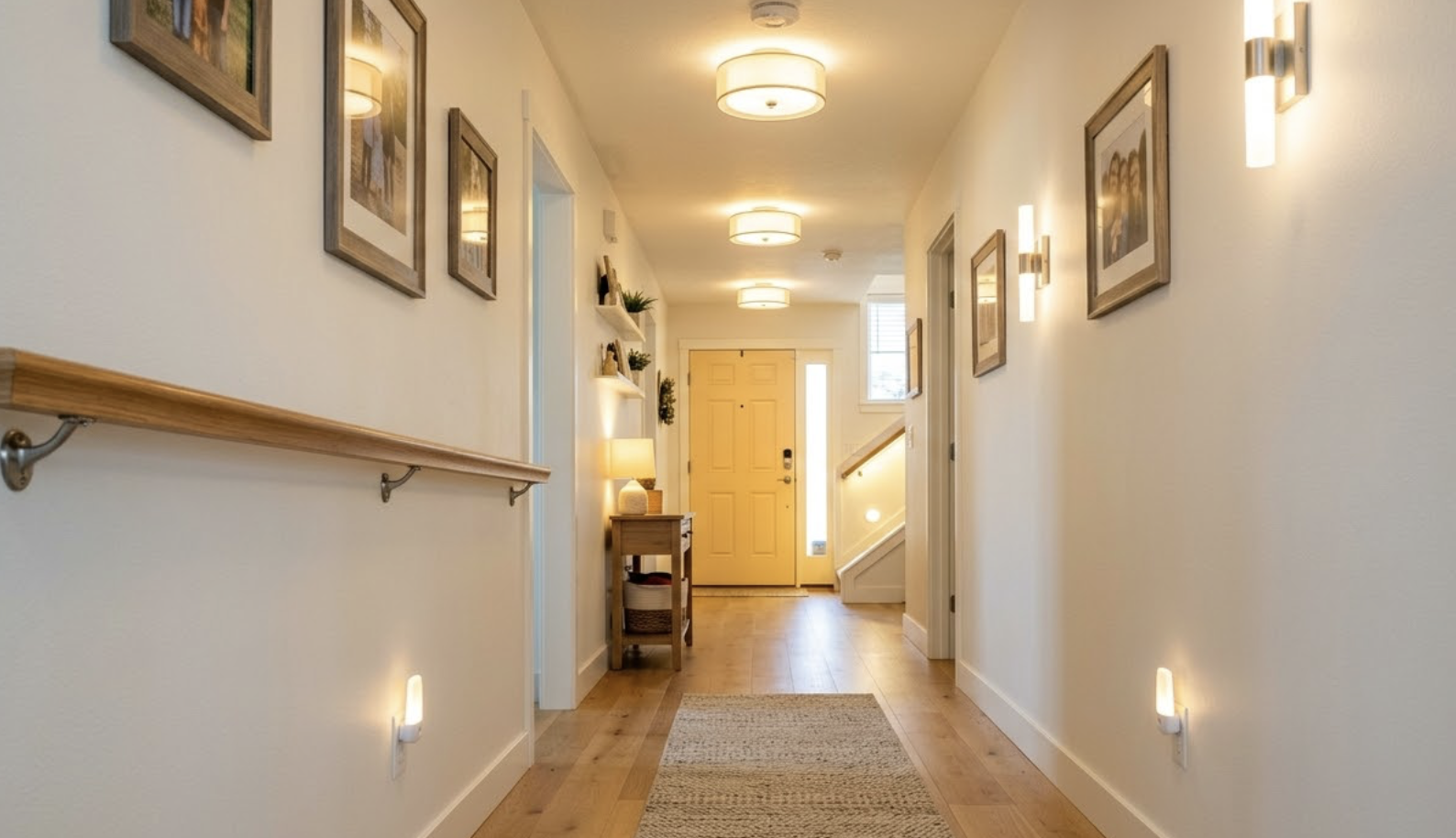
Small details in a home's layout, lighting and everyday pathways can become more important as needs change.
A home can work beautifully for decades and then, little by little, become harder to navigate.
Sometimes the first sign is small. Someone begins holding the railing more carefully on the stairs. A nighttime trip to the bathroom feels less comfortable than it used to. Carrying groceries from the car becomes more difficult. A step that was barely noticed for years suddenly requires more attention.
The house may not have changed at all. But the way someone experiences and moves through it can change over time.
Before real estate, I worked as a physical therapist. That experience still influences what I notice when I walk through a home today. I pay attention to stairs, entrances, bathrooms, lighting, walking paths and the ordinary routes people take through a house.
I am no longer practicing physical therapy, and I do not evaluate an individual's medical or mobility needs. Those questions belong with the appropriate healthcare professionals. But from a real estate and home-function standpoint, there are features worth noticing before they become larger concerns.
That matters whether you are hoping to remain in your home for many years, helping an aging parent think ahead, or considering whether another home might eventually make everyday life easier.
Why does home safety become more important as we age?
Falls are a significant concern for older adults. The CDC reports that falls are the leading cause of injury among adults age 65 and older, and more than 1 in 4 older adults report falling each year.
Fall risk is rarely about one feature of a house alone. Health conditions, medications, vision, strength, balance, footwear and environmental hazards can all play a role. The CDC specifically identifies home hazards such as uneven steps, throw rugs and clutter among the factors that can contribute to falls.
That is why I would not look at a house and declare it “safe” or “unsafe” for a particular person.
Instead, I think it is useful to ask a more practical question:
Where does this home require extra effort, balance, vision or attention during an ordinary day?
Here are seven places I would look.
1. Poor or uneven lighting

Dim hallways and uneven lighting are worth noticing when evaluating how a home may function over time.
Lighting is easy to overlook because we become accustomed to our own homes.
A hallway may seem adequately lit because you have walked through it thousands of times. You know where the step begins, where the furniture sits and how to reach the light switch.
But consider the house at night. Look at stair landings, hallways, entrances, bathrooms and the route from the bedroom to the bathroom. Are there dark stretches? Sudden changes between bright and dim spaces? Light switches that are difficult to reach before entering a room?
The CDC recommends making homes brighter with additional lighting or brighter bulbs as part of fall-prevention efforts.
This does not necessarily require a major renovation. Sometimes the first step is simply noticing where better lighting would make movement through the home easier.
2. Bathrooms without adequate support

Bathroom layout, shower thresholds and available support can affect how easily the space functions over time.
Bathrooms deserve particular attention because everyday activities there can involve stepping over thresholds, changing position, turning in a small space and moving across wet surfaces.
Look at how someone gets into and out of the shower or tub. Is there something sturdy to hold? Is the shower threshold high? Is the floor slippery when wet? Is there enough room to move comfortably around the toilet and vanity?
The CDC recommends grab bars inside and outside the tub or shower and next to the toilet as part of making a home safer from falls.
The right modification for a particular person should be determined with appropriate professionals when individual health or mobility needs are involved. From a home-planning perspective, however, the bathroom is an important room to evaluate before a problem forces the conversation.
3. Entry steps and thresholds
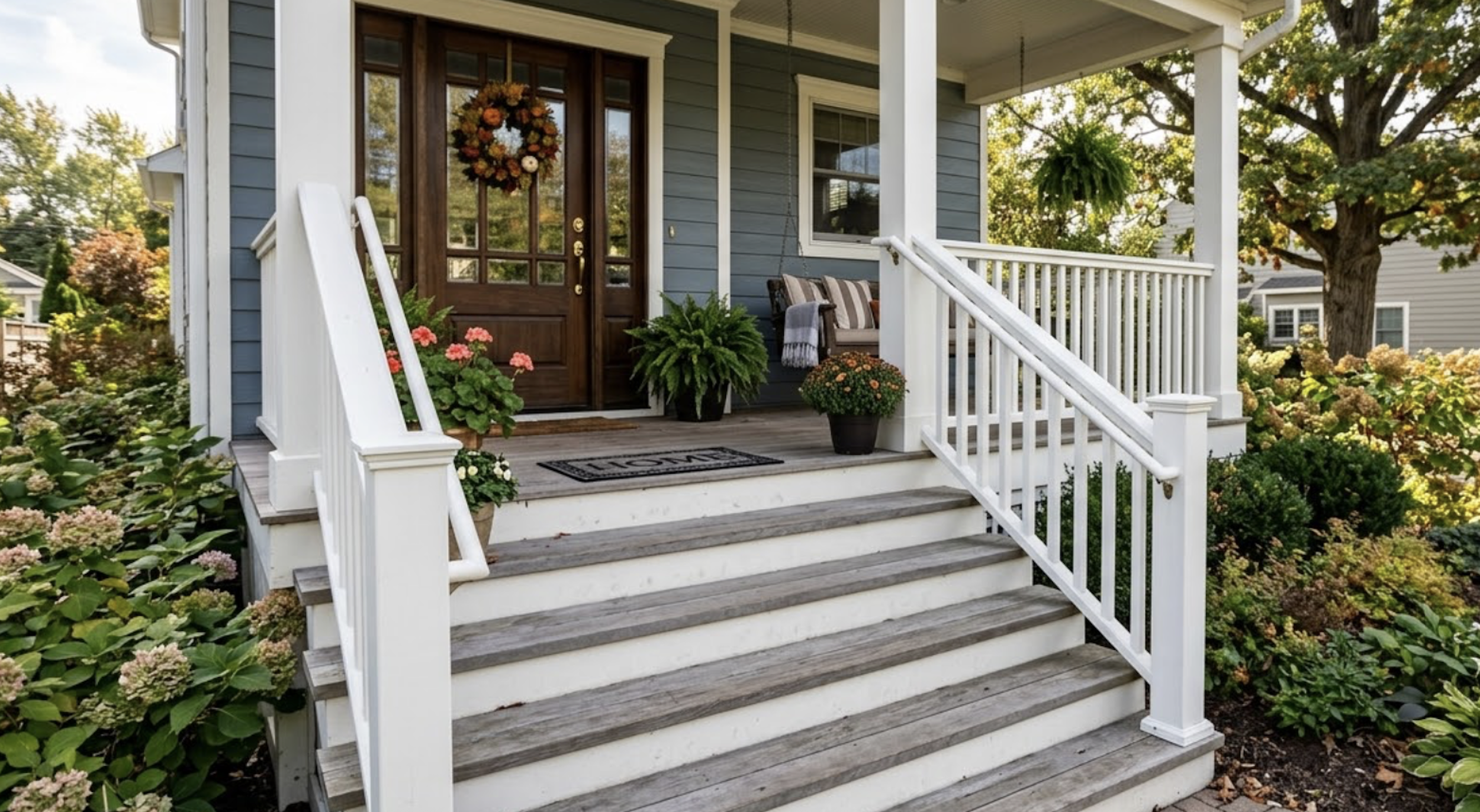
The everyday route into a home deserves attention, including steps, railings, lighting and changes in elevation.
People often think about the stairs inside a house and forget about the steps required simply to get through the front door.
Walk the route someone actually uses every day.
That may not be the front entrance at all. It could be two steps from the garage into the kitchen, a sloped walkway from the driveway, an uneven sidewalk or a back entrance used most often because that is where the car is parked.
Are there railings? Is the surface level? Is the area well lit? Are there awkward thresholds? What happens when someone is carrying groceries at the same time?
A house may have a first-floor bedroom and a beautiful walk-in shower and still require navigating several unsupported steps just to come home.
That is why I consider the everyday entrance part of the home's functional layout.
4. Staircases

Where stairs lead, how often they are needed and whether secure handrails are available all affect how a home functions.
Stairs are one of the most obvious features families think about when considering aging in place, but simply counting the number of stairs does not tell the whole story.
Where are they, and what do they connect?
If the primary bedroom is upstairs, how many times a day is that staircase necessary? Is the laundry in the basement? Are the stairs narrow or steep? Is there a landing? Are there secure handrails?
The CDC recommends handrails on both sides of staircases as one way to make a home safer.
It is also worth noticing behavior. If someone who once moved easily through the house has begun avoiding a level of the home or seems increasingly cautious on the stairs, that may be useful information to discuss with them and, when appropriate, their healthcare provider.
For a deeper look at how stairs and other structural features affect long-term livability, read What My Physical Therapy Career Taught Me About Home Design and Aging in Place.
5. Loose rugs, clutter and unstable walking surfaces

Throw rugs, clutter and changes between flooring surfaces can create trip hazards along everyday walking paths.
A beautiful rug may have been in the same place for twenty years. That does not mean it deserves a permanent exemption from scrutiny.
Look at curled edges, rugs that slide, electrical cords crossing pathways, clutter near furniture and transitions between different flooring materials. Also look at the places where someone has to maneuver around furniture rather than walking through a clear path.
Current CDC guidance specifically recommends removing trip hazards such as throw rugs and keeping floors free of clutter.
This is one of the reasons looking at the house with fresh eyes can be useful. Familiarity makes it surprisingly easy to stop seeing the obstacles we walk around every day.
6. Essential rooms on different levels

A home's layout matters differently when bedrooms, bathrooms, laundry and everyday living spaces require repeated trips between floors.
A two-story home is not automatically a poor choice as someone gets older.
The more useful question is what the stairs are required for.
If the bedroom and full bathroom are upstairs, laundry is in the basement and the kitchen is on the main floor, an ordinary day may require moving between several levels repeatedly.
Now compare that with a home where the bedroom, bathroom, kitchen and laundry can all be reached without stairs.
That difference can matter even to someone who is perfectly capable of using stairs today. It may also affect how adaptable the home would be after an injury, surgery or future change in mobility.
Sometimes a house has more flexibility than it first appears. A main-floor room may eventually serve another purpose, or laundry might be relocated during a future renovation. Other layouts are much harder or more expensive to change.
Understanding which situation you have is useful whether you decide to stay or move.
7. The route from the car into the house

The everyday route from the car into the house is an important part of how a home functions.
This is one of the areas I think homeowners can easily overlook.
Imagine arriving home with groceries in the rain.
Where do you park? How far do you walk? Is the surface level? Are there steps? Is the route covered? Is there somewhere to set down a bag while opening the door? Once inside, how far is it to the kitchen?
Now think about that same route if someone temporarily needed a walker after surgery or experienced a longer-term change in mobility.
The garage, driveway and entrance are not separate from the function of the home. They are part of the daily living environment.
When people are buying a home they hope to remain in for many years, I think this route deserves just as much attention as the kitchen countertops or bedroom sizes.
Does finding one of these features mean you need to move?
No.
Most homes have something that could work better.
The question is whether the features that create difficulty can reasonably be changed and whether making those changes would allow the home to continue supporting the way you want to live.
Lighting may be relatively simple to improve. A bathroom renovation may be possible. Lawn care or other maintenance can sometimes be delegated. A room may be able to serve a different purpose.
Other limitations are built much more deeply into the property. Moving laundry from a basement may be difficult. A steep lot cannot easily become level. A narrow staircase may be expensive or impossible to change. A home with essential rooms spread across several floors may simply require more daily effort than someone wants.
If you are thinking beyond individual safety features and want to understand the larger question of whether a home can adapt over time, read What My Physical Therapy Career Taught Me About Home Design and Aging in Place.
When should a family start considering another housing option?
You do not have to wait for a crisis to learn what other choices exist.
Sometimes families begin exploring alternatives because the current house has several limitations that would be difficult to change. In other cases, the home could be modified, but the homeowner no longer wants the maintenance, stairs or responsibility that comes with it.
There is also a difference between exploring and deciding.
Looking at ranch homes, patio homes, condominiums or other living arrangements does not commit anyone to moving. It gives the family something concrete to compare with the current home.
If you are helping a parent whose present home may no longer work well, I explain some of those choices in When Aging Parents Can't Safely Stay in Their Home: Options Louisville Families Often Face.
For the broader decision about aging in place, downsizing, selling a longtime home and coordinating a transition, visit Downsizing and Senior Transitions in Louisville, KY.
What should you do if you begin noticing concerns in a parent's home?
Start by observing before you start solving.
Which parts of the house seem to require more effort than they once did? Has your parent changed how they use the home? Are certain rooms or stairs being avoided? Are there maintenance responsibilities they no longer want?
Then talk with your parent rather than making decisions around them.
Individual concerns involving falls, balance, strength, vision, medications, mobility or other health issues should be discussed with the appropriate healthcare professionals. The CDC also recommends that older adults speak with their healthcare providers about fall risk, medication effects, vision and other factors that can contribute to falls.
The housing conversation can happen alongside that medical guidance.
If your family reaches the point where you are ready to organize the practical pieces of a possible move, my Louisville Downsizing Planning Checklist for Families Helping Aging Parents can help you work through the next steps without trying to solve everything at once.
Frequently Asked Questions About Home Safety and Aging in Place
What home features can increase fall risk for older adults?
Home hazards can include uneven or broken steps, throw rugs, clutter, poor lighting, stairs without adequate handrails and bathrooms without appropriate support. A person's overall fall risk can also be affected by factors such as balance, strength, vision, medications and health conditions.
What are some ways to make a home safer for aging in place?
Depending on the home and the person, changes may include improving lighting, removing trip hazards, installing bathroom grab bars and adding handrails to stairs. The CDC includes these among its recommendations for reducing fall risk at home. Individual needs should be discussed with appropriate healthcare and home-modification professionals.
Is a one-story home always better for an older adult?
Not necessarily. A one-story layout can reduce the need to use stairs, but the overall function of the home also matters. Entrances, bathrooms, parking, flooring, lighting, maintenance requirements and proximity to everyday needs can all affect how well a property works for someone.
Should an older homeowner modify the current house or move?
There is no single answer. Consider what would need to change, whether those changes are feasible, what the home will continue to require, what another property could offer and what the homeowner actually wants. Health and mobility questions should involve appropriate healthcare professionals.
When should families start talking about aging in place or downsizing?
Ideally, before a crisis makes the decision urgent. Starting earlier gives the homeowner and family time to understand the current house, explore alternatives, consider finances and decide what changes, if any, make sense.
A home should support the life happening inside it
Longtime homes carry history. They hold ordinary routines, celebrations, difficult seasons and years of memories.
That history matters. So does the way the home works today.
Sometimes a few thoughtful changes make staying in a beloved home easier. Sometimes looking carefully at the property helps someone recognize that another layout would better support the life they want now.
Neither conclusion should be assumed in advance.
The useful first step is simply to look at the home with fresh eyes and ask:
Is this house still working well for the way I want to live?
If you are beginning to think through that question for yourself or an aging parent in Louisville, you can contact me here. We can look at the real estate side of the decision, the current home and the housing alternatives without assuming that moving is the answer.
Because Your Move Deserves Care, Not Chaos.
How to Help Aging Parents Downsize Without Overwhelm in Louisville: A Practical Guide for Families
Helping aging parents downsize can feel emotional and overwhelming for families. This Louisville guide explains how to start the conversation, reduce stress, and plan the transition step by step.
Once a family begins considering downsizing for an aging parent, the number of decisions can grow quickly. There may be belongings to sort, a home to prepare, housing options to compare, family members to coordinate, and a move to plan.
Trying to solve all of those pieces at once is where the process can become overwhelming. A more manageable approach is to first understand what the next living situation needs to accomplish, then work through the practical decisions in a sensible order.
This guide walks through that process step by step, including where to begin, how to approach belongings, when outside help may be useful, and how to keep the real estate decisions from getting ahead of the family decisions.

Helping aging parents downsize often begins with a calm conversation about what the next stage of life should look like.
Not Sure Whether It’s Time to Downsize Yet?
If your family is still trying to determine whether a move is necessary, that decision deserves more attention before you begin planning the downsizing process. Changes in home maintenance, mobility, daily routines, safety, and how well the home still supports your parent can all be part of that conversation.
I cover those signs more fully in When Is It Time to Help a Parent Downsize in Louisville?
Why Downsizing Feels So Overwhelming for Families
Downsizing can feel overwhelming because several decisions often arrive at the same time. A family may be thinking about where a parent will live, what will happen to years of belongings, whether the current home needs work, and how a move and home sale will be coordinated.
There is an emotional side to those decisions, too. A longtime home can hold family history, familiar routines, and belongings with meaning that isn't obvious to anyone else.
The process becomes more manageable when families stop treating downsizing as one enormous project and begin working through the decisions in a practical order.
Start the Conversation Before Decisions Become Urgent
Families have more choices when there is time to explore them. If a health change or another unexpected event suddenly makes the current living situation difficult, decisions about housing, belongings, and the home may all need to happen much faster.
Beginning the conversation earlier does not mean a move has been decided. It simply gives your parent and the rest of the family time to understand the options before circumstances begin making the decisions for you.
Decide What the Next Home Needs to Make Easier
It can be tempting to begin with the closets, basement, or garage because the amount of stuff feels like the most obvious problem. But sorting belongings is much easier once there is some clarity about what the next living situation needs to accomplish.
Start with questions such as:
What parts of the current home have become harder to manage?
Are stairs, yard work, cleaning, or home maintenance becoming more difficult?
What would make everyday routines easier?
Is being closer to family, friends, activities, or other support important?
What features would make a future home easier to live in?
The answers help define what the family is working toward. Once you have a clearer picture of the next home, decisions about what to keep, what to move, and what to let go of often become easier.
Bring in Help Where It Actually Helps
A family does not have to personally handle every part of a downsizing transition. Depending on the situation, outside help might include an organizer, estate sale professional, donation resource, mover, contractor, or other local service provider.
The goal is not to build a large team around every move. It is to identify the parts of the process that are creating the most stress or taking more time and expertise than the family can reasonably manage.
As a REALTOR® and Seniors Real Estate Specialist (SRES®), part of my role is helping families think through the real estate side of the transition and, when needed, connecting them with resources for the other pieces surrounding the move.
A Step-by-Step Plan for Helping a Parent Downsize
Breaking the transition into smaller decisions can make a complicated move much easier to manage. The exact order will vary by family, but this is a practical place to begin. If it would help to have those decisions in one place, my Louisville Downsizing Planning Checklist for Families Helping Aging Parents gives you a practical framework you can save, print or share with other family members.
Step 1: Understand What Needs to Change
Start with the reason you are considering a move. Is the home becoming too difficult to maintain? Are stairs or other parts of the layout becoming harder to navigate? Would being closer to family or having less responsibility make everyday life easier?
You do not need every answer yet. You are simply identifying what a different living situation needs to improve.
Step 2: Explore Where Your Parent Might Live Next
Before making major decisions about belongings or preparing the current home for sale, get a clearer picture of the realistic housing options.
That could mean a smaller home, condo or patio home, an age-restricted community, independent living, assisted living, living with family, or remaining in the current home with appropriate changes and support.
My background as a physical therapist also shapes the way I look at housing during these transitions. I tend to notice how a home works in everyday life, including stairs, bathroom access, entrances, walking paths, and the amount of upkeep it requires. Sometimes the current home can continue to work with thoughtful changes and the right support. Other times, those same considerations can help a family identify features that would make another home easier to live in.
Knowing the likely destination also helps answer practical questions such as how much space will be available and what belongings can reasonably move with your parent.
Step 3: Make a Plan for the Belongings
Avoid trying to empty an entire house at once. Start with manageable categories or areas and separate items into what will move, go to family, be donated, be sold, or be discarded.
Meaningful belongings deserve time. Photographs, letters, heirlooms, and other personal items may involve stories and family decisions that cannot always be rushed.
Step 4: Determine What the Current Home Needs
Once you have a better idea of the timing and next destination, look at the current home separately.
Some homes may benefit from repairs, cleaning, decluttering, or other preparation before selling. In other situations, doing very little may make more sense. The right amount of preparation depends on the home, the local market, the family's priorities, and the time and money involved.
Step 5: Coordinate the Move and Home Sale
The move, home preparation, and sale often overlap, which is where good coordination becomes especially important.
Create a realistic sequence for movers, donations or estate-sale work, home preparation, listing the property, and closing. When outside professionals are needed, bring them in for the specific pieces they can take off the family's plate.
How Do You Start the Downsizing Conversation With a Parent?
Begin with questions rather than a conclusion that your parent needs to move. Ask what feels harder about the home than it used to, what is still working well, and whether there are things they wish were easier.
Listen before moving into solutions. A parent may be concerned about losing independence, leaving familiar routines, giving up belongings, or simply having decisions made for them. Understanding those concerns can help the family figure out what needs to be addressed before talking about specific housing choices.
If starting that conversation feels difficult, I go into it more deeply in How to Talk to a Parent About Moving Without Causing Conflict.
How Long Does Downsizing Usually Take?
There is no standard timeline for downsizing. Some families can make the transition fairly quickly, while others may need several months or longer. The timing depends on the amount of belongings to sort, the next housing choice, preparation needed at the current home, and how the move and home sale will be coordinated.
Starting before there is an urgent need gives families more room to work through those decisions at a pace that feels manageable.
What Is the Hardest Part of Helping a Parent Downsize?
For many families, the hardest part is making practical decisions while respecting the emotional meaning of the home and belongings. A house may represent decades of routines, memories, relationships, and independence, so decisions that look simple on a checklist may not feel simple to the person making them.
It can help to separate decisions that truly need to be made now from those that can wait. Not every belonging has to be sorted in one weekend, and not every question about the home has to be answered at the same time. Giving the process some room can make it easier for your parent to remain involved in the decisions that affect them.
It can also help to know where families tend to get stuck before you are in the middle of it. What Mistakes Do People Make When Downsizing in Louisville? covers some of the practical decisions that can create extra work, expense or stress during a move.
Frequently Asked Questions About Helping Aging Parents Downsize
When should families start discussing downsizing?
It can help to begin the conversation before a decision becomes urgent. Changes in how well the home supports everyday life, increasing maintenance demands, or difficulty with parts of the home may be reasons to start exploring options.
For a deeper look at the signs families often notice, see When Is It Time to Help a Parent Downsize in Louisville?
How long does the downsizing process usually take?
There is no standard timeline. Some families can make the transition fairly quickly, while others may need several months or longer. The timing depends on the belongings to sort, where the parent will live next, preparation needed at the current home, and how the move and home sale will be coordinated.
Do families have to handle downsizing alone?
No. Depending on what the family needs, outside help may include professional organizers, estate sale professionals, movers, donation resources, contractors, and real estate guidance. The goal is to bring in help for the parts of the transition that would otherwise create unnecessary stress or require specialized expertise.
What if siblings disagree about downsizing?
Start by identifying what each person is concerned about and what decisions actually need to be made. One sibling may be focused on safety, another on independence, and another on finances or the family home. Getting specific about those concerns can make the conversation more productive.
For families dealing with this situation, see What to Do When Siblings Disagree About Aging Parents: A Practical Guide for Louisville Families.
What should families do first when helping a parent downsize?
Start with the living situation rather than the belongings. Identify what has become difficult in the current home and what a better living situation would need to make easier. Once there is some clarity about the destination and the goal of the move, decisions about belongings, home preparation, and timing become easier to organize.
Related Louisville Senior Transition Resources
Every family reaches this decision from a different place. If you are still exploring whether the current home can continue to work, What My Physical Therapy Career Taught Me About Home Design and Aging in Place looks at home function and aging through the perspective of my years as a physical therapist.
If you're noticing changes but aren't sure whether they point toward a move, When Is It Time to Help a Parent Downsize in Louisville? covers the signs families often begin noticing and how to think about the decision before it becomes urgent.
When remaining in the current home no longer seems realistic, When Aging Parents Can’t Safely Stay in Their Home: Options Louisville Families Often Face walks through some of the housing paths families may need to consider.
A Final Thought for Families Navigating This Decision
Helping a parent downsize can involve far more than deciding where they will live next. There may be a home full of belongings, family opinions, financial considerations, repairs, movers, timelines, and emotions all competing for attention.
You do not have to solve all of it at once.
Start with what your parent needs from their living situation now and in the years ahead. From there, the belongings, the current home, and the logistics can be handled in a more thoughtful order.
If your family is trying to sort through those decisions in Louisville, I’m happy to be a starting point. As a REALTOR®, Seniors Real Estate Specialist (SRES®), and former physical therapist, I can help you think through the housing and real estate pieces, identify practical next steps, and connect you with additional resources when they are needed.
You can start with a conversation.
Because your move deserves care, not chaos.
When Is It Time to Help a Parent Downsize in Louisville?
When a parent’s home begins requiring more effort, maintenance or support, families may wonder whether it is time to discuss downsizing. Beth Green explains the signs to notice, how to begin without pressure and which options Louisville families can consider.
A thoughtful guide for families noticing that a parent’s home may no longer fit as well as it once did

Most families do not wake up one morning and suddenly decide it is time for a parent to move.
The question usually arrives more quietly. The yard is not being kept up the way it once was. A repair has gone untouched for months. Your parent has stopped using the upstairs rooms, or you notice that getting into the bathtub takes more effort. Perhaps nothing is clearly wrong, but each visit leaves you with a little more concern than the last.
That can be a difficult place to stand. You do not want to overreact or take away your parent’s independence. You also do not want to wait until a fall, illness or urgent repair makes the decision for everyone.
So how do you know when ordinary concern has become a reason to begin the conversation?
What are the signs that it may be time for a parent to downsize?
The short answer is that it may be time to discuss downsizing when the home is requiring more physical effort, money or ongoing help than your parent can comfortably manage, or when its layout begins interfering with safe daily life.
No single sign automatically means a move is necessary. What matters is the pattern: changes in mobility, maintenance, safety, isolation, finances or the amount of family support required to keep the household functioning.
The first step is not putting the house on the market. It is paying attention to what has changed and talking with your parent before the situation becomes urgent.
For a broader look at the decisions families may face, including aging in place, housing options, timing, belongings, and coordinating a move, see my Louisville Senior Downsizing and Transition Guide.
Look at how your parent is living, not simply how the house looks
An adult child may walk into a parent’s home and immediately notice worn carpet, an overgrown yard or a room full of belongings. Those things may need attention, but they do not tell the whole story.
A more useful question is: How well is this home supporting daily life now?
Consider what happens during an ordinary week. Is your parent able to prepare meals, manage laundry, reach the rooms they need and enter and leave the home comfortably? Are they avoiding the basement, second floor or shower? Have simple household tasks begun taking more energy than they used to?
Sometimes the house remains safe and manageable even if it looks dated. In another home, everything may appear tidy while the person living there is quietly changing routines to avoid stairs, difficult bathrooms or long walks between important rooms.
That distinction matters. Downsizing should not begin because someone else thinks the house is too large or old-fashioned. It should begin as a conversation when the home itself is making everyday life harder.
Maintenance is becoming more than an inconvenience
Home maintenance can be one of the first visible signs that something has shifted. You may notice:
Repairs being delayed because arranging them feels difficult
Lawn care, snow removal or exterior upkeep becoming unreliable
Unopened mail or household paperwork accumulating
Rooms being closed off because cleaning the whole house is too demanding
Utilities, taxes, insurance or routine bills becoming harder to organize
Family members spending increasing amounts of time keeping the property functioning
One unfinished repair is not proof that someone should move. Many homeowners postpone projects at every age. The concern grows when deferred maintenance becomes a pattern, creates a safety or financial risk, or depends on relatives repeatedly stepping in.
It is also worth separating the condition of the house from your parent’s ability to manage it. A reliable lawn service, housekeeper, handyman or family schedule may make remaining at home realistic for years. If those supports are unavailable, unaffordable or no longer enough, a lower-maintenance home may deserve consideration.
The layout is beginning to limit daily life
Before real estate, I spent many years working as a physical therapist. That experience still shapes the way I look at homes. I notice the step at the entrance, the route from the bedroom to the bathroom, the lighting on the stairs and whether daily living can happen on one level.
The important question is not whether a home contains stairs or an older bathroom. It is whether those features are changing how your parent lives.
Watch for signs such as:
Sleeping in a chair or another room to avoid stairs
Holding onto furniture or walls while walking
Difficulty stepping into the bathtub or shower
Avoiding laundry because it is on another floor
Trouble carrying groceries into the house
Poor lighting along hallways, entrances or stairs
A new reluctance to leave home because entering and exiting feels difficult
The CDC’s guidance on preventing falls recommends practical home measures such as removing trip hazards, improving lighting, installing grab bars and adding railings on both sides of stairs. Those changes can make a meaningful difference. A physician, physical therapist, occupational therapist or other qualified health professional can help evaluate personal mobility and safety needs.
Some homes can continue working well with thoughtful modifications and outside support. Others have structural limitations that are difficult or expensive to change. My article about how home design affects aging in place explains why layout, lighting, bathrooms and entry steps often matter more over time than families initially expect.
The home is contributing to isolation
Safety is not only about falls or physical access. A home can become isolating when it is far from family, friends, medical care or the places that make daily life feel connected.
Perhaps your parent no longer drives at night, avoids bad weather or has stopped attending activities because transportation has become complicated. Maybe a spouse has died and the house now feels too quiet. The property may still be physically manageable, but life within it has narrowed.
A move does not automatically solve loneliness, and remaining in a familiar neighborhood may provide valuable connection. The question is whether the current location supports the relationships, routines and services your parent needs now.
This is one reason the next home should not be chosen by square footage alone. A smaller property that creates more driving and less connection may not improve daily life. A patio home, condominium, apartment, independent-living community or home near family could each offer something different. The right fit depends on how your parent wants to live, not simply how much space they want to maintain.
Your parent has begun talking about change
Sometimes parents open the door themselves, but the comment is easy to miss.
They may say the house feels like too much work, wonder aloud what their home is worth or mention a friend who moved into a patio home. They may ask what you would want from the house someday or say they would like to live closer to family.
These comments are not always a request to list the property. Often they are a way of testing whether the subject is safe to discuss.
Instead of answering with a complete moving plan, stay curious. Ask what has started feeling different. Ask what they would miss most and what they would be relieved to leave behind. Ask what they would want life to feel like if the house required less of them.
A conversation can remain a conversation. Exploring options does not obligate anyone to move.
How do you start the downsizing conversation without creating conflict?
Begin with what you have observed, not with the conclusion you have reached.
“I noticed the stairs seemed harder for you this weekend. How have they been feeling lately?” will usually lead to a better conversation than “You cannot keep living here.”
You might ask:
What parts of the house are easiest for you right now?
What has become more tiring or frustrating?
Is there anything you have stopped doing because the house makes it difficult?
What kind of help would make staying here easier?
If you ever did move, what would matter most about the next place?
Then listen. Your parent may be protecting independence, privacy, memories, familiar routines or the feeling of still being in control of their own life. Those concerns do not disappear because the family has identified a practical problem.
If several siblings are involved, agree on the purpose of the first conversation before anyone begins it. A group arriving with a fully formed plan can feel less like support and more like an intervention. One trusted person may be better positioned to begin, with the rest of the family included as the discussion develops.

What options should families consider before deciding to move?
The early conversation should consider more than one path.
Stay in the current home with changes
The home may continue to work with repairs, improved lighting, bathroom modifications, railings, a first-floor living arrangement, household help or transportation support. The National Institute on Aging’s aging-in-place resources discuss the services and planning that can help older adults remain at home.
Move to a smaller or lower-maintenance home
A one-level house, patio home or condominium may reduce upkeep while allowing your parent to retain a familiar style of independent living. The financial picture, association responsibilities, accessibility and proximity to support should all be considered.
Move closer to family
For some people, the most important change is location rather than property type. That might mean moving into a separate home nearby, joining a family household or relocating to another state. The belongings, timing and sale of the current home may need to be coordinated around a longer-distance move.
Consider independent or assisted living
Some families need more built-in community, meals, transportation or personal support than a traditional home provides. Senior living communities vary considerably in services, costs and levels of care. Families should evaluate those choices with the appropriate health, financial and legal professionals.
My Louisville Senior Downsizing and Transition Guide provides a broader look at these housing paths and the practical work that may accompany a move.
What if your parent is not ready?
Unless there is an immediate safety or capacity concern requiring professional intervention, the first conversation does not need to produce a decision.
It may take time for your parent to consider what life could look like elsewhere. They may need to visit a few communities, look at a smaller home, understand what their present house might be worth or learn what modifications would cost before they can compare the choices realistically.
You can still make useful progress without packing a box. Gather information. Identify maintenance that cannot wait. Talk with appropriate health professionals about safety concerns. Learn about housing options. Discuss legal and financial planning with qualified advisers.
Giving your parent reliable information about the choices can make the situation feel more manageable and allow them to participate meaningfully in the decision.
What if a health event has made the decision urgent?
A fall, hospitalization or sudden change in mobility can compress a conversation that should have taken months into a matter of days. In that situation, separate the immediate decision from the permanent one whenever possible.
The first question may be where your parent can live safely after discharge, not whether the house should be sold. Medical and care professionals should guide decisions involving health, supervision and functional ability. An elder-law attorney, financial adviser or other qualified professional may also be needed, depending on authority, finances and long-term-care considerations.
The real estate decision can then be coordinated around that guidance. If remaining at home is no longer realistic, my article about housing options when an aging parent cannot safely stay at home explains several paths Louisville families often consider.
What happens to the house and all the belongings?
Figuring out what to do with a lifetime of belongings can be one of the hardest parts of a possible move. At the same time, the family may be coordinating repairs, donations, an estate sale, movers, a new residence, and the eventual sale of the home. Trying to solve all of that at once can quickly become overwhelming.
Begin with what the next home can hold and what your parent most wants to keep. Important documents, medications, personal records, photographs, jewelry and irreplaceable items deserve early attention. The remaining belongings can later be considered for family distribution, sale, donation or removal.
Bring in an experienced REALTOR® before automatically emptying or renovating the house. An early property evaluation can help the family understand what preparation may be worthwhile, whether an estate sale could make sense and how the property fits into the current Louisville market.
If the homeowner has died and the property is part of an estate, the order changes. Legal authority and ownership should be clarified before belongings are distributed or real estate documents are signed. My guide to selling an inherited house in Louisville explains those first steps in more detail.
Frequently asked questions about helping a parent downsize
What is the first step when helping a parent downsize?
Begin by asking what has become harder about living in the current home. Do not start with packing or a demand to move. Understanding the concern helps the family determine whether the next step is a home modification, additional support, further evaluation or exploring a different place to live.
How do you know whether a parent should age in place or move?
Compare the parent’s mobility, safety, maintenance needs, finances, social connections and available support with what the current home requires. Aging in place may work well with appropriate changes and services. Moving may be more practical when the home’s layout, location or upkeep continues to limit daily life.
Should the family start clearing the house before a decision is made?
Usually not. Small, voluntary sorting projects may be helpful, but clearing the entire home before the destination, timing and property plan are understood can create unnecessary stress. If a sale is possible, have the property evaluated before removing everything or beginning major work.
What if siblings disagree about whether a parent should move?
Return to observable facts: how the parent is functioning, what the home requires, what support is available and what the parent wants. Separate health, legal, financial and real estate questions so each can be addressed by the appropriate person. When disagreements involve capacity or legal authority, seek qualified legal guidance.
How long does downsizing usually take?
There is no standard timeline. A planned move may unfold over several months, while a health event can create urgency. The process generally includes evaluating options, choosing the next living arrangement, sorting belongings, preparing the current home and coordinating the move and sale.
When should we call a REALTOR®?
Call before the home is emptied or expensive improvements begin. The purpose of an early conversation is not to pressure anyone to list. It is to understand the property, likely value, preparation choices and realistic timing so the family can make decisions with better information.
You do not need a final decision to begin
If you are concerned that a parent’s home may no longer be working as well for them, you do not need to arrive with a moving date or a complete solution. Begin with a conversation about what has changed, what is still working well, and what has become more difficult.
Sometimes the answer will be a safer way to remain at home. Sometimes it will be a smaller property, a move closer to family or a living environment with more support. Often the family will need time and more information before the right direction becomes clear.
If your family has reached the point where you are ready to start organizing those decisions, my Louisville Downsizing Planning Checklist for Families Helping Aging Parents gives you a practical place to begin without trying to solve the entire move at once.
As a former physical therapist, a Seniors Real Estate Specialist® and a Louisville REALTOR®, I help families look at both the person and the property. We can talk through what the home requires, what choices may be available and which questions belong with other qualified professionals before anyone is asked to make a final decision.
Because your move deserves care, not chaos.
This article provides general real estate information and is not medical, legal, financial or tax advice. Health and safety concerns should be discussed with appropriately qualified healthcare professionals. Legal and financial questions should be directed to qualified advisers familiar with the family’s circumstances.
What My Physical Therapy Career Taught Me About Home Design and Aging in Place
What makes a home work well for the long term? Beth Green shares how her background in physical therapy shapes the way she notices stairs, bathrooms, entrances, lighting, adaptability and the everyday routes people take through a home.
A Louisville Realtor and former Physical Therapist explains how home design quietly affects safety, mobility, and aging in place.

Years before I became a Louisville REALTOR®, I worked as a physical therapist. I don’t practice physical therapy today, but that experience has never really left the way I look at a home.
When I walk through a house, I notice the things any buyer notices: the kitchen, condition, room sizes, natural light and how the house feels. At the same time, I find myself noticing other things almost automatically. How many steps are there from the garage into the house? Where is the laundry? How do you get from the bedroom to the bathroom? Is there enough room beside the car in the garage to open the door fully? Could that bathroom doorway be widened someday? If stairs became difficult, could most of daily life happen on one floor?
Those questions come from years of watching people move through their environments, and they are also useful real estate questions, especially for someone who hopes to stay in a home for a long time.
A home does not have to be fully accessible today to be a good long-term choice. I want to understand how well it functions now, what could reasonably be adapted later, and whether the things that are difficult to change are likely to become a problem.
That is a much bigger picture than simply looking for a ranch.
What Does Aging in Place Mean When You’re Looking at the Home?
Aging in place generally means being able to remain in your own home and community as you get older. Whether that works well depends on the person, the house and the support available. Health, finances, transportation, family, services and personal preference may all become part of the decision.
The home itself deserves a close look because sometimes it is the house creating the difficulty, and sometimes it isn’t. If yard work has become too much, hiring someone to maintain the yard may solve the problem. If driving has become difficult, transportation may be the bigger issue. If the only bedroom and full bathroom are upstairs and stairs have become increasingly difficult, the structure of the home may play a much larger role.
So when someone tells me they want to stay in their home, I don’t immediately start thinking about moving. I want to know what is making it harder to stay. Once we understand that, we have a much better idea of what kinds of solutions are worth exploring.
If You’re Buying a Home, Think About Accessibility Before You Need It
This is something I wish more buyers considered. Most of us naturally buy for the life we are living right now, but if you are hoping your next home will be the place you stay for many years, it makes sense to think about how that house could work if your needs changed.
You don’t have to search for a perfectly accessible home. In fact, you may pass over some very good houses if you do. I would rather look at adaptability.
A home may not seem exactly right at first glance, but perhaps the location is excellent and the basic layout gives us something to work with. A bathroom doorway may be narrower than you would want for someone using a wheelchair or another assistive device, but the surrounding wall may allow that opening to be widened during a future renovation. Another house may have a gorgeous new bathroom that would be extremely difficult to alter because of its size or configuration.
This is why I don’t want buyers looking only at what a house is today. Sometimes we need to consider what it could reasonably become. If the location and bones of the house are good, a property with a few workable limitations may offer better long-term possibilities than one that looks perfect on the surface but gives you very little flexibility.
Accessibility Actually Starts at the Car
This is one of those details people often don’t think about until they have a reason to. A garage may be advertised as a two-car garage, but what happens after two cars are actually parked in it?
Can you open the vehicle doors fully? Is there enough space beside the car for someone who needs more room getting in and out? What if that person uses a walker, wheelchair or another assistive device? Then look at what happens next. How do you get from the car into the house? Are there steps? Is there a railing? Is there room to maneuver around the entrance? Where could equipment be stored? If you are carrying groceries, what does that trip into the kitchen look like?
The same thinking applies when there isn’t a garage. I look at the driveway or parking area, walkway and entrance together.
My physical therapy background makes me notice this very quickly because moving around a home begins before you are standing in the living room. You have to arrive, get out of the vehicle, reach the house, enter it and then move through the spaces you use every day. When those pieces work together, a home can be much easier to live in.
How Much Do Stairs Really Matter?
Stairs deserve attention, but I don’t automatically see them as a reason to rule out a house. Louisville has wonderful two-story homes, homes with basements and older houses where stairs are simply part of the architecture.
What matters more to me is what you have to use the stairs for.
If every bedroom is upstairs, laundry is in the basement and there is no full bathroom on the main floor, everyday life depends heavily on moving between levels. Compare that with another two-story house that has a first-floor office or flex room, a full bathroom nearby and laundry on the main level. That house may offer considerably more flexibility even though the listing still says “two story.”
I look for possibilities like that when long-term livability matters to a buyer. Could a room be used differently later? Could laundry move to another area? If stairs became difficult for a period of time, could the household still function? Those questions tell me more than the architectural label attached to the house.
Don’t Assume a Room Has to Keep the Same Purpose Forever
Floor plans aren’t as fixed as we sometimes treat them. A room being used as an office today may not always need to be an office, and a formal dining room may have possibilities that aren’t obvious when there is a dining table sitting in the middle of it.
If there is a first-floor room near a full bathroom, for example, I may wonder whether that space gives the homeowner some flexibility later. Not every room can simply be converted to another use, of course, and renovations or changes need to be evaluated properly. But when I’m helping someone think long term, I don’t want today’s furniture to keep us from seeing tomorrow’s possibilities.
Bathrooms Are About Much More Than the Finishes
Bathrooms are one of the first places my physical therapy background tends to show up. Most buyers walk in and notice whether the bathroom has been updated. They see the tile, vanity, countertops and fixtures. I’m looking at those things too, but I’m also looking at the doorway.
How much room is there to enter? How do you get into the shower? Is there a tub wall to step over? How tight is the space around the toilet? Could the room potentially accommodate changes later?
A narrow doorway is a good example of why I don’t like dismissing a house too quickly. Depending on the wall and surrounding layout, widening that opening may be something a qualified contractor could address during a future renovation. That could make the bathroom much more usable for someone using a wheelchair, walker or other assistive equipment.
In another house, the bathroom may be so small or the surrounding structure so limiting that meaningful changes would be far more involved. You can’t tell the whole story by looking at whether the bathroom is pretty.
Some Changes May Be Fairly Simple. Others Need a Professional.
People sometimes hear “aging in place” or “accessibility” and immediately picture a major renovation. Depending on the home and the person, however, there may be smaller changes worth considering before getting anywhere near a major remodel.
Lighting is one example. In some situations, hardware, flooring transitions, railings or the way a particular space is arranged may also deserve attention. Other changes are more involved and need a qualified vendor. A doorway may need to be widened, a bathroom reconfigured or an entrance altered.
There are also situations where a home modification or piece of equipment relates directly to someone’s mobility, physical abilities or health. That is where an appropriate healthcare professional needs to be part of the discussion.
Because of my physical therapy background, I have quite a bit of familiarity with assistive and adaptive equipment and with the kinds of home modifications families may encounter. Over the years, I have also developed contacts and resources I can turn to when someone needs specialized help.
In my role as a REALTOR®, I’m not prescribing equipment or determining what modification is medically appropriate for someone. I can help clients notice things they may not have considered, ask better questions about how a property could function, and connect them with qualified professionals and vendors when we need another level of expertise. For a family already juggling several decisions, simply knowing who to call next can make the process much easier.
If You’re Renovating Anyway, Look a Little Further Ahead
I don’t think people need to remodel their homes today around every possible thing that could happen 15 years from now. But if you are already renovating, it makes sense to think ahead.
Suppose you’re completely redoing a bathroom. Before putting everything back exactly where it was, it may be worth asking whether a different layout would give you more usable space. If a doorway is already being changed, could its width matter later? If you’re redesigning part of the first floor, could the new plan give the house more flexibility?
You may decide not to make any additional changes at all. The value is in asking while you still have options, particularly when walls are already open and money is already being spent on the space.
Kitchens and Laundry Rooms Tell You a Lot About Daily Life
Kitchens receive a lot of attention in real estate, usually because people care about finishes, storage and entertaining. I also think about the work that happens there every day.
Where are the things you use most often? How much reaching or bending is involved? Is there enough room to move comfortably when an appliance or cabinet door is open? How far do groceries have to travel from the car to the kitchen?
Laundry is another good example. A basement laundry room may be perfectly fine for someone today, but doing laundry isn’t just standing at the washer. It means carrying clothes to the machine and bringing them back again. If that requires a flight of stairs every single time, it is worth noticing.
These aren’t necessarily reasons to reject a house. They are simply part of understanding how the house functions in real life.
Sometimes the Route Between Rooms Matters More Than the Rooms
One of the things I learned as a physical therapist was to pay attention to the whole activity rather than one isolated moment. That carries over into how I look at homes.
Think about getting up in the middle of the night and walking from the bedroom to the bathroom. Think about bringing groceries in from the car, taking laundry from the bedroom to the washer, or getting outside to pick up the mail or take out the trash.
When we’re healthy and moving easily, we rarely think about these routines. We just do them. A change in mobility can make you see the same house very differently.
That is why sometimes a smaller, less impressive house can function beautifully, while a larger home with gorgeous individual rooms may ask much more of the person living there.
Lighting Is Easy to Overlook
Lighting tends to fade into the background until it isn’t adequate. I pay particular attention to entrances, stairs, hallways, bathrooms and the route between a bedroom and bathroom.
Natural light is wonderful during the day, but it doesn’t help much when someone gets up during the night. Fortunately, lighting is also one of the features that may be relatively manageable to improve. Depending on the home, additional fixtures, better placement, improved switches or other changes may be worth considering.
This is a good example of why it helps to separate the things that may be fairly easy to change from the characteristics that are built into the house.
What Can Be Changed, and What Is Built Into the House?
This may be one of the most useful questions to ask when thinking about long-term livability.
Paint can change. Lighting can often change. Flooring can change. Bathrooms may be remodeled. A doorway may sometimes be widened, and an existing room may be able to serve another purpose.
Other things are harder. Moving a second-floor primary bedroom downstairs requires space the house may simply not have. Eliminating a steep staircase may not be realistic. Changing the slope of a lot is a very different undertaking from changing a light fixture.
There is also a large middle ground where something may be possible but needs to be evaluated by a qualified contractor or other professional.
I don’t expect a house to anticipate every possible future need. What I want to understand is how many reasonable options the property gives us.
Is a Ranch Always Better for Aging in Place?
No. A ranch can be a very good option because it reduces the need for interior stairs, but I would never assume a home works well for long-term living simply because it is one level.
I have seen one-level homes with difficult entrances, awkward bathrooms, inconvenient laundry arrangements and large properties that require a tremendous amount of upkeep. At the same time, a two-story home may have an easy entrance, a full bathroom on the first floor and enough flexible space that most daily living could happen downstairs if needed.
This is another reason I look at the entire property rather than one feature.
The Yard and Exterior Are Part of the House Too
Sometimes the interior of the home is working just fine. The property surrounding it is what has become difficult.
How much grass has to be cut? Is the driveway steep? Are there exterior steps? Is there a long walk to the mailbox? Who handles snow removal? What about gutters, landscaping and all the other maintenance that comes with owning the property?
A homeowner may still love the house while being completely tired of taking care of everything around it. Before deciding that means moving, it may be worth looking at what could be outsourced. Lawn services, snow removal, handyman help and other resources may take enough responsibility off the homeowner to make staying more manageable.
For some people, that makes a meaningful difference.
Location Matters More Than People Sometimes Realize
This is an area where my real estate experience becomes just as important as my physical therapy background. You can renovate a bathroom, but you can’t move the house to another part of Louisville.
When someone is buying for the long term, I want them to think about location in practical terms. How far are the places you regularly go? Where are the people who would realistically help you if you needed something? How dependent is your everyday routine on driving? Would the location still work if driving became more difficult someday?
Those answers will be different for everyone. Someone may want to be close to family. Someone else may care more about convenient access to the places they visit regularly. Another person may value a particular community or familiar area enough that it outweighs other considerations.
Location belongs in the long-term picture because it is one of the few things about a home you truly cannot change.
What Should You Look for When Buying a Home for the Long Term?
If you hope your next home will serve you for many years, I would look at more than bedrooms, updates and square footage. Some of the questions I think are worth asking are:
How do we get from the car into the house?
Is there enough room around the vehicle to get in and out comfortably?
How many steps are required at the entrances?
Could the main parts of daily life happen on one level if necessary?
Is there a full bathroom on the main floor?
Is there a first-floor room that could potentially serve another purpose?
Where is the laundry?
What does the route from the bedroom to the bathroom look like?
How do you get into the shower or bathtub?
Are entrances, stairs and important walkways well lit?
Are there narrow spaces that could become difficult with assistive equipment?
Which features could reasonably be modified?
Which limitations are part of the basic structure?
How much exterior maintenance comes with the property?
Does the location still make sense if life changes?
I don’t expect a house to get a perfect score on every question. I want buyers to understand what they’re buying, where the flexibility is and where it isn’t. That gives them better information for deciding what matters to them.
Try Walking Through Your Own Home With Fresh Eyes
If you’re wondering how well your current home might work over time, try starting where you normally park. Get out of the car and walk into the house the way you usually do. Notice how much room there is around the vehicle, then pay attention to the entrance, the steps, the lighting and what it is like to open the door while carrying something.
Once you are inside, go through an ordinary day. Walk from your bedroom to the bathroom. Go to the kitchen. Take something to the laundry room. Imagine bringing in several bags of groceries. Walk outside to where you take the trash or get the mail.
You may begin noticing things you have walked past for years.
Ask yourself which parts of the house make daily life easier, which require more effort than you usually notice, and what would become difficult first if your mobility changed, even temporarily. You don’t need to make a decision after that walk. Sometimes simply seeing the house differently gives you a better place to begin.
A Temporary Change Can Tell You a Lot About a Home
People don’t always start thinking about accessibility because they are getting older. Sometimes surgery, an injury or another temporary mobility change suddenly makes someone aware of how their house works.
The stairs that barely registered before become a major part of the day. The bathroom seems smaller. Getting groceries from the car to the kitchen takes more effort.
That experience doesn’t necessarily mean the house is wrong for the person. It may show where the limitations are and where adaptations could be useful if circumstances changed again later.
Questions about an individual’s health, mobility or specific safety needs belong with the appropriate healthcare professional. From a housing standpoint, though, these experiences can teach us quite a bit about the property.
What If Someone Wants to Stay in Their Home?
Then I think we should take that seriously.
For many people, the house is much more than a structure. It may be where they raised their children, know their neighbors, celebrated holidays and built decades of memories. Before assuming that moving is the solution, I want to understand what is actually making staying difficult.
There may be more possibilities than the family realizes. Home modifications are one possibility, and equipment may be another. Outside services can also make a tremendous difference for some older adults.
Depending on someone’s circumstances and what is available locally, families may explore help with lawn care, home maintenance, housekeeping, transportation, meals, personal care, home health services or other day-to-day needs. Those services don’t make every home appropriate for every person, and health or personal-care decisions need to involve the professionals qualified to address them.
Still, a homeowner who needs help maintaining the yard is facing a very different situation from someone whose home itself has become extremely difficult to navigate. Understanding what is actually causing the problem helps families explore the right options.
If you are starting to wonder whether a parent’s home still works as well as it once did, When Is It Time to Help a Parent Downsize in Louisville? goes more deeply into the early signs families often notice.
How Do You Decide Between Adapting the Home and Moving?
There isn’t one formula I would use for every family. I would start with the reasons the current home has become difficult and separate the issues that may have reasonable solutions from those that are much harder to overcome.
If the homeowner loves the location, has support nearby and the biggest problems can realistically be addressed, adapting the current house may deserve serious consideration. If the basic layout remains difficult even after possible renovations, the property requires more upkeep than the homeowner wants, or the location itself has become part of the problem, it may be useful to see what other housing choices look like.
Cost matters, but so does disruption. Renovating can be disruptive, and moving brings an entirely different kind of disruption. There is also an emotional side that shouldn’t be dismissed simply because it doesn’t fit neatly on a spreadsheet. Leaving a home after 30 or 40 years can be a very big decision.
Families deserve enough information to compare their choices without being rushed toward one of them.
What If the Current Home Really Doesn’t Work Anymore?
There are times when a family explores modifications, services and support and still concludes that the home is no longer a good fit. At that point, it helps to understand the choices before making assumptions about where someone should go next.
A smaller house may be one possibility. A patio home or condominium may be another. Some people want to live closer to family, while others begin exploring independent living or settings that offer more support.
I’ve gone through those choices more fully in When Aging Parents Can’t Safely Stay in Their Home: Options Louisville Families Often Face.
If your family is at the beginning of the process and needs the larger picture, my Downsizing & Senior Transitions in Louisville, KY guide brings together the housing, planning and transition questions in one place.
Frequently Asked Questions About Home Design and Aging in Place
What should I look for when buying a home for aging in place?
Look at how the entire property functions. Consider the path from the car into the house, necessary stair use, bedroom and bathroom locations, laundry, bathroom configuration, lighting, exterior maintenance and whether important areas could reasonably be modified later.
A home doesn’t have to be fully accessible today to offer good long-term possibilities. Its adaptability can be just as important as the features already there.
Is a ranch always the best home for aging in place?
No. One-level living can be helpful, but entrances, bathrooms, laundry, garage access, property maintenance and the overall layout still matter. Some multi-level homes also have enough first-floor living space to provide considerable flexibility.
Can an existing home be modified to make it more accessible?
Many homes can be modified to some degree. Some improvements may be fairly straightforward, while others require significant renovation. The structure of the house and the needs of the individual determine what is practical.
When a modification or piece of equipment is being considered for a person’s specific health or mobility needs, an appropriate healthcare professional and qualified vendor should be involved.
Should I think about accessibility even if I don’t need it now?
If you hope to stay in a home for many years, it is worth considering how adaptable the property is. You don’t need to plan for every possible future circumstance. Knowing which parts of the house could reasonably change and which could not can help you make a more informed purchase.
Can services help an older adult stay at home longer?
For some people, they can. Depending on the person’s needs and the services available, help with transportation, meals, housekeeping, home maintenance, lawn care, personal care or home health may make remaining at home more manageable.
The appropriate services vary from person to person, and medical or personal-care needs should be discussed with qualified professionals.
How do I know whether it makes more sense to modify the house or move?
Start with what is making the current home difficult. Then look at whether those problems could reasonably be addressed through modifications, equipment, outside services or additional support. If the home’s structure, maintenance demands or location would continue to create significant difficulties, comparing other housing options may be worthwhile.
Why My Physical Therapy Background Still Matters in Real Estate
After years in real estate, I understand how important price, condition, location and resale are when someone is evaluating a house. I just happen to bring another set of eyes with me.
I notice whether there is enough room beside the car and the step everyone else walks over without thinking. I notice the narrow bathroom doorway and wonder what is on the other side of that wall. I notice the basement laundry, the first-floor room that might give a homeowner options later, and sometimes I notice that a house a buyer was ready to dismiss actually has very good bones and a few problems that may have workable solutions.
I’m not there to turn every showing into an accessibility evaluation, and I’m not practicing physical therapy when I work with my real estate clients. Those years did teach me to pay attention to how people actually live in a space, and I still do that.
For a buyer, that perspective can help us look beyond today’s floor plan and consider whether a home has room to adapt. For an older homeowner, it can help us identify the specific things that have become difficult before assuming a move is necessary. And for a family helping a parent, it can give us a much better place to begin the conversation.
Sometimes the question really is whether it is time to move. Other times, the more useful question is, “What would make this home work better?”
If you are thinking about your own home, helping a parent consider their options, or buying a Louisville home with long-term livability in mind, you are welcome to contact me.
Because Your Move Deserves Care, Not Chaos.
This article provides general real estate information and is not medical, legal, financial or tax advice. Individual health, mobility, accessibility and safety needs should be evaluated by appropriately qualified professionals.
When Aging Parents Can’t Safely Stay in Their Home: Options Louisville Families Often Face
When an aging parent's current home may no longer work well, what comes next? Explore Louisville housing options and the questions that can help families compare staying, downsizing, moving closer to family and additional support.

There can be a difficult point in helping an aging parent when the question begins to change.
Instead of asking, “Can we make this house work a little longer?” the family begins asking, “What would be a better living situation now?”
Sometimes that shift follows a fall, hospitalization, or change in mobility. Other times it develops gradually as stairs, maintenance, transportation, isolation, or everyday routines become harder to manage.
Reaching this point does not automatically tell you where your parent should live next. It means the family may need to compare the current home with other realistic options and understand what each one would provide.
For Louisville families, those options might include remaining in the current home with additional support, moving to a smaller or lower-maintenance home, living closer to family, choosing an independent-living community, or considering a setting that provides more assistance.
The right starting point is understanding what your parent needs the next living situation to make easier.
What Should Families Consider Before Choosing Another Living Situation?
Before looking at homes or communities, identify what is driving the conversation.
Ask:
What has become difficult in the current home?
Which daily routines are requiring more help?
Is the home's layout part of the problem?
Is maintaining the property becoming too demanding?
Would being closer to family or other support make everyday life easier?
Is transportation becoming more important?
Does your parent want more social connection?
Is additional personal or medical support needed?
What does your parent most want to preserve about their current life?
Those answers help separate the housing question from the larger health, care, financial, and family questions that may also be involved.
A REALTOR® can help a family understand housing and real estate choices. Decisions involving medical needs, cognitive changes, personal care, legal authority, or long-term financial planning should involve the appropriate qualified professionals.
If your family is still trying to determine whether a move needs to be considered at all, start with When Is It Time to Help a Parent Downsize in Louisville?
Option 1: Stay in the Current Home With Changes or Additional Support
Before assuming that moving is necessary, consider whether the current home can continue to work.
The answer may depend on both the house and the support available around your parent.
Families sometimes explore changes such as improved lighting, railings, bathroom modifications, easier access at entrances, moving important daily activities onto one level, or reducing the amount of home and yard maintenance the parent personally handles.
Outside services may also change the picture. Housekeeping, lawn care, transportation, meal assistance, home maintenance, or other support may reduce some of the demands that have made living at home more difficult.
My background as a physical therapist influences how I look at homes during these conversations. I tend to notice how someone moves through a space, including stairs, entrances, bathrooms, walking paths, and whether important daily activities can happen without navigating difficult parts of the house.
That perspective does not replace an individual evaluation by an appropriate healthcare professional. It does help me ask practical questions about how a home functions in everyday life and what features a family may want to consider if they begin looking elsewhere.
I discuss this more fully in What My Physical Therapy Career Taught Me About Home Design and Aging in Place.
Option 2: Move to a Smaller or Lower-Maintenance Home
For some parents, the problem is not living independently. It is the amount of house they are responsible for.
A smaller home may reduce cleaning, repairs, yard work, stairs, or unused space while allowing someone to maintain a familiar independent lifestyle.
Louisville-area families may consider options such as:
a one-level house
a patio home
a condominium
a townhome with an appropriate layout
an age-restricted community
another lower-maintenance property
Property type alone does not determine whether a home will be a good long-term fit.
Look beyond square footage.
Consider entrances, stairs, bathroom access, parking, laundry location, association responsibilities, maintenance requirements, distance from family, transportation, and proximity to the places your parent regularly uses.
A smaller house that creates new difficulties may not be an improvement. The goal is to find a living situation that addresses the reasons the current home has become harder to manage.
Option 3: Move Closer to Family
Sometimes the most important change is location rather than the type of home.
A parent may be managing fairly well independently but living far enough from adult children that routine help requires significant travel. Another parent may want more regular contact with children, grandchildren, friends, or other support.
Moving closer could mean finding another home in the Louisville area, moving into a nearby condo or patio home, joining a family household, or relocating to another city or state.
Before making that decision, think about what “closer” is intended to accomplish.
Is the goal easier transportation? More frequent visits? Help with appointments or household needs? Less isolation? Access to particular services?
Being specific about the goal makes it easier to evaluate whether a particular location will actually improve everyday life.
If the move involves bringing a parent to Louisville or relocating them to another part of the country, the sale of the current home and purchase or selection of the next residence may also need to be coordinated across two locations.
Option 4: Consider Independent Living
Independent-living communities can be worth exploring when someone wants fewer household responsibilities and more built-in convenience or social opportunities but does not necessarily need substantial assistance with everyday personal care.
Communities differ considerably, but some may offer features such as meals, transportation, housekeeping, activities, maintenance, or shared amenities.
Families should look carefully at what is actually included, what costs extra, what services are available if needs change, and whether the location fits the parent's routines and relationships.
The decision should not be based simply on whether a community looks appealing during a tour. Think about how your parent actually spends an ordinary day and whether the environment supports the life they want to continue living.
Option 5: Explore Assisted Living or Other Supportive Settings
When a parent needs more help with everyday activities, the housing decision may extend beyond traditional real estate.
Assisted living and other supportive living arrangements vary in the services and levels of care they provide. At that point, healthcare needs, finances, personal preferences, and the availability of appropriate care become important parts of the decision.
This is where the family should rely on qualified healthcare, senior-care, financial, and legal professionals as appropriate.
My role as a REALTOR® is not to determine what level of care someone needs. I can help the family understand the real estate side of the transition, including what may happen with the current home, how the timing of a sale could fit with the move, and what needs to be coordinated around those decisions.

How Do You Compare Staying With Moving?
It can help to put the current home and the alternatives through the same set of questions.
For each option, consider:
How well does it support everyday routines?
How much maintenance will your parent be responsible for?
Are important areas easy to access?
How close will your parent be to family, friends, healthcare, activities, and other support?
What transportation will be available?
What will the living arrangement cost?
What services are included?
How much independence and privacy does it provide?
What happens if your parent's needs change?
How does your parent feel about living there?
This can turn a vague discussion about “moving somewhere easier” into a more useful comparison.
The best choice may not be the smallest home or the place with the most services. It is the option that most appropriately addresses the reasons the current living situation is being reconsidered.
What If Your Parent Does Not Want to Move?
Do not assume resistance means your parent does not understand the situation.
They may be thinking about what a move could mean for their independence, routines, friendships, belongings, memories, or control over their own decisions.
Before discussing properties or communities, find out what they are worried about losing.
If the conversation itself has become difficult, How to Talk to a Parent About Moving Without Causing Conflict focuses specifically on how to approach that discussion without beginning with a predetermined conclusion.
Unless circumstances require an urgent decision, your parent may need time to understand the alternatives before they can meaningfully compare them.
What If Siblings Disagree About the Best Option?
One sibling may believe staying at home is important. Another may be worried about the amount of help already being provided. Someone living out of town may see the situation very differently from the sibling who visits several times a week.
Before arguing about which option is best, make sure everyone is working from the same information.
What has actually changed? What help is currently being provided? What is your parent saying they want? Which concerns involve the house, and which involve health, care, finances, or family responsibilities?
My guide What to Do When Siblings Disagree About Aging Parents walks through that family decision-making process in more detail.
What Happens to the Current Home?
Once a family begins seriously considering another living arrangement, attention often turns quickly to the house.
Try not to get ahead of the housing decision.
Before emptying the property or beginning expensive improvements, it can be useful to understand the home's likely market position and what preparation may actually be worthwhile.
Some homes benefit from repairs, cleaning, decluttering, or other preparation. In other situations, doing less may make more sense.
An early real estate conversation can help answer questions such as:
What might the home realistically sell for?
What preparation is likely to matter?
Which projects may not provide enough benefit to justify the cost or effort?
Could the home be sold with minimal preparation?
How could the sale be timed around the parent's move?
Does the family need vendors or other resources to help prepare the property?
The purpose of that conversation is not to rush the house onto the market. It is to give the family better information before decisions are made.
If your family is beginning to organize the practical pieces of a possible move, my Louisville Downsizing Planning Checklist for Families Helping Aging Parents can help you work through the housing decisions, belongings, home preparation and moving plan without trying to handle everything at once.
Should Your Parent Move Before the Home Is Sold?
There is no single sequence that works for every family.
Some parents move first and sell the home afterward. That can make preparing and showing the property easier and allow the parent to settle into the next living situation before dealing with the sale.
Other families need proceeds from the current home as part of the next move, which can make timing more complicated.
The right sequence depends on finances, the next housing arrangement, the condition of the current property, the local real estate market, and how much transition the parent can comfortably manage at once.
This is one reason it helps to understand both the next destination and the current home's likely sale before creating the timeline.
What If the Move Needs to Happen Quickly?
A fall, hospitalization, sudden change in mobility, or another event can compress decisions that families expected to make gradually.
When that happens, try to separate the immediate decision from the permanent one whenever circumstances allow.
The immediate question may be where your parent can appropriately live after leaving a hospital or rehabilitation setting. Healthcare and care professionals should guide those decisions.
The permanent questions about the house, belongings, and long-term living arrangement may be able to follow once the immediate situation is clearer.
If the family eventually decides that downsizing is the next step, How to Help Aging Parents Downsize Without Overwhelm in Louisville provides a practical sequence for working through the belongings, current home, move, and sale.
Frequently Asked Questions About Housing Options for Aging Parents
What housing options are available when an aging parent can no longer remain in their current home?
Depending on the parent's needs, possibilities may include a smaller or lower-maintenance home, a condo or patio home, moving closer to family, living with family, an independent-living community, assisted living, or another supportive setting. Some families also find that changes to the current home and additional services allow a parent to remain there longer.
How do we know which option is right?
Start with what has become difficult in the current living situation and what the next one needs to improve. Consider daily routines, home maintenance, location, transportation, family support, finances, social connection, and any health or care needs that should be evaluated by qualified professionals.
Is a patio home or condo always easier for an older adult?
No. Lower maintenance can be helpful, but the individual property still matters. Consider stairs, entrances, bathroom access, laundry location, parking, association responsibilities, costs, and proximity to the people and places that are important to your parent.
Should we sell the current home before choosing where a parent will live next?
Usually it is helpful to have a clearer understanding of the next living arrangement before making major decisions about the current home. The actual timing of a sale depends on finances, the housing choice, the property's condition, and the family's circumstances.
When should a REALTOR® become involved?
A real estate conversation can be useful before the home is emptied or expensive work begins. Understanding the property's likely value, preparation needs, and possible sale timeline gives the family information they can use while considering the larger transition. An early conversation does not require the homeowner to list the property.
Related Louisville Senior Transition Resources
For the broader picture, including aging in place, housing options, family conversations, downsizing and coordinating a move, start with my Downsizing & Senior Transitions in Louisville, KY guide.
You may also find these resources helpful:
How to Talk to a Parent About Moving Without Causing Conflict
How to Help Aging Parents Downsize Without Overwhelm in Louisville
What My Physical Therapy Career Taught Me About Home Design and Aging in Place
A Practical Next Step for Louisville Families
When the current home may no longer be the best fit for an aging parent, you do not need to know immediately where they should move.
Start with a more manageable question: What does the next living situation need to make easier?
That answer may point toward changes to the current home, a smaller or lower-maintenance property, living closer to family, or a setting with additional support. It may also reveal that the family needs more information before making any decision at all.
A good housing decision begins with understanding what needs to change, not simply choosing a new address.
If the current home is part of that decision, I can help you understand its likely market position, what preparation may or may not be worthwhile, and how a possible sale could fit with the larger transition. My background in both real estate and physical therapy also shapes the practical questions I ask about how a home functions, while medical, care, legal and financial decisions remain with the appropriate professionals.
You can start with a conversation.
Because Your Move Deserves Care, Not Chaos.

What Happens If Your Louisville Home Doesn’t Sell in the First 10 Days?
What does it mean if your Louisville home doesn’t sell in the first 10 days? Here’s what early days on market really signal — and how to respond strategically.

If your Louisville home doesn’t sell in the first 10 days, it doesn’t automatically mean something is wrong.
But it does mean the market is giving you information.
In a selective market, the first 7–10 days are when your home receives its highest level of attention. Buyers are watching closely. Agents are previewing. Serious shoppers are moving quickly.
If you don’t see strong activity during that window, the issue is usually one of three things: price, positioning, or preparation. In most cases, it is fixable — especially if adjustments are made early.
Why the First 10 Days Matter in Louisville
In most Louisville price ranges, the first 7–10 days on market generate the highest visibility your home will receive.
Buyers who have been waiting are notified immediately. Agents who have active clients schedule showings quickly. Online activity spikes during this initial window.
If strong interest doesn’t materialize early, it usually isn’t because demand disappeared overnight. It’s because buyers compared your home to other available options — and made a decision.
This early window is when your home has the highest chance of attracting its strongest offer.
Why?
• Direct value statement.
• Matches search intent.
• Strong snippet possibility.
If Your Home Doesn’t Sell in 10 Days, Here’s What It Usually Means
The Price Is Slightly Ahead of the Market
In a selective market, buyers are analytical. They compare square footage, updates, lot size, and location quickly. Even a small pricing gap can reduce urgency and slow early offers.
The Positioning Isn’t Clear
If buyers can’t immediately see who the home is for — move-up family, downsizer, first-time buyer — they hesitate. Confusion reduces action.
Preparation Didn’t Maximize First Impressions
Photos, staging, lighting, repairs, and presentation matter most during the first 10 days. That’s when buyers are forming their strongest opinions.
What To Do If Your Louisville Home Doesn’t Sell Quickly
First, don’t panic.
A slow first 10 days is not a verdict — it’s feedback.
Start by reviewing the data objectively:
• How many showings occurred?
• How many online saves or views did the listing receive?
• Were there private comments from agents about price or condition?
• How does your home compare to the most recent pending properties — not just active competition?
If traffic was low, pricing is usually the primary issue.
If traffic was strong but offers didn’t materialize, positioning or preparation may need adjustment.
Small, strategic corrections made early protect your negotiating strength far more than waiting several weeks and reacting later.
Is 10 Days on Market Too Long in Louisville?
Not necessarily.
In some Louisville neighborhoods and price ranges, homes go under contract within days. In others, 14–21 days is still considered healthy activity.
What matters most isn’t the number alone. It’s the quality of the activity behind it.
Are serious buyers touring?
Are comparable homes going pending?
Are showings increasing or slowing?
Ten days is an early checkpoint — not a failure point.
Frequently Asked Questions About Days on Market in Louisville
How many days on market is normal in Louisville?
It depends on price range and neighborhood. In many mid-range areas, 7–14 days is common for well-priced homes. Higher price points may take longer.
Should I reduce the price after 10 days?
Not automatically. Pricing decisions should be based on showing activity, buyer feedback, and comparable pending sales — not the calendar alone.
Does a price reduction hurt negotiating power?
Early, strategic adjustments can actually protect leverage. Waiting too long often creates more concern than a small, proactive correction.
Do buyers avoid homes that sit on the market?
Buyers notice days on market, but they respond more strongly to value. If price and condition align, activity returns.
If your home has been on the market for 10 days without strong movement, it’s not time for panic.
It’s time for precision.
A calm review of pricing, positioning, and preparation usually reveals the next strategic step quickly.
If you’re preparing to list — or currently watching those early days closely — I’m happy to review your pricing, positioning, and local absorption data privately and outline what I would adjust.
No pressure. Just clarity and strategy.
Most stalled listings come back to three variables: price, positioning, and preparation.
What Louisville Sellers Are Really Asking This Spring — And How to Tell If This Is Your Moment
Is spring a good time to sell in Louisville? Here’s what local sellers are really asking — and how to tell if this season aligns with your goals, timing, and financial picture.

Is spring a good time to sell in Louisville?
Short answer: Spring is historically one of the strongest listing seasons in Louisville. But whether it’s the right time for you depends less on the calendar — and more on your position, your goals, and your level of readiness.
Every year around this time, I start hearing the same quiet questions. Not from people who are “definitely listing.” From people who are watching. Thinking. Wondering if this is their moment.
What Sellers Are Really Asking (Even If They Don’t Say It Out Loud)
Am I too late to catch the best price?
What if interest rates drop after I sell?
What if I sell quickly and can’t find something to buy?
Are buyers still competitive — or is the market slowing down?
Most sellers don’t start by saying, “I’m ready to list.”
They start by asking these questions quietly. Watching the market. Wondering if waiting feels safer than acting.
The truth is, spring doesn’t create opportunity — it reveals it. The real question isn’t whether it’s a strong season. It’s whether your situation aligns with it.
What Actually Changes in Louisville During Spring?
Every spring in Louisville, a few consistent shifts happen.
More homeowners list their properties.
More buyers resume active searches after winter.
Homes tend to show better with longer daylight and improved curb appeal.
And competition increases in popular price ranges.
That doesn’t automatically mean prices spike overnight. But it does mean activity rises — and well-prepared homes tend to benefit from that momentum.
The key isn’t just that more homes hit the market. It’s how your home compares when it does. In a stronger spring season, buyers have more options — which means pricing, preparation, and positioning matter even more.
Spring rewards readiness. It doesn’t fix uncertainty.
Three Situations — Which One Feels Like You?
1. You’re Emotionally Ready and Financially Ready
You’ve been thinking about moving for a while. The space feels tight, or too large, or simply no longer aligned with your life. You’ve run the numbers loosely. You know a move makes sense.
For you, spring often provides momentum. More buyers. Stronger activity. A clearer path forward.
2. You’re Emotionally Ready, But Financially Unsure
You want to move. But you don’t feel clear on the numbers. You’re not sure what your home would realistically sell for. You’re unsure how the next purchase fits into the picture.
For you, spring isn’t about urgency. It’s about clarity. Before listing, you need a side-by-side plan — what selling first looks like, what buying first looks like, and what your real margins are.
3. You’re Watching the Market, But Not Quite Ready
You check listings. You read headlines. You tell yourself maybe later this year. Nothing is urgent — but something is shifting.
For you, the right next step isn’t listing. It’s planning. Understanding your timing window. Knowing what would need to change for this to feel right.
The Biggest Spring Mistake Sellers Make
It’s not listing too early.
It’s not missing the peak weekend.
It’s not trying to time interest rates perfectly.
The biggest mistake is making a rushed decision based on noise instead of a plan.
Spring energy can make everything feel urgent. But real confidence comes from clarity — knowing your numbers, your timing, and your options before you ever put a sign in the yard.
Frequently Asked Questions About Selling in Spring
Is spring always the highest-priced season in Louisville?
Not always. Spring typically brings stronger activity and more buyers, but pricing depends on preparation, condition, and positioning — not just the calendar.
Do homes sell faster in spring?
In many cases, yes. Increased buyer activity often shortens days on market for well-priced homes.
Should I wait for interest rates to drop before selling?
Waiting for perfect rate conditions can delay progress. The more important question is how your move fits your overall financial picture.
What if my home doesn’t sell quickly?
A clear pricing strategy and preparation plan reduce that risk significantly. And having a plan before listing helps you respond calmly if adjustments are needed.
If you’re somewhere between curious and ready, the right next step isn’t pressure — it’s clarity.
I can prepare a simple spring strategy outline for your specific home. What your likely price band looks like. What timing scenarios make sense. What buying or selling first would realistically involve.
No obligation to list. Just a calm look at your options.

Afraid to Buy or Sell in Louisville Right Now? Here’s How to Know if It’s a Timing Issue or a Clarity Issue
Afraid to buy or sell in Louisville this February? Here’s a calm, practical decision guide to help you tell the difference between fear and missing information, and choose a plan that fits your life.
February has a particular feeling in real estate.
The holidays are behind us. Spring hasn’t fully started. And a lot of Louisville buyers and sellers are carrying the same quiet question:
Is now a bad time to buy or sell… or am I just nervous?
If you feel hesitant, you’re not alone. And you’re not wrong for pausing.
But here’s the key distinction I see every week: Many people aren’t waiting for the right market. They’re waiting for clarity.
Quick answers (for the people who just want the truth)
Is February a bad time to buy in Louisville?
Not automatically. February can be a calmer window with less competition than peak spring, as long as your payment and plan are solid.
Is February a bad time to sell in Louisville?
Not automatically. Sellers who prepare early often enter spring with better positioning and less stress.
Should I wait for rates to drop?
Waiting can be smart if it’s part of a plan. Waiting without a plan usually creates more pressure later.
The most common fear I hear from Louisville buyers
“I’m afraid I’ll overpay and regret it later.”
That fear is understandable. A home purchase is one of the biggest financial decisions you’ll make.
What I’ve found, though, is this: Regret usually comes from buying stretched and rushed, not from buying at the wrong time.
If you want a cleaner way to think about it, ask these three questions:
Is the monthly payment comfortable enough that you can still live your life?
Would you stay in the home long enough to let normal market shifts matter less?
Do you have a plan for the predictable parts of the process (inspection, appraisal, repairs, timeline)?
If those answers are steady, February can be a very workable time to buy in Louisville.
If you’re in the early stage and want a grounded starting point, here’s what to do first when buying a home in Louisville.
The most common fear I hear from Louisville sellers
“I don’t want to give up my low rate, sell, and then feel stuck.”
This is real. Many homeowners are sitting on rates that feel like a once-in-a-generation advantage.
But a low rate only solves one problem: the cost of borrowing.
It does not solve: A home that no longer fits your body. A home that’s too big to maintain. A layout that makes daily life harder. A location that no longer matches your routine.
If the home isn’t fitting your life anymore, the rate can become a reason you stay longer than you should.
A simple February decision framework (buy, sell, or wait)
This is the decision tool I wish everyone had before they spiral.
If you’re thinking about buying, consider moving forward when: The payment works without stress. You have stable income and savings buffers. You plan to stay put for a while. You’re tired of feeling “in limbo” and want a plan.
If you’re thinking about selling, consider moving forward when: The home no longer fits your life (space, stairs, upkeep, location). You need a timeline you can control (job, family, school, caregiving). You want to prepare calmly instead of rushing into spring. You want real numbers, not guesses.
Waiting may be smarter when: Your job or income is unsettled. You’d be stretching too far financially. You don’t yet know where you’d go next. You’re not avoiding the move, you’re building a plan.
Notice the theme: The best reason to wait is strategy. The hardest reason to wait is fear without information.
The question that matters more than “Is this a good market?”
Try this instead:
Does staying exactly where I am serve the next 2–5 years of my life?
Markets shift. Rates move. But life keeps happening.
Most of the time, the right decision is the one that fits your actual life and your actual numbers, not the one that feels safest in a headline.
Final Thoughts
If you’re afraid to buy or sell right now, that doesn’t mean you’re making a mistake.
It usually means you’re standing near a decision that deserves care.
If you want a calm, numbers-first conversation to figure out whether moving now, later, or not at all makes the most sense, I’m happy to help you map it out.
No pressure. Just clarity.
Beth Green RE Solutions • Louisville Home and Living
Because your move deserves care, not chaos.
FAQs
Is it better to buy before spring in Louisville?
Sometimes. Spring often brings more listings, but it also brings more competition. Buying earlier can feel calmer if the right home shows up.
Will home prices drop if I wait?
Nobody can promise that. Price movement in Louisville depends on the specific neighborhood, condition, and buyer demand.
Should I sell first or buy first?
It depends on your risk tolerance, finances, and housing options. Having a plan reduces stress either way.
What if I buy and rates drop later?
Refinancing may be an option for some borrowers, but your plan should never rely on a future rate guess.
Is February a slow month in Louisville real estate?
It can be quieter than spring, which some buyers and sellers prefer. Quieter doesn’t mean inactive.
If I’m not ready, when should I start planning?
Earlier than you think. Planning doesn’t force action. It removes pressure.
Snow Week Survival: Simple Cold-Day Activities for Kids and Parents at Home
Looking for simple snow day activities for kids at home that don’t require a lot of prep, money, or energy? This guide shares low-stress, realistic cold-day ideas for toddlers through teens — designed for parents who are juggling work, home, and everything in between.
Cold-Day Activities for Toddlers (Ages 1–3)
Stuffed Animal Parade
Line up their favorite animals, march around the house, and give everyone a “ticket.”
Warm Water Play in the Sink
A bowl of warm water with measuring cups can buy real minutes of peace.
Indoor Snowball Toss
Crumple socks or paper into “snowballs” and toss them into a laundry basket.
Sticker Rescue
Tape down a few toys and let your toddler peel stickers off to “save” them.
Cozy Read + Snack Hour
A blanket pile, board books, and something crunchy counts as an activity.
Three-Song Dance Party
Play three songs, dance hard, then stop. This is the reset button.
Cold-Day Activities for Preschoolers (Ages 3–5)
Blanket Fort Town
No rules, no Pinterest pressure. Just cushions and flashlights.
Muffin Tin Sorting
Sort cereal, pom-poms, or buttons by color and size.
Snow Day Chef Helper
Let them help with cocoa, toast, or yogurt parfaits.
Indoor Scavenger Hunt
Find something soft, something blue, something that makes noise…
Paint With Water
A paintbrush and water on paper is simple and mess-free.
Movie + Coloring Combo
A familiar movie while they color beside you can feel like a lifeline.
Snow Week Activities for Early Elementary Kids (Ages 6–8)
Build a Winter Cabin Challenge
LEGO, magnet tiles, or blocks — build the coziest cabin possible.
Snow Day Bingo
Create a simple bingo card: cocoa, fort, book, dance, game.
Stuffed Animal Mini Play
Let them put on a five-minute show for the family.
Indoor Obstacle Course
Hop over pillows, crawl under chairs, walk the tape line.
Bake Something Easy
Box mix absolutely counts. Warm cookies help everyone.
Mostly Yes Hour
One hour where the answer is mostly yes (within reason).
Activities for Older Kids (Ages 9–12)
Cardboard Makerspace
Boxes, tape, markers — build anything.
Board Game Café Afternoon
Set out snacks, light a candle, play one real game.
Winter Journal Prompt
“What would your perfect snow day look like?”
Ice Melting Science Experiment
Test salt vs. sugar vs. baking soda on ice cubes.
Declutter Challenge
Find ten things you don’t use anymore.
Audiobook + Craft Time
A calm activity that gives everyone a break.
Cold-Day Ideas for Teens (Ages 13+)
Cozy Co-Existing
Everyone in the same room doing their own thing counts as togetherness.
Snack Plate Competition
Each person makes the best “snow day plate” from the pantry.
Family Movie Draft
Everyone picks a movie, family votes.
Learn Something Random
Origami, baking bread, photo editing, guitar chords.
Winter Walk + Hot Drink
No big conversation needed. Just movement.
Late Night Game Hour
Uno and teens come alive after 8pm.
All-Ages Lifesavers (When You’re Running on Empty)
Pajama Day
20-Minute Reset Tidy
Snack Dinner
Midday Bath (yes, even big kids)
Quiet Time for Everyone
Cocoa + Snow Watching
A Simple Snow Day Rhythm (If You Need One)
Morning: one activity
Midday: food + movement
Afternoon: screen time without guilt
Evening: cozy connection
That’s the whole plan.
You don’t have to make it magical.
You just have to make it through.